Figure ramps humanoid production to one per hour
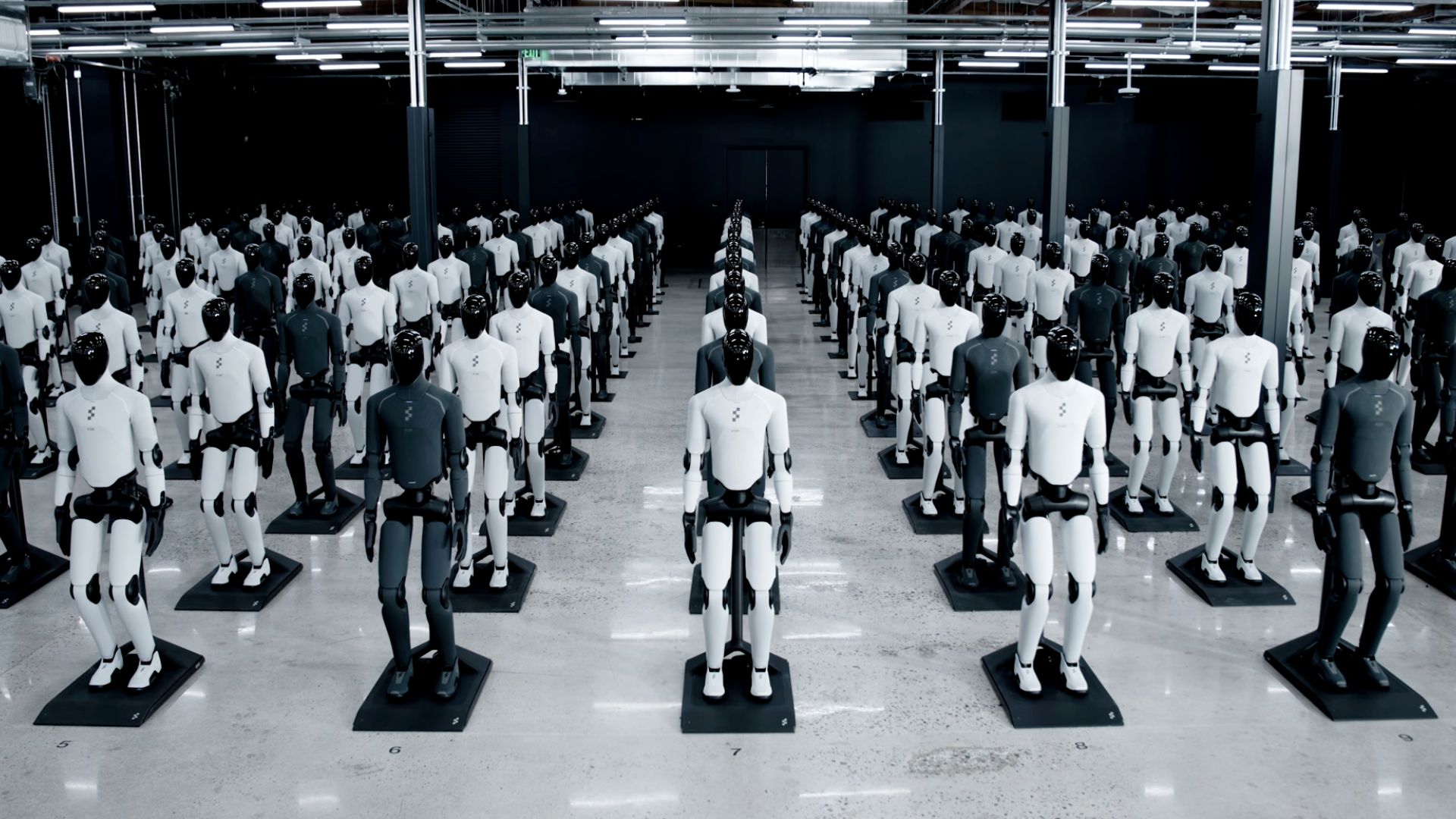
According to Figure's April 29 blog post and reporting by Interesting Engineering and Humanoids Daily, Figure has increased production of its Figure 03 humanoid from one unit per day to one unit per hour, a 24x throughput improvement achieved in under 120 days. The company reports delivering more than 350 units and demonstrated the one-per-hour cycle at its BotQ facility in California. Per Figure, the ramp uses a custom manufacturing execution system across over 150 networked workstations, more than 50 in-process inspection points, and EOL testing of over 80 functional checks. Reported yields include an end-of-line first-pass yield above 80%, 99.3% battery line first-pass yield, and production of over 9,000 actuators. According to Figure, the larger fleet is producing data for its humanoid AI work, including references to the Helix model and perception-conditioned whole-body control.
What happened
According to Figure's April 29 blog post, the company increased throughput at its BotQ manufacturing facility from one Figure 03 per day to one Figure 03 per hour, representing a 24x increase completed in under 120 days. Figure's announcement states the facility has delivered more than 350 units to date. The company reports the manufacturing line runs on custom execution software across over 150 networked workstations and includes more than 50 in-process inspection points and end-of-line testing comprising over 80 functional checks per robot. Figure reports an end-of-line first-pass yield above 80%, a battery-line first-pass yield of 99.3% with over 500 battery packs shipped, and more than 9,000 actuators produced across multiple SKUs.
Technical details
Per Figure's documentation, the scale-up relied on dedicated assembly lines for critical subassemblies, supplier qualification processes, and a bespoke MES to shorten cycle times. Figure's release highlights a manufacturing emphasis on automated and manual verification (burn-in and stress tests such as squats and jogging) to reduce early-life failures. Figure also links the fleet expansion to data generation for its humanoid control stack, referencing Helix and a perception-conditioned whole-body control milestone sometimes reported as S0 or System 0 in industry coverage.
Editorial analysis - technical context
Companies that combine higher-volume manufacturing with integrated test and telemetry pipelines tend to accelerate iterative ML-driven improvements because they increase real-world data throughput. For humanoid robotics this matters because locomotion, balance, and manipulation models benefit from diverse, on-platform failure cases and long-duration burn-in logs. The reported combination of higher first-pass yields and systematic burn-in narrows the gap between prototype-only deployments and repeatable, instrumented fleets that can generate labelled or weakly labelled operational data at scale.
Context and significance
Mass-produced robotics hardware historically unlocks scale effects beyond per-unit cost: it produces the sensor and actuation datasets needed to train higher-capability control policies and to validate whole-system reliability. The milestones Figure reports, if sustained, place it in a different operational class than small-batch research labs because the company claims both volume and structured verification that feed closed-loop model improvements. For practitioners, faster hardware iteration and larger robot fleets change experiment design: more A/B testing of control policies in the field becomes feasible, and dataset engineering must account for on-device telemetry, versioning, and drift over hardware revisions.
What to watch
- •Fleet data plumbing: look for published details on telemetry schemas, annotation workflows, and privacy/consent controls for deployed units.
- •Model reproducibility: watch for technical reports or papers describing Helix or the perception-conditioned whole-body control approach, including training data composition and sim-to-real proportions.
- •Long-run yield and uptime metrics: weekly or monthly production and EOL yield trends will indicate whether the early scale is durable beyond the initial ramp.
- •Customer deployments and use cases: announcements of commercial or research partners deploying larger numbers of Figure 03 units could clarify how the company operationalizes the fleet's data streams.
Reported limitations
All quantitative claims above are drawn from Figure's public announcement and media coverage (Interesting Engineering, Humanoids Daily). Independent verification of sustained one-per-hour continuous throughput, long-term field reliability, and the composition of datasets feeding Helix is not present in the cited material.
For practitioners
If substantiated, the reported throughput and verification processes lower a practical barrier to collecting real-world robotics data at scale, which can accelerate control-model iteration and benchmarking. Observers should treat the current claims as company-reported milestones pending independent operational metrics and peer-reviewed descriptions of the underlying ML systems.
Key Points
- 1Scaling from one robot/day to one/hour multiplies real-world robot-hours, accelerating data collection for control-model training and validation.
- 2Combining an MES, supplier qualification, and extensive burn-in testing is a common manufacturing pattern that improves first-pass yields and field reliability.
- 3Practitioners will watch for detailed telemetry, dataset schemas, and reproducible model descriptions to assess how production scale translates into ML progress.
Scoring Rationale
This is a notable operational milestone because volume manufacturing enables larger-scale data collection for robotics ML, which matters to practitioners. The score reflects significance without being a frontier research breakthrough and depends on independent verification of sustained throughput.
Sources
Public references used for this report.
Practice interview problems based on real data
1,625 SQL & Python problems across 15 industry datasets — the exact type of data you work with.
Try 250 free problems