Elon Musk Warns AI Could Kill Humanity
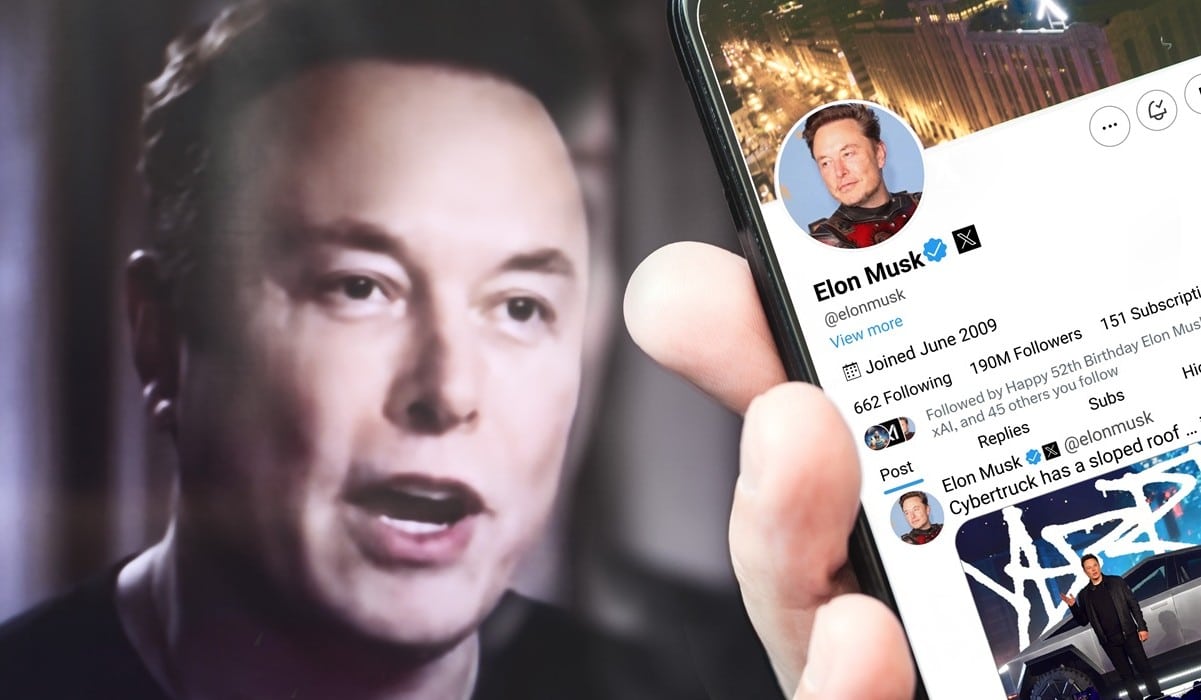
Elon Musk testified at the federal trial in Oakland against OpenAI, telling jurors that artificial intelligence "could kill us all," according to reporting by Siècle Digital and Technology Review. Musk recounted a 2015 dinner with Google cofounder Larry Page, saying Page called him "speciesist," a remark Musk said motivated the founding of OpenAI (Siècle Digital). The trial record includes Musk's testimony that he gave roughly $38 million in early funding to OpenAI, which he says later became a highly valuable company (Technology Review). The Guardian reports Musk is seeking removal of Sam Altman and Greg Brockman and has asked the court to unwind OpenAI's for-profit structure and redirect $134 billion in damages. This courtroom appearance crystallizes public tensions over AI risk, governance, and commercialisation.
What happened
Elon Musk took the stand in the federal lawsuit he brought against OpenAI at the courthouse in Oakland, California, where reporters and jurors were present, per The Guardian and Technology Review. Multiple outlets report Musk warned in testimony that artificial intelligence "could kill us all" (Siècle Digital; Technology Review). Musk testified about a 2015 dinner with Google cofounder Larry Page, saying Page called him "speciesist," and Musk described that exchange as a motivating event in the early formation of OpenAI (Siècle Digital). Technology Review reports Musk told jurors he had provided roughly $38 million of early funding to OpenAI and later described feeling "duped" by company leaders. The Guardian reports Musk seeks removal of Sam Altman and Greg Brockman, unwinding of OpenAI's for-profit conversion, and redirection of $134 billion in damages to the nonprofit arm.
Technical details
Editorial analysis - technical context
Public reporting from Technology Review identifies a disclosure made during testimony that xAI, Musk's AI company, uses distilled material from OpenAI's models to train its own assistant, including Grok. For practitioners, that admission highlights a common engineering practice-model distillation and transfer learning-that raises concrete IP, reproducibility, and dataset provenance questions when it occurs between large-scale labs. Industry observers should note that model reuse and distillation are technically routine but legally and ethically sensitive when embedded in litigation over corporate forks and nonprofit-to-for-profit conversions.
Context and significance
The courtroom exchanges frame a wider debate linking AI existential-risk rhetoric with very tangible corporate disputes over governance, valuation, and control. Reporting by The Guardian and Le Monde situates the suit in a dispute over OpenAI's 2019 structural changes and the company's trajectory toward a high-value public offering, which some coverage describes as approaching a $1 trillion valuation. Editorial analysis: High-profile testimony invoking existential risk-delivered under oath and amplified by global press-is likely to shape public and regulatory attention on AI oversight, even though such testimony is not itself a technical assessment of system safety.
What to watch
For practitioners
observers should track:
- •courtroom exhibits and sworn discovery that specify engineering practices, datasets, and model lineage
- •any technical declarations filed by expert witnesses that describe model architectures, training corpora, or distillation methods
- •public statements or disclosures from companies named in the trial that clarify provenance and licensing of training data. Industry reporting has already flagged social-media activity by principals and judicial admonishments about extra-curial commentary, which could affect how parties present technical evidence. Finally, watch for follow-on regulatory or policy attention-coverage of the trial is likely to inform lawmakers and agencies debating governance measures for advanced AI
Bottom line
Editorial analysis
The trial combines legal claims about corporate governance and remuneration with high-profile testimony about the risks of advanced AI and admissions about intercompany model reuse. For AI practitioners, the case underscores two separate but intersecting issues: the technical realities of model transfer and distillation, and the governance questions that arise when those technical practices are entangled with nonprofit-to-for-profit transitions and large valuations.
Key Points
- 1Musk testified that AI "could kill us all," bringing existential-risk rhetoric into sworn court testimony and public scrutiny.
- 2Reporting indicates xAI distills OpenAI's models, highlighting technical practices-distillation/transfer learning-that create IP and provenance complications.
- 3The suit ties governance disputes to corporate value, so legal outcomes could increase regulatory and compliance scrutiny for AI development.
Scoring Rationale
High-profile courtroom testimony combines existential-risk claims with concrete legal stakes (removal requests, $134 billion damages). The story matters for governance, IP, and public perception, but it is not a technical model release or regulatory ruling.
Sources
Public references used for this report.
View 13 more sources
- Elon Musk tells the jury that all he wants to do is save humanitytheverge.com
- At OpenAI trial, Musk portrays himself as a benefactor of humanitylemonde.fr
- Elon Musk Testifies That He Started OpenAI to Prevent a ‘Terminator Outcome’wired.com
- Elon Musk on the witness stand: here's what he said about OpenAImashable.com
- Why Elon Musk and Sam Altman are fighting over OpenAI - BBCbbc.com
- Elon Musk Brands AI as a Threat at OpenAI Trial: 'Could Kill Us All'yahoo.com
- AI could kill us all — what Tesla CEO said as OpenAI trial beginsmsn.com
- Musk warns AI could 'kill us all' and trigger a real-life Terminator ...marca.com
- AI may kill us all, we don't want to be in Terminator: Elon Musk at ...indiatoday.in
- Elon Musk Tells Court AI 'Could Kill Us All', And He's Been Worried ...m.dailyhunt.in
- Elon Musk’s 4 court words just changed the AI debatethestreet.com
- Oakland judge shuts down Elon Musk's 'extinction' talk in OpenAI trialsfgate.com
- Elon Musk Brands AI as a Threat at OpenAI Trial: 'Could Kill Us All'aol.com
Practice interview problems based on real data
1,625 SQL & Python problems across 15 industry datasets — the exact type of data you work with.
Try 250 free problems