DeSantis Pushes AI Bill of Rights Through Florida Legislature
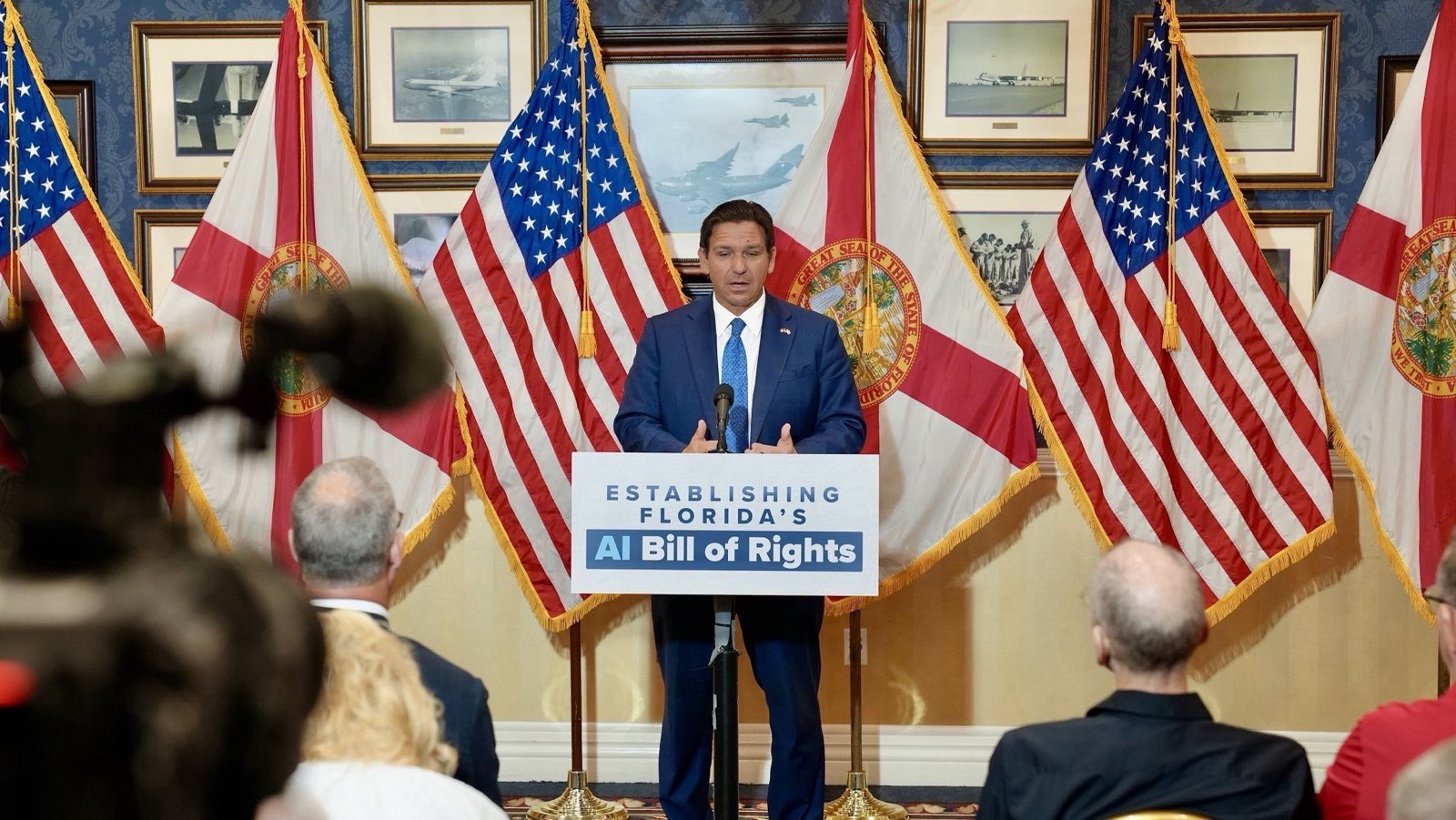
Florida Gov. Ron DeSantis is pressuring the state House to pass a revived AI Bill of Rights ahead of a special legislative session, after the Florida Senate overwhelmingly approved sweeping AI restrictions during the regular session. The push comes days after Florida Attorney General James Uthmeier opened a criminal investigation into OpenAI for an alleged role in the Florida State University shooting, citing interactions between the shooter and ChatGPT. The proposed law would impose removal from office for local officials who violate the statute and ban companion chatbots from talking to minors without parental consent. The House previously declined to act, with Speaker Daniel Perez favoring a single federal framework; DeSantis frames the issue as protection against "big tech" and is pressing lawmakers to act quickly.
What happened
Governor Ron DeSantis on Wednesday ramped up pressure on the Florida House to pass a revived AI Bill of Rights just days before a special legislative session, after the Florida Senate earlier approved sweeping AI regulations during the 60-day regular session. The push follows a landmark criminal investigation announced by Florida Attorney General James Uthmeier into OpenAI for an alleged connection between ChatGPT interactions and the Florida State University shooter. DeSantis framed the measure as protecting citizens from "big tech" and told reporters voters will ask why lawmakers side with companies over people.
Technical details
The publicly described provisions include a ban on companion chatbots talking with minors without parental consent and penalties that allow removal from office for local officials who violate the law. The House did not take up the measure during the regular session, with Speaker Daniel Perez aligning with President Donald Trump's call for a single federal regulatory framework instead. The state-level push ties a legislative response to an active criminal probe of company conduct and model behavior.
Context and significance
This is a sharp example of state-level regulatory escalation that links real-world harms to model outputs. Combining criminal investigation with fast-tracked legislation raises the stakes for AI companies and deployers: legal liability, operational compliance, and product safety controls will be front-and-center. It also highlights the federal-versus-state tension; an industry preferring uniform federal rules now faces patchwork state mandates that could set substantive precedents.
What to watch
The special session outcome, details of AG Uthmeier's criminal inquiry, and any legal challenges that follow will determine how quickly these rules translate into engineering and compliance requirements for model providers and integrators.
Key Points
- 1State-level lawmaking is accelerating, linking criminal probes to fast-tracked AI regulation and increasing legal risk for AI companies.
- 2Provisions target social bots and local-official accountability, forcing product changes such as parental-consent gating and stricter moderation.
- 3Federal-versus-state tension persists, creating a potential patchwork of rules that raises implementation and compliance costs for developers.
Scoring Rationale
This is a notable state-level escalation: a revived regulatory bill tied to an active criminal investigation increases legal and operational risk for AI providers. The story matters for practitioners but is not yet a national paradigm shift.
Practice interview problems based on real data
1,625 SQL & Python problems across 15 industry datasets — the exact type of data you work with.
Try 250 free problems