DeepSeek Releases V4, Extends Open-Source AI Reach
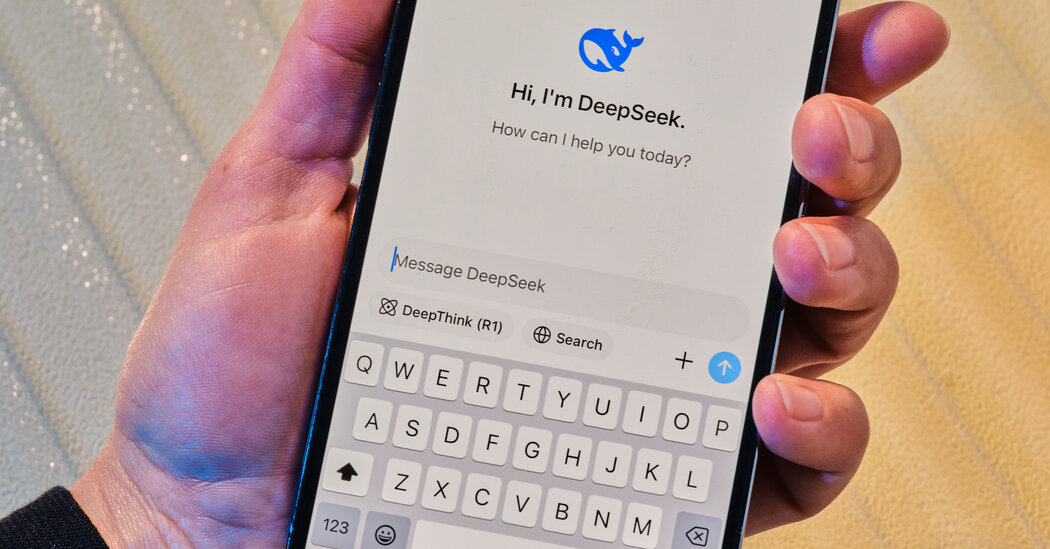
DeepSeek released a preview of V4 on April 24, offering two open-weight variants, deepseek-v4-pro and deepseek-v4-flash, and making 1,000,000-token context the default, according to DeepSeek's API documentation. The company describes deepseek-v4-pro as a 1.6T total / 49B active-parameter Mixture-of-Experts model and deepseek-v4-flash as a 284B total / 13B active-parameter option (DeepSeek API docs). Media coverage frames the release as strategically significant: The New York Times frames DeepSeek's openness as a potential soft-power advantage (Meaghan Tobin, NYT), while MIT Technology Review highlights cost and long-context gains (Technology Review). Independent observers remain mixed; The Economist characterises the launch as underwhelming in impact, and U.S. standards work has already started: the National Institute of Standards and Technology's CAISI ran an evaluation of DeepSeek V4 Pro (NIST/CAISI).
What happened
DeepSeek released a preview of V4 on April 24, publishing open weights and API details for two variants, per DeepSeek's API release notes and documentation. According to DeepSeek's API page, deepseek-v4-pro is a Mixture-of-Experts model with 1.6T total and 49B active parameters, and deepseek-v4-flash is a smaller Mixture-of-Experts model with 284B total and 13B active parameters. DeepSeek's documentation also states that 1,000,000-token context is now the default across official services and that the models are available via the public API today. MIT Technology Review summarised the release as materially improving long-context handling and cost-efficiency for open models, while The New York Times framed the lab's openness as a broader geopolitical and soft-power development (Meaghan Tobin, NYT). The release has drawn mixed reception in the press: The Economist described V4's debut as failing to match the disruptive effect of DeepSeek's earlier releases, and NIST's Center for AI Standards and Innovation (CAISI) has published an evaluation of DeepSeek V4 Pro (NIST/CAISI; The Economist; Technology Review; DeepSeek API docs).
Editorial analysis - technical context
DeepSeek's public materials advertise two technical thrusts that matter for practitioners: a Mixture-of-Experts architecture for parameter efficiency and a novel attention scheme for long-context efficiency. Public technical notes from DeepSeek highlight token-wise compression and DeepSeek Sparse Attention as enablers of 1M-token context, and community mirrors (Hugging Face) and the lab's tech report provide runnable artifacts for reproducibility. Industry-pattern observations: open-weight model releases with long-context capabilities typically accelerate tool-building for retrieval-augmented pipelines, document-heavy agents, and chain-of-thought style reasoning workflows, while also shifting benchmarking from closed evaluations to community-driven stress tests.
Context and significance
Industry context: DeepSeek's 2025 releases already catalysed attention by demonstrating high capability at lower compute budgets; press coverage frames V4 as the next iteration of that story. According to MIT Technology Review, V4 matters because it combines open access with increased context length and lower inference cost, which could lower barriers for startups and research groups. Editorial analysis: open-weight models with frontier-class capabilities create two simultaneous effects for the ecosystem, faster experimentation by downstream teams and a greater need for independent validation and safety testing by standards bodies and third parties. Reporting also shows divergent reactions: The Economist questions how much V4 moves the frontier commercially and strategically, while NIST/CAISI engagement signals that standards and evaluation pipelines are already adapting to open frontier models.
What to watch
For practitioners: track independent benchmark results and reproducibility reports on Hugging Face and in CAISI/NIST publications, because community tests will determine real-world robustness and alignment properties. Monitor API stability, pricing and throughput metrics reported by third-party users; Technology Review cited specific pricing for V4-Pro inference in its coverage, underscoring cost comparisons that teams will use to decide deployment strategies. Finally, watch regulatory and operational signals, including published safety audits, content-moderation controls in the public API, and government evaluations, as these will shape adoption pathways for production use.
Key Points
- 1DeepSeek's V4 preview releases open weights and defaults to a 1,000,000-token context, lowering barriers for large-document workflows.
- 2Open-weight Mixture-of-Experts models with long-context claims shift evaluation toward independent benchmarks and standards work.
- 3Media reaction is mixed, highlighting both practical cost gains and questions about whether V4 changes the competitive frontier.
Scoring Rationale
Open-weight releases that claim frontier performance and introduce 1,000,000-token context materially lower barriers for practitioners and spur independent benchmarking and standards work. The story is a major open-model development but not a clear, immediate paradigm shift, hence a high but not maximal score.
Sources
Public references used for this report.
View 8 more sources
- Why DeepSeek’s sequel failed to impresseconomist.com
- Three reasons why DeepSeek's new model matterstechnologyreview.com
- CAISI Evaluation of DeepSeek V4 Pronist.gov
- China's DeepSeek unveils latest models a year after upending ...aljazeera.com
- China's DeepSeek rolls out a long-anticipated update of its AI modelca.finance.yahoo.com
- DeepSeek V4—almost on the frontier, a fraction of the pricesimonwillison.net
- deepseek-ai/DeepSeek-V4-Prohuggingface.co
- DeepSeek - Wikipediaen.wikipedia.org
Practice interview problems based on real data
1,625 SQL & Python problems across 15 industry datasets — the exact type of data you work with.
Try 250 free problems