DeepSeek Adapts V4 to Huawei Ascend Chips
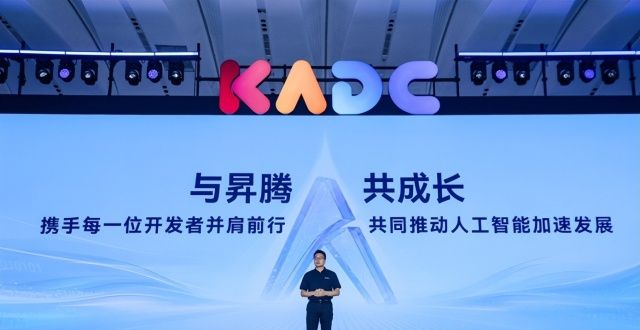
For teams running LLMs on-premises in China, or watching how fast the domestic stack absorbs a frontier open model, the operational headline is the porting lag collapsing to zero: DeepSeek-V4 launched with day-0 support on Huawei Ascend and other Chinese accelerators, per TrendForce, with SCMP reporting early compatibility for Ascend 950PR and 950DT chips. DeepSeek's own release notes (April 24, 2026) confirm the model family: V4-Pro at 1.6 trillion parameters with 49 billion activated, V4-Flash at 284 billion with 13 billion activated, both MIT-licensed with a 1,000,000-token context window built on hybrid sparse attention. Reuters first reported the preview release and the Huawei adaptation. Multi-vendor day-0 adaptation was previously an NVIDIA-only phenomenon; its arrival on domestic silicon shortens the gap between model release and production deployment and reshapes latency, cost, and on-premises-versus-cloud calculations for practitioners in the region. Audited, end-to-end production benchmarks on Ascend at scale remain unpublished.
The porting lag between a frontier open-model release and production support on domestic Chinese accelerators has effectively hit zero, and that is the durable story here. When DeepSeek-V4 shipped, Huawei Ascend, Cambricon, Hygon, and Moore Threads all had day-0 or immediate adaptation in place, per TrendForce, a level of hardware-software coordination previously associated only with the NVIDIA ecosystem. For practitioners, that compresses the time from model release to deployable inference and changes the calculus on latency, cost, and on-premises versus cloud in the Chinese market.
The verified specs
DeepSeek's release notes and Hugging Face model cards confirm what early coverage reported: DeepSeek-V4 launched in preview on April 24, 2026 in two MIT-licensed variants, V4-Pro at 1.6 trillion total parameters with 49 billion activated per token and V4-Flash at 284 billion with 13 billion activated, both with a 1,000,000-token context window. The models use a hybrid attention design combining compressed sparse attention mechanisms to cut compute and memory cost on long-context workloads; DeepSeek states V4-Pro needs roughly 27% of the single-token inference FLOPs and 10% of the KV cache of V3.2 in the 1M-token setting. Reuters first reported the preview release and noted support for agent frameworks and OpenAI/Anthropic-compatible API formats.
The adaptation story
TrendForce reports Huawei Ascend, Cambricon, Hygon, and Moore Threads completed day-0 adaptation at launch, with adaptation work completed in April 2026 per Pandaily. SCMP's coverage cites Huawei livestream remarks on early compatibility for Ascend 950PR and Ascend 950DT chips, and eeworld and TrendForce describe full inference-stage Ascend compatibility while citing only rumored, unaudited utilization rates. The pattern matters more than any single number: synchronized adaptation means Chinese deployers no longer wait months for domestic-silicon support after a major open-weight release.
For practitioners
Three concrete implications. First, on-premises options in China now track the open-model frontier with little delay, strengthening the case for domestic-accelerator procurement where NVIDIA supply is constrained. Second, the OpenAI/Anthropic-compatible API surface lowers switching costs for integrators looking to swap or augment hosted proprietary models. Third, million-token context at sharply reduced FLOPs and KV-cache cost, if the claimed efficiency holds in production, moves long-document and agent-trajectory workloads from impractical to routine on mid-sized clusters.
What to watch and caveats
Broader availability of Ascend 950 supernodes in the second half of 2026, which TrendForce and SCMP flag as the trigger for higher throughput and lower Pro pricing; empirical throughput and utilization numbers from early Ascend deployments, since the cited utilization figures are rumored rather than audited; and agent-framework compatibility in practice. No source yet provides audited, end-to-end production benchmarks for V4 on Ascend at scale; vendor statements and livestream remarks dominate the record.
Key Points
- 1DeepSeek-V4 has been adapted for Huawei Ascend, with multiple Chinese chip vendors completing day-0 support, reducing porting lag.
- 2DeepSeek's release notes confirm V4-Pro at 1.6T parameters (49B active) and V4-Flash at 284B (13B active), MIT-licensed with 1M-token context.
- 3Synchronized hardware adaptation shortens time-to-deployment, increasing options for on-premises inference in China where NVIDIA supply is constrained.
Scoring Rationale
Multi-vendor, day-0 adaptation of a frontier open model to domestic accelerators materially lowers deployment friction in China, and model specs are now verified against DeepSeek's official release notes and Hugging Face model card. Regionally important for practitioners weighing hardware and deployment options; production-scale Ascend benchmarks remain unaudited.
Sources
Public references used for this report.
View 7 more sources
- [News] Huawei Ascend, Cambricon and Hygon Completed Day 0 ...trendforce.com
- Huawei, DeepSeek strengthen China's AI self-reliance with V4 ...scmp.com
- DeepSeek launches V4 model adapted for Huawei AI chipstechwireasia.com
- DeepSeek-V4: Huawei Ascend compatible, cost-effective king, latest ...en.eeworld.com.cn
- DeepSeek V4 - ChinaTalkchinatalk.media
- DeepSeek V4 on Huawei Ascend: AI Infrastructure Strategy Guidelushbinary.com
- The Ultimate Guide to DeepSeek V4 on Huawei Ascend Chipsskywork.ai
Practice with real Ad Tech data
90 SQL & Python problems · 15 industry datasets
250 free problems · No credit card
See all Ad Tech problems