Cowboy Space Raises $275M For Orbital AI Data Centers
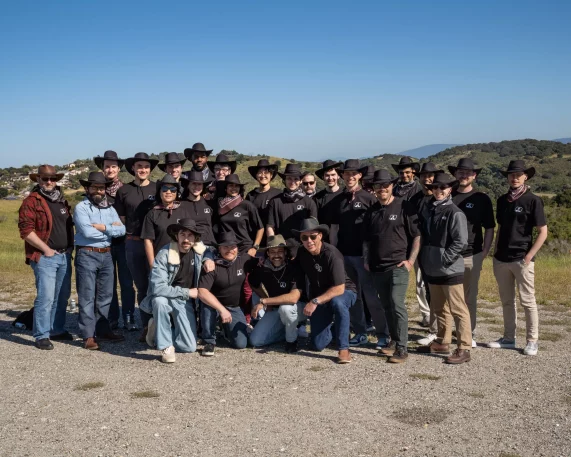
Cowboy Space Corporation, the space startup founded by Robinhood co-founder Baiju Bhatt, closed a $275 million Series B at a $2 billion valuation, according to the company press release published on BusinessWire. Reporting by CryptoBriefing and TechCrunch says the round was led by Index Ventures with participation from IVP, Blossom Capital, SAIC and existing investors including Breakthrough Energy Ventures, Construct Capital, Andreessen Horowitz, NEA, Interlagos and Baiju Bhatt. The company, which rebranded from Aetherflux, is developing Low Earth Orbit satellites that harness solar power, a purpose-built launch vehicle, and compute payloads whose upper stages are intended to operate as 1-megawatt orbital data centers, per BusinessWire and CryptoBriefing. TechCrunch and Dealroom report timelines ranging from a demonstration satellite later in 2026 to an in-house rocket targeted by the end of 2028.
What happened
Cowboy Space Corporation, formerly Aetherflux, announced a $275 million Series B at a $2 billion post-money valuation, per the company press release on BusinessWire and reporting in CryptoBriefing and TechCrunch. BusinessWire and CryptoBriefing list Index Ventures as the lead investor, with participation from IVP, Blossom Capital, SAIC and existing backers including Breakthrough Energy Ventures, Construct Capital, Andreessen Horowitz, NEA, Interlagos and founder Baiju Bhatt. The company unveiled the Cowboy Space brand alongside the financing, according to BusinessWire and Bloomberg.
Technical details
BusinessWire and CryptoBriefing report that Cowboy Space is developing a vertically integrated system combining a launch vehicle, a rocket upper stage and compute payloads designed for the space environment. Per BusinessWire and Payload, the firm describes each rocket upper stage as intended to remain in orbit and operate as a 1-megawatt data center. CryptoBriefing says Cowboy is working with NVIDIA to deploy NVIDIA Space 1 Vera Rubin Modules in Low Earth Orbit. Dealroom and TechCrunch report the company's previous concept of beaming space solar power down has shifted toward selling in-orbit compute, and that the firm aims to demonstrate space-to-Earth power beaming with a satellite later in 2026, with a cluster of GPUs targeted for early 2027 according to Dealroom.
Editorial analysis - technical context
Industry observers have long argued that orbital systems offer high solar irradiance and potential continuous generation compared with many terrestrial sites. Companies attempting in-orbit compute must address thermal dissipation, radiation hardening for GPUs, in-orbit maintenance and replacement logistics, and launch mass economics. Industry-pattern observations: projects that integrate rockets and payloads amplify complexity because they must solve both launch reliability and long-duration operations in orbit, two domains where experience and scale materially affect unit economics.
Context and significance
reporting frames the raise as a bet on addressing growing AI compute and energy constraints on Earth. BusinessWire and CryptoBriefing present Cowboy's approach as driven by what the company calls first-principles design for orbital data centers; TechCrunch and Dealroom place the move inside a broader surge of investor interest in space infrastructure amid limited near-term commercial launch capacity. The announced collaboration with a major AI-hardware vendor, reported by BusinessWire and CryptoBriefing, is notable because hardware partnerships can shorten integration timelines but do not eliminate orbital-specific engineering risks.
What to watch
Industry context
observers and reporters will track the company's demonstration milestones. Multiple sources report an upcoming demonstration satellite and space-to-Earth beaming before the end of 2026 (BusinessWire, CryptoBriefing, Dealroom). TechCrunch and Dealroom report the company expects to develop its own rocket, with a first in-house launch target in late 2028, a timeline that industry observers often treat as optimistic for new launch programs. Other near-term indicators include specified hardware integration with NVIDIA modules (BusinessWire, CryptoBriefing), third-party launch agreements or manifest bookings, and any published results from thermal, radiation or power-beaming tests.
Direct quotes from sources
BusinessWire quotes Baiju Bhatt, founder and CEO: "Our approach starts from a blank sheet, where the unique requirements of data centers in orbit drive the form and function of the overall system." BusinessWire also quotes Jan Hammer, Partner at Index Ventures, saying Cowboy is building as "demand for AI compute and energy begins to outstrip what terrestrial infrastructure can support."
Key Points
- 1Large Series B funding indicates investor appetite for space-based compute, reflecting concern about terrestrial power and data-center constraints.
- 2Integrating rockets and orbital data centers increases technical complexity, since teams must master both launch reliability and long-duration spacecraft operations.
- 3Partnerships with hardware vendors shorten integration work but do not remove thermal, radiation-hardening and replacement challenges unique to orbital GPUs.
Scoring Rationale
The raise and vendor partnerships make this a notable infrastructure development for AI compute supply, but timelines and technical risk are long-term. The story matters for planners evaluating alternative compute and energy strategies, though near-term impact on practitioner tooling is limited.
Sources
Public references used for this report.
View 6 more sources
- Aetherflux Rebrands, Pivots Business—and Raises $275Mpayloadspace.com
- Robinhood co-founder Bhatt raises $275M for Cowboy Space to build data centres in orbitapp.dealroom.co
- Baiju Bhatt's Cowboy Space raises $275M for orbital data centersfinance.yahoo.com
- Orbital AI Data Centers: Cowboy Space Raises $275Mtechnews180.com
- Cowboy Space recauda $275M para data centers orbitalesecosistemastartup.com
- Cowboy Space raised $275M and plans in house rocket program by ...mezha.net
Practice interview problems based on real data
1,625 SQL & Python problems across 15 industry datasets — the exact type of data you work with.
Try 250 free problems