
Core Scientific Raises $3.3B to Build AI Data Centers
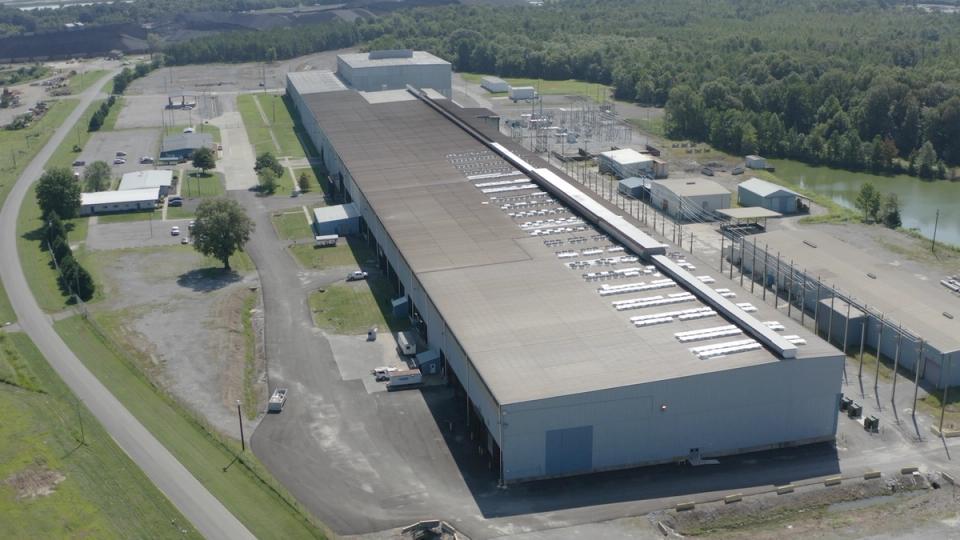
Core Scientific is selling $3.3 billion in high-yield junk bonds to finance a strategic pivot from crypto mining into AI infrastructure. The company plans to develop six data center facilities that are contracted to be leased to CoreWeave under a 12-year agreement, a move Bloomberg and other outlets estimate could generate roughly $10 billion in revenue. The financing via junk bonds signals elevated execution and refinancing risk but accelerates capacity expansion for GPU-heavy workloads. For practitioners, the deal matters because it will increase demand for commodity GPUs such as H100-class accelerators, intensify competition for power and colocation capacity, and create more specialized AI rack inventory on the market.
What happened
Core Scientific is raising $3.3 billion through a junk bond offering to fund a strategic shift away from its prior focus on crypto mining toward building AI-focused data centers. The company plans to construct six facilities that are tied to a lease arrangement with CoreWeave under a 12-year contract. Bloomberg coverage cited in the filings and summarized by market outlets places potential revenue from the facilities at around $10 billion over the contract horizon.
Technical details
The buildout targets high-density GPU colocation designed for training and inference workloads. Key technical and procurement considerations practitioners should note now include:
- •GPU supply and configuration pressures, driven by demand for units such as H100 and next-generation accelerators.
- •Power, cooling, and site engineering for high rack densities, including potential adoption of liquid cooling and specialised PDUs.
- •Networking and storage topology to support multi-petabyte datasets and low-latency interconnects for distributed training.
Why it matters
Financing via high-yield, or junk, bonds signals that Core Scientific is accessing expensive capital to accelerate this pivot. That raises two immediate implications. First, the company will face significant interest costs and covenant scrutiny, making timely execution and predictable lease cashflows critical. Second, accelerating capacity expansion with long-term leases to CoreWeave directly increases available GPU-rich colocations for model-training customers and service providers, which can relieve short-term capacity bottlenecks but also concentrate supply with fewer specialized operators.
Market and operational context
This transaction sits inside a broader pattern: capital that once flowed to crypto infrastructure is being redeployed into AI compute real estate. GPU demand remains the gating factor for many large-model projects, so institutionalized supply-the kind provided by specialized colo companies-now matters as much as raw chip production. CoreWeave, as the lessee, provides an operational channel to deploy those GPUs into customers, potentially shortening time-to-service versus a generalist cloud onboarding.
Risks and caveats
The offering is inherently risky. Junk bonds carry higher yields because investors price in credit and execution risk. Key failure modes include construction delays, GPU procurement constraints, higher-than-expected power costs, or weaker-than-anticipated utilization even under the CoreWeave contract. The revenue estimate of $10 billion is material but contingent on uptime, pricing stability for GPU-backed services, and the durability of customer demand for large-scale training capacity.
What to watch next
Monitor the bond pricing and coupon as a market-implied risk signal; track procurement announcements for GPU shipments; watch power permit and construction milestones; and assess the specifics of the CoreWeave lease when formal terms become public. These data points will determine whether this is a rapid capacity expansion that eases ecosystem constraints or an over-levered corporate bet on sustained AI compute demand.
Key Points
- 1Core Scientific is raising $3.3B in junk bonds to fund six AI data centers leased to CoreWeave under a 12-year deal.
- 2High-yield financing accelerates capacity but increases refinancing and execution risk, making timely GPU procurement and builds critical.
- 3The project could unlock roughly $10B of revenue and shift GPU colocation supply dynamics, easing short-term capacity constraints.
Scoring Rationale
The story is notable for channeling significant capital into AI data-center capacity, directly affecting GPU colocation supply and power infrastructure demand. It is not a frontier model or regulatory shock, but the financing size and strategic pivot make it materially relevant to practitioners and operators.
Sources
Public references used for this report.
Practice interview problems based on real data
1,625 SQL & Python problems across 15 industry datasets — the exact type of data you work with.
Try 250 free problems

