COAI Highlights AI, 6G and Anti-Fraud Priorities
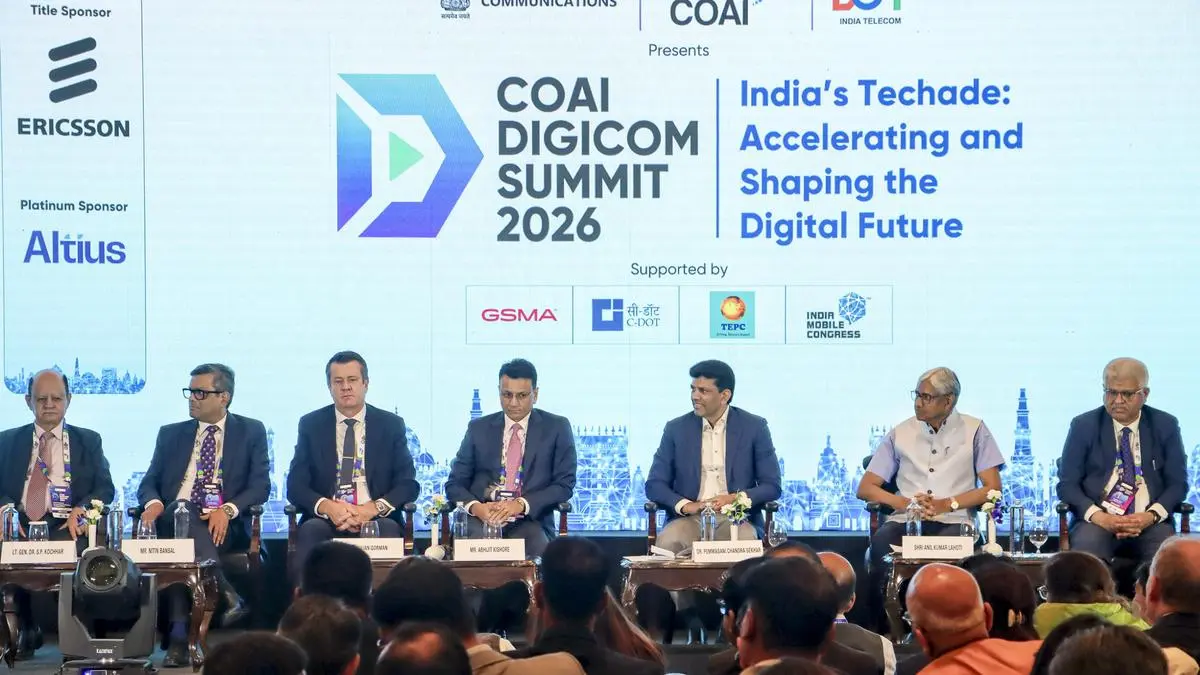
India's Cellular Operators Association (COAI) held its DigiCom Summit 2026 in New Delhi on April 24, 2026, where Minister of State for Communications Dr. Pemmasani Chandra Sekhar urged the telecom sector to pursue design-led 6G innovation and deeper R&D investment, according to the Press Information Bureau and multiple Indian outlets. The minister said India has disconnected more than 88 lakh (8.8 million) fraudulent SIM cards as part of anti-fraud enforcement, and flagged AI-generated scams, deepfakes and voice cloning as a fast-evolving threat, per ANI. Separately, TRAI chairman Anil Kumar Lahoti told the summit that broadband penetration remains low and pushed a hybrid connectivity model combining fixed and wireless access, according to ANI/MSN. Industry panels covered in The Tribune and The Hindu Business Line called for AI-led network automation and stronger operator-regulator collaboration.
The concrete, checkable number out of this summit is the 8.8 million disconnected SIM cards, an enforcement action already underway rather than a future plan, and it is the figure practitioners building telecom fraud-detection or KYC systems should track for signal on how aggressively Indian carriers are being pushed toward automated, AI-driven identity verification. The 6G and AI-network talk, by contrast, is strategic intent and R&D framing at this stage, useful for understanding where Indian policy is heading but not yet backed by funding announcements or standards commitments.
What happened
The Cellular Operators Association of India (COAI) held its DigiCom Summit 2026 in New Delhi on April 24, 2026, bringing together government officials, regulators, operators and vendors, according to the Press Information Bureau, India's state broadcaster News on Air, and multiple Indian outlets. Minister of State for Communications Dr. Pemmasani Chandra Sekhar urged the sector to shift toward design-led innovation and increase R&D investment so India can help set global 6G standards rather than only adopt them, per ANI and Economic Times Government coverage. On fraud, the minister said India has disconnected more than 88 lakh (8.8 million) fraudulent SIM cards, and warned that AI-generated scams, deepfakes and voice cloning represent a rapidly evolving threat, according to ANI. Separately, TRAI chairman Anil Kumar Lahoti told the summit that broadband penetration remains low relative to mobile connectivity and advocated a hybrid model combining fixed and wireless access to extend reach, per ANI and MSN's coverage. The Tribune and The Hindu Business Line reported industry panels calling for AI-led network automation, predictive maintenance and stronger operator-regulator collaboration on a "trusted digital ecosystem."
Industry context
This summit is one part of India's broader public push to position itself in the 6G standards race and to treat telecom fraud as an AI-versus-AI problem, using automated detection to counter AI-enabled scams rather than only manual reporting. The scale of the SIM-disconnection figure, in the tens of millions, indicates automated, telecom-wide detection systems are already in production use in India, not a pilot, which is a more advanced stage than the 6G R&D discussion, still centered on standards participation and design-led manufacturing rather than deployed technology.
For practitioners
These are industry-pattern observations, not claims about any single operator's internal roadmap. Telecom-scale fraud detection at the volumes described here typically requires cross-operator telemetry sharing, real-time signal-processing pipelines that combine call, message and behavioral data, and compliance-aware architectures given India's data-localization rules. Teams building AI-for-telecom tools should treat regulator statements like TRAI's on hybrid connectivity and broadband penetration as demand signals for edge and rural-deployment-friendly inference, not just urban network automation.
What to watch
Track whether India follows this summit with formal 6G research-funding announcements or standards-body submissions, any TRAI rulemaking on cross-operator fraud-data sharing, and pilot programs for AI-led network automation from major operators. The statements reported here signal direction, not committed timelines or budgets.
Key Points
- 1India's telecom minister said 88 lakh (8.8 million) fraudulent SIM cards have already been disconnected, an active enforcement action, not a future plan.
- 2The minister urged design-led 6G R&D so India can help set global standards, per COAI DigiCom Summit 2026 coverage.
- 3TRAI's chairman separately flagged low broadband penetration and pushed a hybrid fixed-wireless model to extend rural connectivity.
Scoring Rationale
A well-corroborated government/industry summit (official PIB and state-broadcaster sourcing plus multiple independent Indian outlets) with one concrete, checkable enforcement figure, 8.8 million fraudulent SIMs disconnected, alongside strategic 6G and AI-network statements of intent. Notable for practitioners tracking India's telecom-AI policy direction, but it reports conference remarks and R&D framing rather than a funded program, standard, or shipped technology.
Sources
Public references used for this report.
View 8 more sources
- AI-led networks, stronger anti-fraud measures key to digital growthtribuneindia.com
- Dr Chandra Sekhar Pemmasani urges India to write global 6G standards at COAI summitgovernment.economictimes.indiatimes.com
- TRAI chief flags low broadband penetration, pushes hybrid model at DigiCom 2026msn.com
- MoS Telecom Pemmasani urges telecom sector to shift to design-led innovation, increase R&D investmentsaninews.in
- India must lead 6G through design-led innovation and R&D: MoS Pemmasani Chandra Sekharvarindia.com
- Pemmasani Chandra Sekhar: India's techade to be shaped by 6G, AI, quantum technologiesap7am.com
- COAI DigiCom Summit 2026 Calls for AI-Led Networks, Stronger Collaboration and Trusted Digital Ecosystembisinfotech.com
- DoT MoS Pemmasani Highlights India's Telecom Growth and 6G Vision at DIGICOM Summitimpressivetimes.com
Practice with real Telecom & ISP data
90 SQL & Python problems · 15 industry datasets
250 free problems · No credit card
See all Telecom & ISP problems