Claude Code Unlocks 80% of Functionality With 15 Concepts
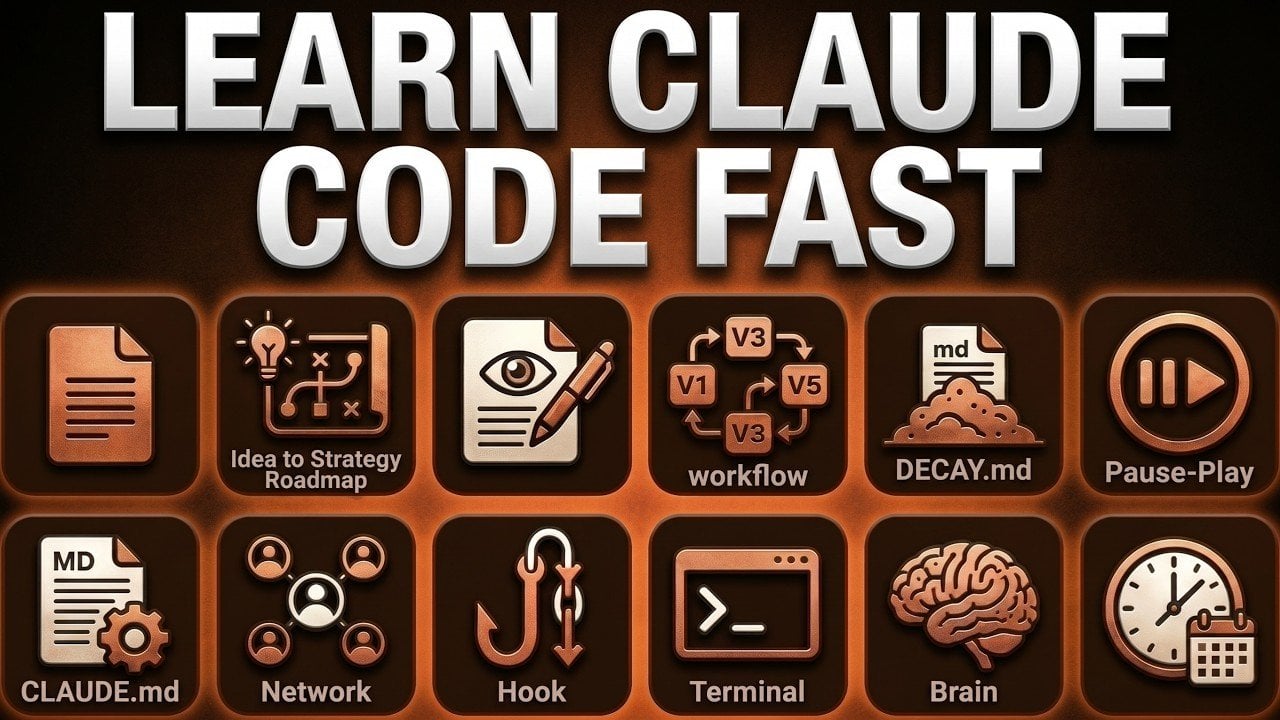
Geeky-Gadgets reports that mastering 15 core concepts lets users access roughly 80% of Claude Code's capabilities, according to an article by Simon Scrapes. The piece highlights Plan Mode, which helps outline tasks for structured outputs, and context management commands such as /clear and /compact to trim and reset context windows. Geeky-Gadgets also describes Model Context Protocols (MCPs) and integrations with platforms like Slack and Google Drive, plus modular skills, hooks, and memory features that enable file reading, writing, and command execution. The article frames these elements as practical levers for productivity tasks including website creation, content generation, and data organization.
What happened
Geeky-Gadgets published a guide by Simon Scrapes arguing that mastering 15 concepts unlocks about 80% of Claude Code's practical capabilities. The article identifies Plan Mode as a central workflow tool for outlining tasks and improving output structure, and documents context management commands such as /clear and /compact for streamlining active context. Geeky-Gadgets also describes Model Context Protocols (MCPs) that connect Claude Code with external platforms such as Slack and Google Drive, and lists features including modular skills, hooks, advanced memory systems, and the ability to read, write, and execute commands on files.
Technical details
Geeky-Gadgets reports that Claude Code can interact with files and execute commands, enabling use cases from automated content generation to file organization. The article frames MCPs as the integration mechanism for pushing and pulling context between Claude Code and third-party tools. It further highlights modular skills and hooks as composable building blocks for custom workflows.
Industry context
Editorial analysis: Tools that provide file I/O plus explicit context-management controls frequently enable higher automation levels for routine tasks while shifting complexity into integration and orchestration layers. In comparable systems, developers tend to rely on modular skill composition and context-trimming primitives to keep prompt state manageable and predictable.
Practical implications for practitioners
Editorial analysis: For engineers and ML practitioners, the patterns described in the article reflect common operational trade-offs: richer tool access (file execution, external integrations) increases automation possibilities but also raises needs for input sanitization, provenance tracking, and access controls. Observers integrating similar systems often build logging, permission gating, and staged testing around file-affecting capabilities.
What to watch
Editorial analysis: Monitor official product documentation for MCP specifications, rate limits on file operations, and memory retention semantics. Also watch for published examples or SDKs that demonstrate safe use of modular skills and hooks, and for community tooling that standardizes context-management best practices.
Key Points
- 1Mastering 15 core concepts delivers roughly 80% of day-to-day Claude Code utility, per Geeky-Gadgets reporting.
- 2Clear context controls (/clear, /compact) plus Plan Mode make structured, repeatable workflows easier to maintain.
- 3Industry pattern: file I/O and external integrations increase automation value but require stronger auditing and access controls.
Scoring Rationale
This is a practical product-focused guide rather than a frontier-model release, so it matters mainly to practitioners integrating Claude Code into workflows. The report highlights usable features and integration patterns that influence implementation choices, warranting a mid-range impact score.
Practice interview problems based on real data
1,625 SQL & Python problems across 15 industry datasets — the exact type of data you work with.
Try 250 free problems