China Doubles Domestic AI Accelerator Capacity
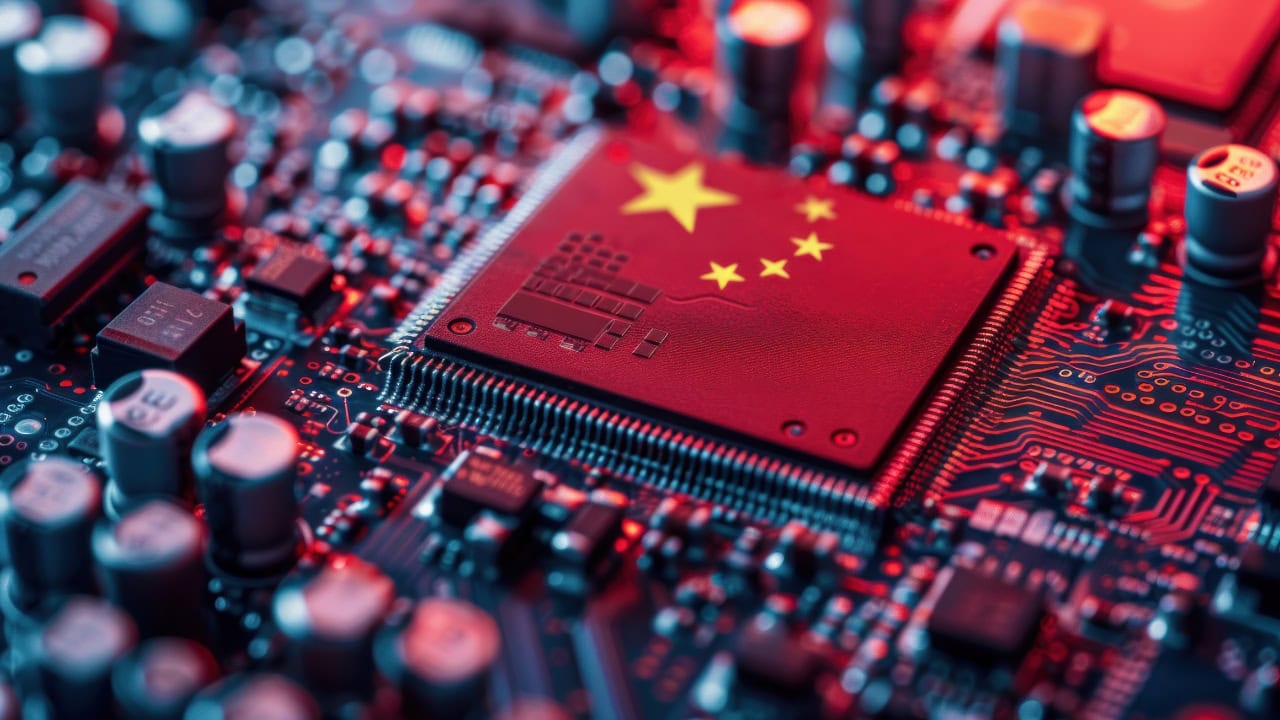
China has doubled the size of its largest domestic "AI for science" computing cluster in two months, expanding the Zhengzhou core node from 30,000 to 60,000 domestically produced AI accelerator chips. The upgrade, reported by CCTV, includes Chinese-made chips, high-speed interconnects, and an advanced software stack, creating what state media calls the country's most powerful scientific intelligent computing infrastructure. The cluster promises to relieve researchers of foreign hardware limits and to support high-dimensional, complex scientific workloads. The move comes amid US efforts to restrict advanced chipmaking equipment exports and the US Department of Energy's Genesis Mission, underlining the geopolitical race over AI compute and scientific infrastructure.
What happened
China brought its largest "AI for science" computing cluster in Zhengzhou into upgraded operation, increasing the number of domestically made AI accelerator chips from 30,000 to 60,000 in two months, state broadcaster CCTV says. The Zhengzhou core node is now described as the country's most powerful scientific intelligent computing infrastructure.
Technical details
The cluster was built end-to-end with domestic components: foundational chips, high-speed interconnects, and an advanced software platform. It is designed to run high-dimensional functions and complex scientific simulations without reliance on foreign hardware. Key technical features include:
- •domestically produced AI accelerator cards totaling 60,000 units
- •custom high-speed interconnect fabric for large-scale parallel workloads
- •an integrated software stack optimized for "AI for science" workflows
Context and significance
This is a material step toward compute self-sufficiency for Chinese scientific AI. For practitioners, access to a large national cluster reduces friction for compute-intensive experiments and domain simulations. Strategically, the upgrade tightens the technology gap in a contested supply chain: US lawmakers are pursuing export curbs on advanced chipmaking equipment, and the US Department of Energy launched the Genesis Mission to consolidate federal scientific data and compute. That combination accelerates a bifurcated compute ecosystem.
What to watch
Adoption patterns from Chinese research institutions and benchmarked workloads on the Zhengzhou node. Also monitor whether domestic accelerator designs and interconnects close performance and software-ecosystem gaps with Western offerings.
Key Points
- 1China doubled the Zhengzhou node to 60,000 domestic AI accelerators in two months, shifting major scientific compute capacity onshore.
- 2The cluster combines domestic chips, high-speed interconnects, and a software stack, reducing dependency on foreign suppliers and export controls.
- 3The upgrade intensifies geopolitical compute competition, raising stakes for US export policy and national-scale AI research initiatives.
Scoring Rationale
This is a notable infrastructure milestone for AI research compute and national self-sufficiency. It materially affects compute availability for Chinese scientific teams and escalates geopolitical compute competition, but it is not a paradigm-shifting model or landmark global policy event.
Sources
Public references used for this report.
Practice interview problems based on real data
1,625 SQL & Python problems across 15 industry datasets — the exact type of data you work with.
Try 250 free problems