Cambridge Tests First AI-designed Universal Coronavirus Vaccine
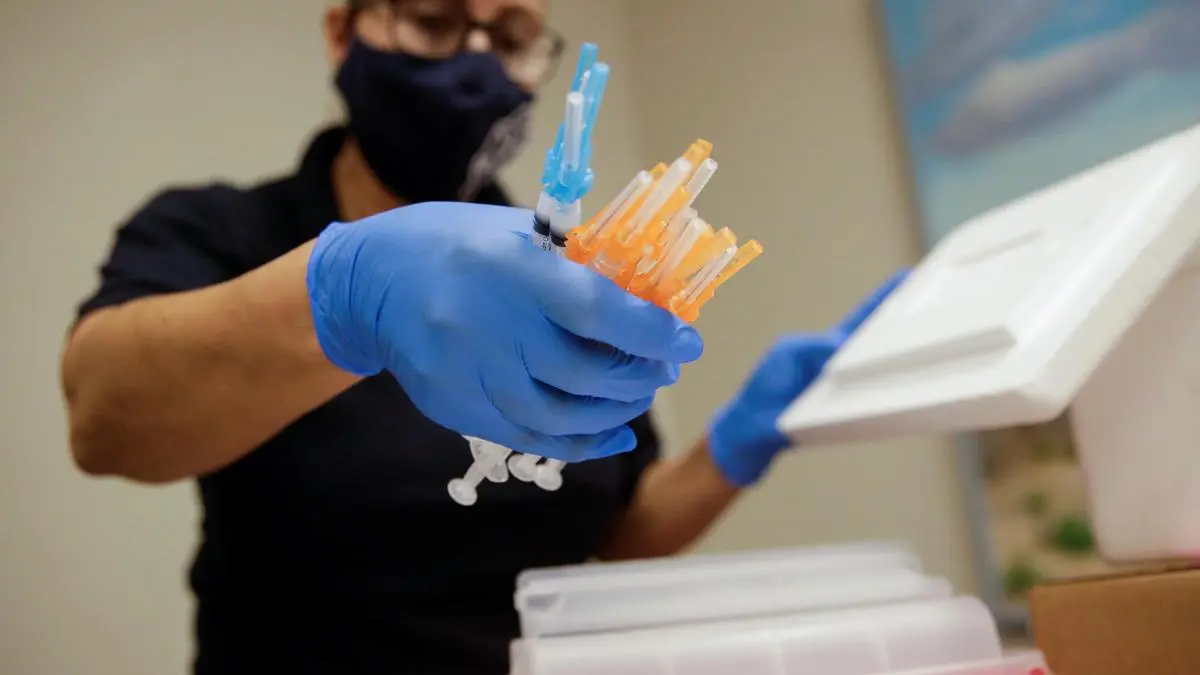
Researchers at the University of Cambridge and spin-out DIOSynVax (DVX) Ltd have completed a first-in-human safety trial of an AI-designed universal Sarbeco coronavirus vaccine, the institutions report. The trial involved 39 healthy volunteers and found the vaccine to be safe and well tolerated, with no significant side-effects reported, according to the University of Cambridge press release and ScienceDaily coverage. The investigational product uses an AI-designed "super-antigen" intended to generate immune responses across the Sarbeco family; trial participants showed immune responses to SARS-CoV-2, SARS, and related bat coronaviruses, per the published report in the Journal of Infection and Cambridge reporting. The formulation tested was delivered as a DNA vaccine using a needle-free microfluidic jet in the trial, ScienceDaily and Cambridge reported.
What happened
Researchers at the University of Cambridge and the university spin-out DIOSynVax (DVX) Ltd ran the first human clinical trial of a vaccine whose active component was designed entirely by computer simulations, the Cambridge press release and ScienceDaily report. The study enrolled 39 healthy volunteers, and the sponsors reported the vaccine was safe and produced no significant adverse events, according to the University of Cambridge and ScienceDaily. The trial tested a vaccine targeting the Sarbeco coronavirus family; investigators reported immune responses in participants to SARS-CoV-2, SARS, and multiple related bat coronaviruses, and the results were published in the Journal of Infection, per ScienceDaily and Cambridge coverage. The Cambridge team describes the vaccine antigen as a computationally derived "super-antigen." Jonathan Heeney, scientific lead at Cambridge, is quoted in the university release: "We've converted vaccine development from being reactive to being future proof. Our vaccines will continue to provide protection against viruses even as they mutate into new strains."
Technical details
The Cambridge and ScienceDaily accounts state the antigen was generated by AI and machine learning applied to sequence data from sarbecoviruses collected through surveillance programmes; the algorithm identified conserved epitope features across the virus family and produced a synthetic antigen intended to present those conserved features to the immune system. The trial formulation in this study was administered as a DNA vaccine using a needle-free microfluidic jet delivery system, ScienceDaily and Medical Xpress report, and Cambridge material notes the AI-designed super-antigen is compatible with multiple delivery platforms.
Editorial analysis - technical context
AI-enabled antigen design shortens the search through vast viral sequence space by scoring conserved regions and proposing synthetic constructs that are not constrained to natural protein sequences. For practitioners in computational biology and protein engineering, this approach shifts work from manual epitope selection toward large-scale sequence synthesis and in-silico optimization, and it increases the importance of validating predicted antigen structure and immunogenicity in wet-lab assays and animal models before human efficacy trials.
Context and significance
Public reporting frames this trial as the first instance of a vaccine antigen designed entirely by AI reaching human testing, positioning it as a milestone at the interface of machine learning and vaccinology (BBC, Cambridge, ScienceDaily). If further trials confirm broad, durable protective responses, AI-enabled antigen design could reduce the need for frequent reformulation of strain-specific vaccines and accelerate prototype-to-trial timelines. Multiple outlets, including BBC and The Conversation, note the Cambridge team is already applying the method to other families such as influenza and Ebola, per public reporting.
Editorial analysis - regulatory and operational considerations
From an implementation perspective, universal or family-wide vaccine concepts change efficacy endpoints, trial design, and regulatory expectations because breadth of protection must be demonstrated across diverse viral variants and, eventually, correlated with clinical endpoints. Observers will need to watch how neutralization breadth and durability are measured, and how manufacturers scale production of synthetic antigens and integrate them with delivery platforms such as DNA vectors or protein subunits.
What to watch
For practitioners
follow results from larger Phase 2/3 trials that quantify breadth and durability of neutralizing antibody and T-cell responses against circulating and zoonotic sarbecoviruses; peer-reviewed immunogenicity and neutralization data beyond initial safety readouts; and independent replication of AI antigen predictions in preclinical models. Also monitor manufacturing pathway choices (DNA versus protein or mRNA delivery), regulatory guidance for "universal" vaccine endpoints, and whether the same computational pipeline is published or made available for external validation.
Editorial analysis - closing note
The current data are early and safety-focused, but the trial demonstrates a working pipeline from global sequence surveillance, through AI antigen design, to first-in-human testing. The development highlights an emerging role for machine learning as a practical tool in antigen discovery rather than solely a hypothesis-generating aid.
Key Points
- 1AI-generated antigens can be moved from in-silico design to first-in-human testing, shortening the initial design cycle for vaccines.
- 2Targeting conserved features across a virus family aims to broaden protection and could reduce frequent reformulation of strain-specific vaccines.
- 3Practical adoption will hinge on larger trials that demonstrate neutralization breadth, durability, and compatibility with scalable delivery platforms.
Scoring Rationale
The trial represents the first human testing of a vaccine antigen designed entirely by AI, a genuine milestone at the intersection of machine learning and vaccinology. The score reflects the early-stage, safety-only design with 39 volunteers and the need for larger efficacy trials before any clinical or production impact is established; the story sits at the upper end of 'notable' rather than 'major' for ML practitioners.
Sources
Public references used for this report.
View 6 more sources
- New AI-designed vaccine could prevent pandemics and save millions of lives, scientists saynews.sky.com
- AI-designed universal vaccine clears first human trial, targets future coronavirus threats with needle-free deliverymedicalxpress.com
- The University of Cambridge says it successfully tested a vaccine with an AI-designed antigenengadget.com
- Researchers Are Using AI to Create Vaccines—and It’s Workinggizmodo.com
- The First AI-Designed Vaccine Was Just Tested on Humans. It Could Change How We Fight Pandemicszmescience.com
- New AI-Designed Universal Vaccine — What It Could Mean for Future Pandemics Before They Begindiscovermagazine.com
Practice with real Health & Insurance data
90 SQL & Python problems · 15 industry datasets
250 free problems · No credit card
See all Health & Insurance problems