ByteDance Releases Lance Unified Multimodal Model
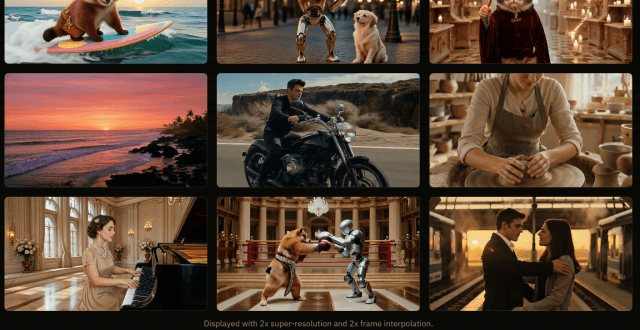
ByteDance released the open-source multimodal model Lance, a native unified system that handles image and video understanding, generation, and editing within a single architecture, according to the project's arXiv paper (arXiv:2605.18678) and GitHub repository. Per the paper and repository, Lance runs with 3B active parameters, was trained from scratch with a staged multi-task recipe on a budget of 128 A100 GPUs, and is published under an Apache-2.0 license. The architecture uses a shared interleaved multimodal sequence and separates understanding and generation through dedicated pathways, the authors write. The project provides downloadable checkpoints and demos via ByteDance Research's GitHub and Hugging Face pages.
What happened
ByteDance published a new open-source multimodal model called Lance, documented in an arXiv paper (arXiv:2605.18678) and released via the project's GitHub and Hugging Face pages. According to those sources, Lance supports image and video understanding, generation, and editing within a single framework and ships with 3B active parameters. The project repository and paper state the model was trained from scratch using a staged multi-task recipe on a budget of 128 A100 GPUs and is distributed under an Apache-2.0 license.
Technical details
Per the arXiv paper and project documentation, Lance implements a shared interleaved multimodal sequence that mixes text tokens, semantic visual tokens, and continuous latent visual tokens. The authors describe two architectural principles: unified context modeling and decoupled capability pathways. The implementation reportedly uses Qwen2.5-VL embeddings for text, a ViT encoder for semantic visual tokens, and a Wan2.2 3D causal VAE encoder for generation-oriented latent visual representations, with spatial and temporal downsampling applied to the latter, according to the paper and project notes.
Benchmarks and claims
According to the arXiv paper, Lance at 3B scale achieves strong results on a mix of image and video generation, image editing, and video understanding benchmarks versus existing open-source unified models. Project demos on the Hugging Face and GitHub pages illustrate examples including text-to-video, multi-turn consistency editing, video question answering, and subject-driven generation.
Practical implications for practitioners
Editorial analysis
Unified multimodal modeling that natively combines both understanding and generation across images and video remains an active research frontier. Many production systems instead link specialist modules for generation and perception; public reporting frames Lance as an attempt to train a single model to span those roles from the start. The choice of a 3B active-parameter footprint and an Apache-2.0 license places emphasis on deployability and permissive reuse compared with larger, closed models.
For teams experimenting with multimodal pipelines, a compact, open-source model that covers captioning, VQA, text-to-image, text-to-video, and editing reduces the initial integration work required to evaluate unified approaches. The documented training budget of 128 A100 GPUs signals a reproducible training scale for well-resourced labs, while the permissive license lowers legal frictions for commercial experimentation.
What to watch
Industry context
Observers should track independent replication of the paper's benchmark claims on public datasets and community ports to inference-efficient runtimes. Also watch for model-card disclosures and safety evaluations from the community, and for integrations or forks that adapt Lance to lower-cost inference (quantization, distilled variants) or to domain-specific datasets.
Key Points
- 1Lance is an open-source unified multimodal model that combines image/video understanding, generation, and editing in one architecture.
- 2At 3B active parameters and trained with 128 A100 GPUs, the project emphasizes efficiency and reproducible training scale for research teams.
- 3Published under Apache-2.0 with downloadable checkpoints, Lance lowers legal and engineering friction for commercial experimentation and prototyping.
Scoring Rationale
A compact, open-source unified model that spans image and video understanding plus generation is a notable research-and-practical step. The 3B scale and permissive Apache-2.0 license increase its relevance for practitioners testing multimodal workflows, though it is not a frontier-scale paradigm shift.
Sources
Public references used for this report.
Practice interview problems based on real data
1,625 SQL & Python problems across 15 industry datasets — the exact type of data you work with.
Try 250 free problems