Building Trades Unions Back AI Data Center Boom
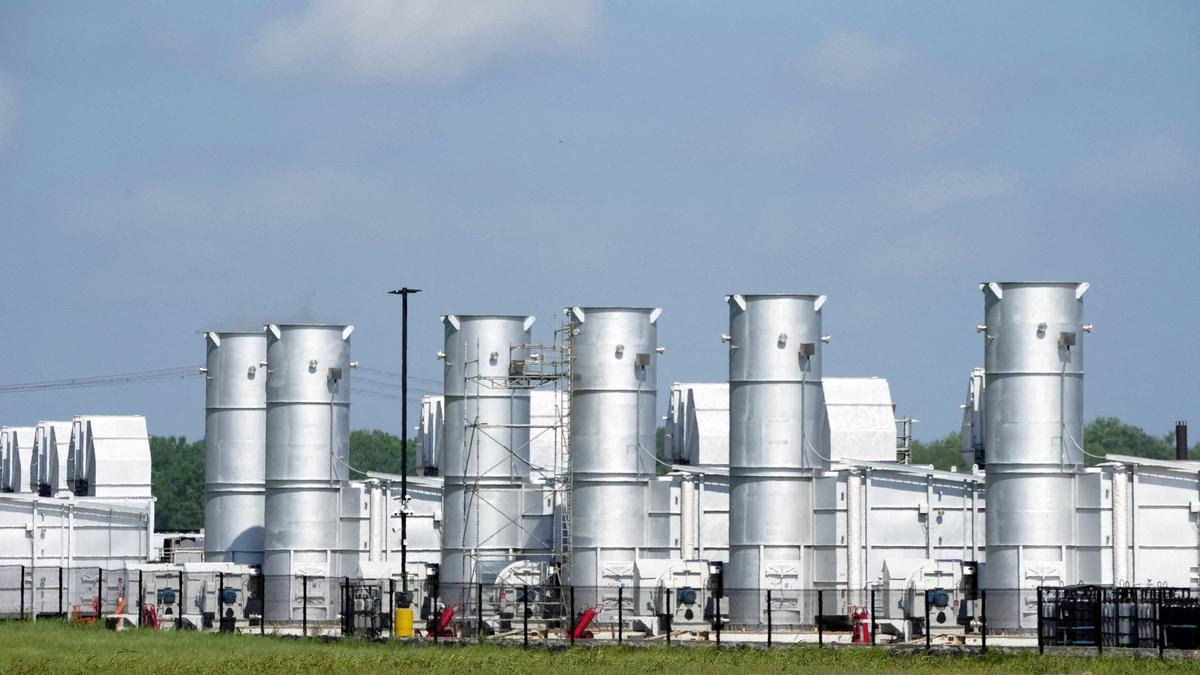
Building trades unions are working on large numbers of AI data center construction projects and expanding training and apprenticeships, according to reporting by the Associated Press. The AP reports unions are aligning publicly with tech companies and tech-friendly government officials, often invoking a national security framing about competition with China. Unions have been active in local debates, responding to community complaints about energy, water use, noise, and tax impacts, and in some states they have helped blunt legislation hostile to data center development, per AP. Axios previously reported that OpenAI has engaged unions, describing partnerships with North America's Building Trades Unions as part of scaling U.S. data center builds. Rob Bair, president of the Pennsylvania Building and Construction Trades Council, is quoted by AP defending data centers for bringing construction jobs.
What happened
Building trades unions are staffing and training for a surge of massive data center projects tied to AI, according to reporting by the Associated Press. Per AP, unions are expanding training centers and apprentice classes as construction man hours rise. AP reports unions have become visible allies of tech companies and tech-friendly officials, using a national security frame about competition with China when defending projects. AP quotes Rob Bair, president of the Pennsylvania Building and Construction Trades Council: "When people say, you know, 'data centers are the root of all evil,' we're just saying, 'look, they do create a hell of a lot of construction jobs, which we live and work in your communities.'"
Technical details
Reporting describes unions engaging in community-facing roles that developers and corporate communications teams often do not, including direct responses to concerns about energy and water use, noise, and local fiscal impacts, per AP. Separately, Axios reported in March that OpenAI has partnered with North America's Building Trades Unions as part of its U.S. data center construction efforts, indicating at least some tech firms are formalizing labor relationships rather than relying solely on nonunion contractors.
Industry context
Editorial analysis: Companies undertaking large infrastructure builds commonly engage local labor organizations to secure skilled crews and to reduce permitting and political friction. Industry observers note that union involvement typically shortens ramp-up for complex builds while changing local political dynamics because unions can mobilize votes and messaging across party lines.
Context and significance
Editorial analysis: The AP frames union support as shifting the politics around AI infrastructure by giving tech firms a blue-collar ally in often contentious local debates. This alignment complicates efforts by some municipalities and state legislatures to restrict data center growth; AP cites instances where unions have helped counter legislative proposals and where governors have vetoed moratoriums, for example in Maine, according to AP reporting on that veto.
What to watch
Editorial analysis: Observers and practitioners should track apprenticeship enrollment and training-center expansions as metrics of labor capacity, filings or announcements of formal labor partnerships (for example the OpenAI-NABTU coverage in Axios), and state or local legislative action on data center siting, permitting, and utility allocation. Those signals will indicate whether union involvement materially accelerates construction pipelines or simply reshapes local negotiations.
Key Points
- 1Unions are supplying skilled labor and expanding apprenticeships to meet booming AI data center construction demand, easing workforce bottlenecks reported by AP.
- 2Union public support gives tech firms a local ally that can blunt restrictive legislation and reframe debates as jobs-versus-nuisance, per AP coverage.
- 3Industry-pattern observation: Formal labor partnerships, like the OpenAI-NABTU reporting by Axios, typically accelerate permit-to-build timelines and alter local political calculations.
Scoring Rationale
The story matters to practitioners because union labor and formal partnerships can materially affect data center construction speed, permitting risk, and local political friction. It is a notable infrastructure and policy development but not a frontier technological breakthrough.
Sources
Public references used for this report.
View 9 more sources
- In the PR battle for AI data centers, tech giants got a blue-collar allyyahoo.com
- Building trades unions emerge as a key ally of tech giants in push for AI data centerswsbtv.com
- In the PR battle for AI data centers, tech giants got a blue-collar allyclickondetroit.com
- Building trades unions emerge as key ally of tech giants in push for ...toledoblade.com
- In the PR battle for AI data centers, tech giants got a blue-collar allykdhnews.com
- Building trades unions emerge as a key ally of tech giants in push for AI data centerswvnews.com
- Building trades unions emerge as a key ally of tech giants in push for AI data centerswtaj.com
- OpenAI bets on union labor to scale AI infrastructure - Axiosaxios.com
- In PR battle for AI data centers, tech giants got blue-collar allylmtribune.com
Practice interview problems based on real data
1,625 SQL & Python problems across 15 industry datasets — the exact type of data you work with.
Try 250 free problems