BlackRock CEO Dismisses AI Bubble, Urges Infrastructure Spending
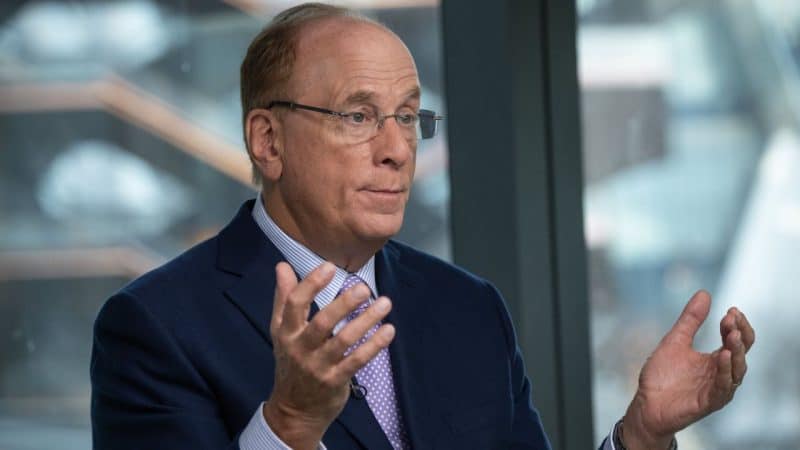
At the World Economic Forum in Davos, BlackRock CEO Larry Fink said "I sincerely believe there is no bubble in the AI space," according to Bloomberg and said "I think there will be big failures, but I don't think we are in a bubble," according to CryptoBriefing. Reporting by CryptoBriefing and Business Insider records Fink urging "hundreds of billions" in AI infrastructure investment and warning that Western economies risk falling behind China without greater cooperation and capital deployment. Fink's comments highlight investor focus on large-scale capital expenditure for data centers, chips, power and cooling, and frame AI investment as both an economic and geopolitical issue rather than a pure market mania.
What happened
Larry Fink spoke at the 2026 World Economic Forum in Davos and said, "I sincerely believe there is no bubble in the AI space," according to Bloomberg. CryptoBriefing records Fink adding, "I think there will be big failures, but I don't think we are in a bubble." Business Insider and CryptoBriefing report Fink called for "hundreds of billions" in AI infrastructure spending and warned that Western economies risk falling behind China if they do not scale investment and cooperate.
Infrastructure framing
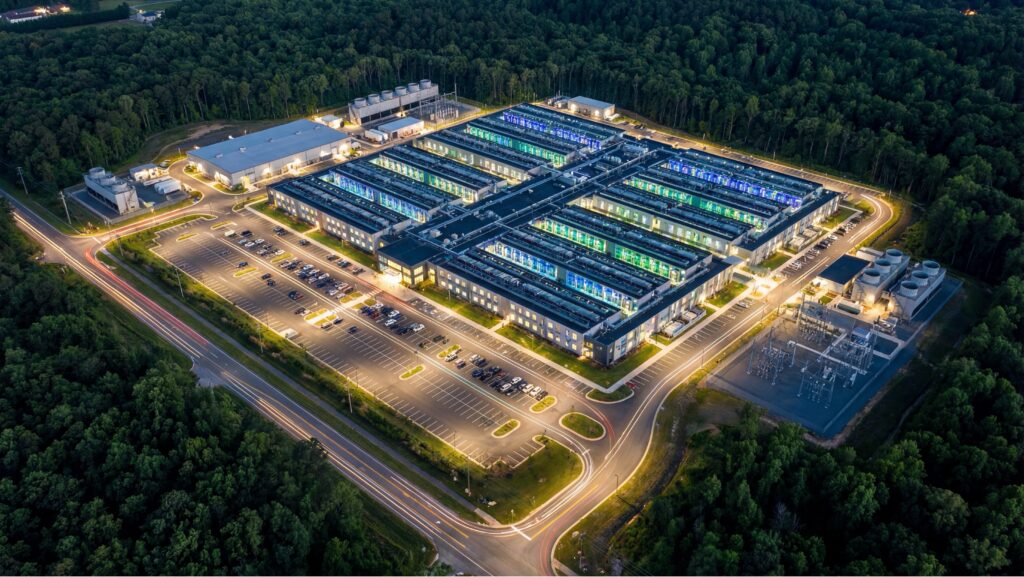
CryptoBriefing notes Fink and coverage at Davos described the AI buildout as requiring physical infrastructure including data centers, chips, power grids, and cooling systems. CryptoBriefing also cites an industry estimate that major cloud providers could spend $200 billion or more on data centers in 2026 and reports BlackRock referenced a $1 trillion-plus opportunity tied to AI infrastructure in its Q1 2026 messaging.
Editorial analysis - technical context
Companies and investors discussing large-scale AI deployments routinely emphasize three cost drivers: compute-capital (GPUs/accelerators), facilities (data centers and power delivery), and operational infrastructure (cooling, networking, resilience). Industry-pattern observations note these areas create long lead times, heavy upfront capex, and dependency on supply chains for specialized chips and power capacity.
Context and significance
Public statements from prominent asset managers often steer capital conversations even when they do not announce specific investment commitments. Observers following the sector should see Fink's messaging as part of a broader debate that frames AI investment not solely as a software bet but as a multi-year infrastructure program with geopolitical stakes, especially in comparisons to China that business coverage highlighted.
What to watch
Track three observable indicators: announcements of large-scale data center builds or GPU farm commitments by hyperscalers and sovereign investors; cross-border industry-government coordinating statements or alliances that address data-sharing and privacy; and capital flows into funds or ETFs specifically earmarked for digital infrastructure. Each indicator is an external sign of whether the "hundreds of billions" in demand Fink referenced is materializing.
Concluding note
Reporting across Bloomberg, Business Insider, and CryptoBriefing shows the core, attributable claims: Fink denied an AI bubble, warned of concentrated benefits if diffusion fails, and urged faster, large-scale infrastructure spending. Editorial analysis here frames those claims within common industry trade-offs between capex intensity and diffusion of economic benefits.
Key Points
- 1Fink told Davos audiences there is no AI bubble, framing AI as an infrastructure-led, capital-intensive expansion rather than a pure market mania.
- 2Industry-pattern observation: large-scale AI deployments shift the bottleneck from algorithms to capex, power, cooling, and specialized chips.
- 3For practitioners and investors, observable signs of momentum are data center builds, hyperscaler GPU commitments, and cross-border policy or funding coordination.
Scoring Rationale
Notable because a major asset-manager CEO reframed AI as an infrastructure investment opportunity with geopolitical framing, which can influence capital flows. The story lacks technical or product breakthroughs, so it rates below frontier-model releases.
Sources
Public references used for this report.
View 4 more sources
- Larry Fink: There's No AI Bubblethinkadvisor.com
- Microsoft CEO Satya Nadella speaks on the fears that has been rattling Wall Street for past many months atimesofindia.indiatimes.com
- This is what BlackRock's Larry Fink said about the AI bubble debate in Davosmalaysia.news.yahoo.com
- BlackRock CEO Larry Fink: I don't believe there is an AI bubbleidnfinancials.com
Practice with real FinTech & Trading data
90 SQL & Python problems · 15 industry datasets
250 free problems · No credit card
See all FinTech & Trading problems