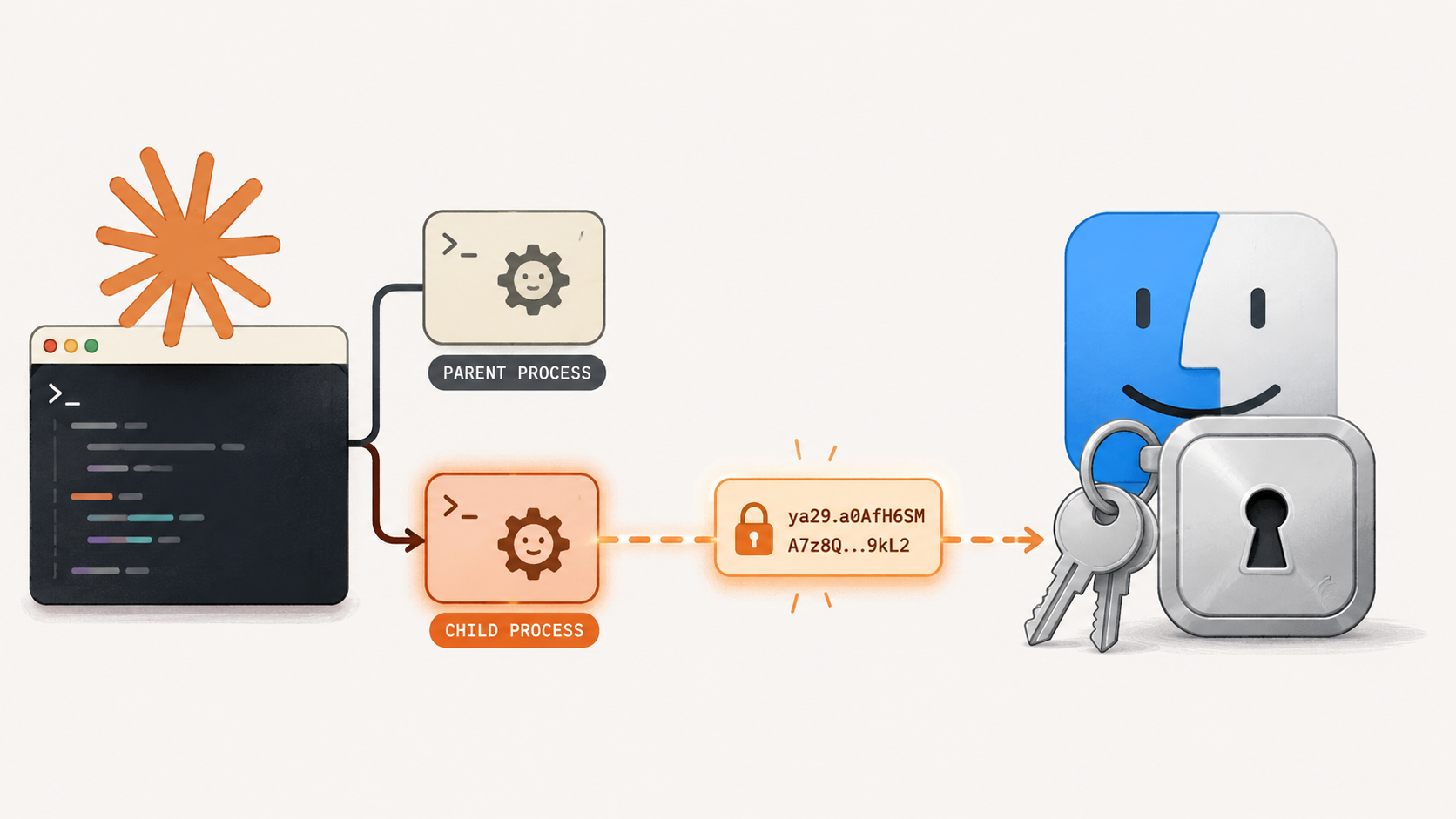
Bit2Watt Paper Tests GPU Workload Risk to Power Grids

Researchers describe Bit2Watt, a CHES 2026 paper on using legitimate GPU workloads to create high-frequency power oscillations in renewable-heavy local grids. In the paper's synchronized worst-case model, 1,000 GPUs on a 1 MW system with 90% distributed energy resources drove current distortion to 46.8% and produced a negative damping ratio. The work combines physical GPU and inverter tests with simulations; it does not document a real-world grid outage.
Researchers Zhouhao Ji, Kaikai Pan and Wenyuan Xu submitted Bit2Watt on July 7, 2026, and arXiv lists the work as accepted by CHES 2026. The paper examines whether a cloud tenant could use ordinary GPU workloads to create deliberately timed power fluctuations that travel beyond the server and affect data-center electrical equipment or a connected grid.
The study presents a proof of concept and simulation-based risk analysis, not an in-the-wild attack or a reported power outage. That distinction matters because its largest grid effects depend on an explicitly synchronized worst-case aggregation model.
How the proposed attack works
Bit2Watt's threat model does not require compromising grid controls, facility sensors or cloud-management software. Instead, a tenant alternates GPU activity to modulate electricity demand at high frequency. Because large GPU clusters sit behind power electronics and may share local infrastructure with inverter-based distributed energy resources, those workload changes can become an electrical disturbance.
The authors combine impedance analysis and power-system simulations with physical tests on GPUs and grid-connected photovoltaic inverters. They argue that routine cloud and facility telemetry may miss the most distinctive behavior because it is concentrated in higher-frequency components than common workload or power dashboards emphasize.
What the reported numbers mean
In the paper's synchronized worst-case scenario, an aggregate of 1,000 GPUs is modeled in a 1 MW local power system with 90% distributed energy resources. The authors report current total harmonic distortion of 46.8% and a damping ratio of -0.27, indicating an unstable modeled response. They also simulate how severe power-quality degradation could trigger protection systems and, in an extreme transmission-scale case, contribute to cascading failures.
Those results should not be read as evidence that 1,000 physical GPUs caused a real grid failure. The experiments validate workload-driven power modulation and inverter interaction at smaller scale; the broader grid consequences come from analysis and simulation. Independent coverage from The Register and CyberInsider describes the same boundary between the demonstrated mechanism and the modeled impact.
The operational signal
For data-center and cloud operators, the paper suggests that workload security and power-quality monitoring can no longer be treated as separate domains. A useful response would combine tenant-level workload controls, high-frequency electrical telemetry, anomaly detection and coordination with facility or grid operators.
The immediate value is a new threat model to test, not proof of an active campaign. Reproduction across different GPU generations, power architectures and renewable-energy mixes will determine how broadly the risk applies.
Key Points
- 1Bit2Watt proposes that an ordinary cloud tenant could modulate GPU workloads to create electrical disturbances without compromising grid-control systems.
- 2The headline 1,000-GPU result is a synchronized worst-case model: a 1 MW system with 90% distributed energy resources reached 46.8% current distortion and a -0.27 damping ratio.
- 3Physical GPU and inverter tests support the workload-to-power mechanism, while transmission-scale failures remain simulation results rather than a documented real-world outage.
Scoring Rationale
The CHES 2026 paper identifies a novel cross-layer risk linking shared GPU workloads, data-center power delivery and DER-heavy grids. Its physical experiments support the modulation mechanism, while the largest grid effects remain synchronized worst-case simulations, making the work important but not evidence of an in-the-wild incident.
Sources
Primary source and supporting public references used for this report.
Practice with real Telecom & ISP data
90 SQL & Python problems · 15 industry datasets
250 free problems · No credit card
See all Telecom & ISP problems