Bernie Sanders Proposes One-Time 50% AI Share Tax
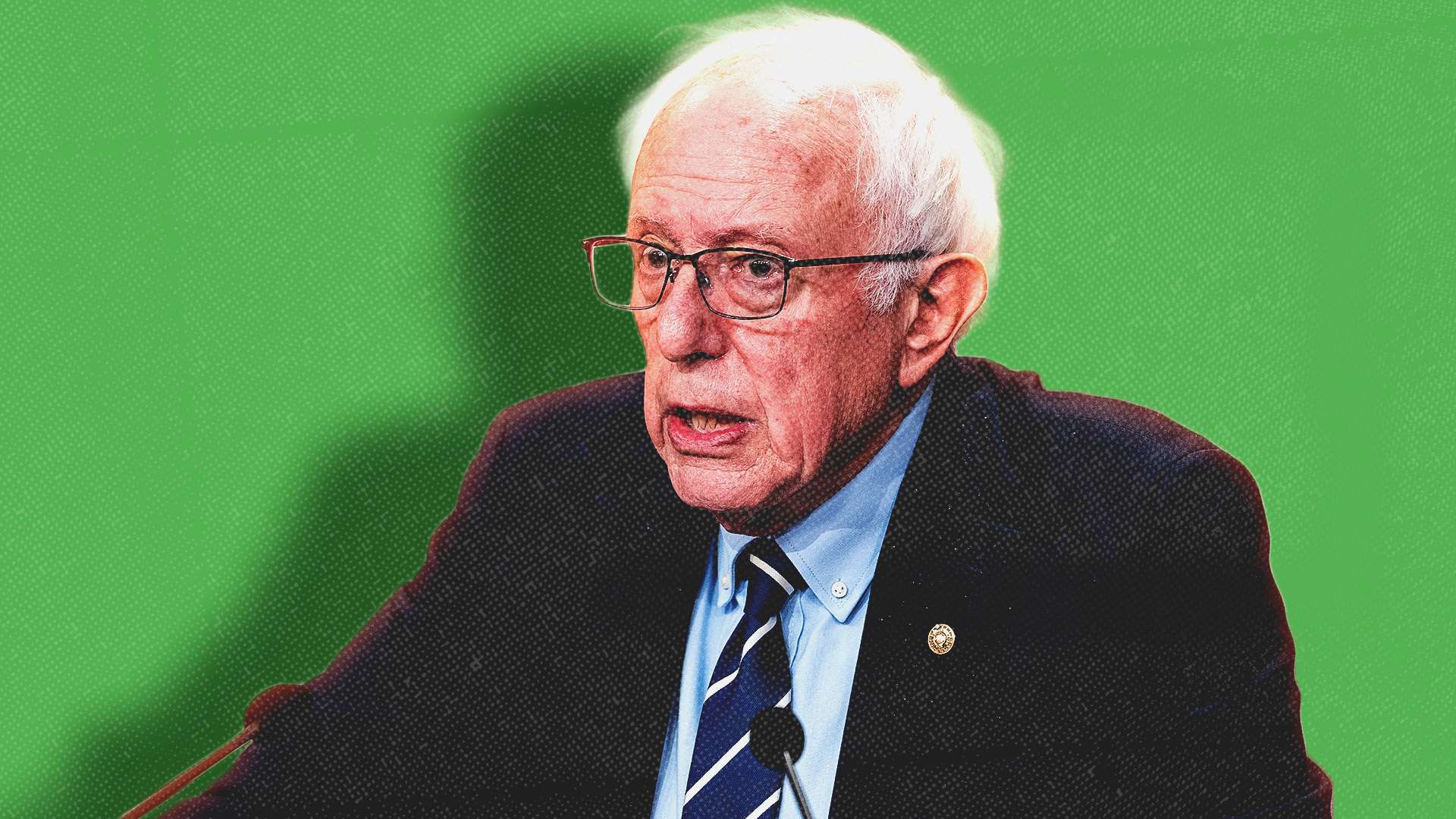
Senator Bernie Sanders introduced the American AI Sovereign Wealth Fund Act on June 18, 2026, which would impose a one-time 50 percent tax, paid in stock, on AI companies with more than $200 million in annual AI-related revenue, funding a public sovereign wealth fund Sanders estimates could start with roughly $7 trillion in assets. The bill creates an Independent Commission for Democratic AI, seven members nominated by the President and confirmed by the Senate, to hold voting shares, block harmful corporate decisions, and direct 5 percent of the fund's value annually toward citizen dividends and health care, education, and housing programs. For AI practitioners, the most consequential detail is the bill's structural-separation requirement, which would force companies running both AI and non-AI business lines to split them so the public stake applies only to the AI business.
The headline "50 percent AI tax" understates what Sanders actually filed: this is now formal legislation, not just an op-ed proposal, with a defined revenue threshold, a named governance body, and a structural-separation clause aimed squarely at diversified tech conglomerates. For practitioners at large AI labs embedded inside bigger companies - cloud divisions, ad-tech arms, hardware units - the structural-separation requirement is the detail worth tracking, since it would force a corporate split before any tax liability attaches.
What happened
Senator Bernie Sanders introduced the American AI Sovereign Wealth Fund Act on June 18, 2026, following a New York Times op-ed in which he argued AI is "built on our collective intelligence." The bill imposes a one-time 50 percent tax, payable in stock, on companies with more than $200 million in annual AI-related receipts, according to Sanders' own office. Sanders estimates the resulting fund would begin with approximately $7 trillion in assets, with 5 percent of its value distributed annually, split between direct payments to Americans (an estimated $1,000 per person in early dividends) and funding for health care, education, housing, and environmental programs.
Policy context
The bill creates an Independent Commission for Democratic AI to manage the fund, composed of seven members nominated by the President and confirmed by the Senate from a bipartisan list supplied by Congress. The commission would hold voting shares in the taxed companies and could use them to block decisions it judges harmful to the public, and to push for policies it deems beneficial. Companies operating both AI and non-AI lines of business would be required to undergo "structural separation," splitting the businesses so the government's ownership stake applies only to the AI unit.
Editorial analysis
Converting private equity into government-held shares at this scale has no recent precedent in U.S. tech policy, and the bill faces substantial hurdles: valuing privately held AI subsidiaries, defining what counts as "AI-related receipts," and surviving likely constitutional challenges over takings and equal protection. Reason's opinion column, reacting to Sanders' earlier op-ed, called the proposal "the worst idea Bernie Sanders has ever had," while Roll Call and Forbes have covered the formally introduced bill primarily as a legislative long-shot rather than a near-term regulatory risk. For practitioners, the proposal is currently a policy marker rather than an operational constraint, but the structural-separation language, if it gains traction in any revised form, would matter well before a 50 percent tax rate ever would.
What to watch
- •Whether the bill attracts co-sponsors or committee movement beyond its introduction.
- •How AI companies with over $200 million in annual AI revenue and mixed business lines (cloud providers, ad-tech firms, hardware makers) respond publicly.
- •Whether any valuation methodology or "AI-related receipts" definition is clarified in committee markup.
Key Points
- 1Sanders introduced formal legislation, the American AI Sovereign Wealth Fund Act, with a defined $200 million revenue threshold and a named governance commission.
- 2The bill's structural-separation clause would force companies running both AI and non-AI business lines to split them before any tax liability applies.
- 3A seven-member Independent Commission for Democratic AI would hold voting shares and could block corporate decisions judged harmful to the public.
Scoring Rationale
This moved from an op-ed proposal to formally introduced federal legislation with defined mechanics (tax threshold, governance commission, structural separation), which is more concrete than typical policy commentary, but passage remains a long shot and there is no near-term operational impact for AI teams.
Sources
Public references used for this report.
Practice interview problems based on real data
1,625 SQL & Python problems across 15 industry datasets — the exact type of data you work with.
Try 250 free problems