Beacon Biosignals develops sleep EEG brain-mapping model
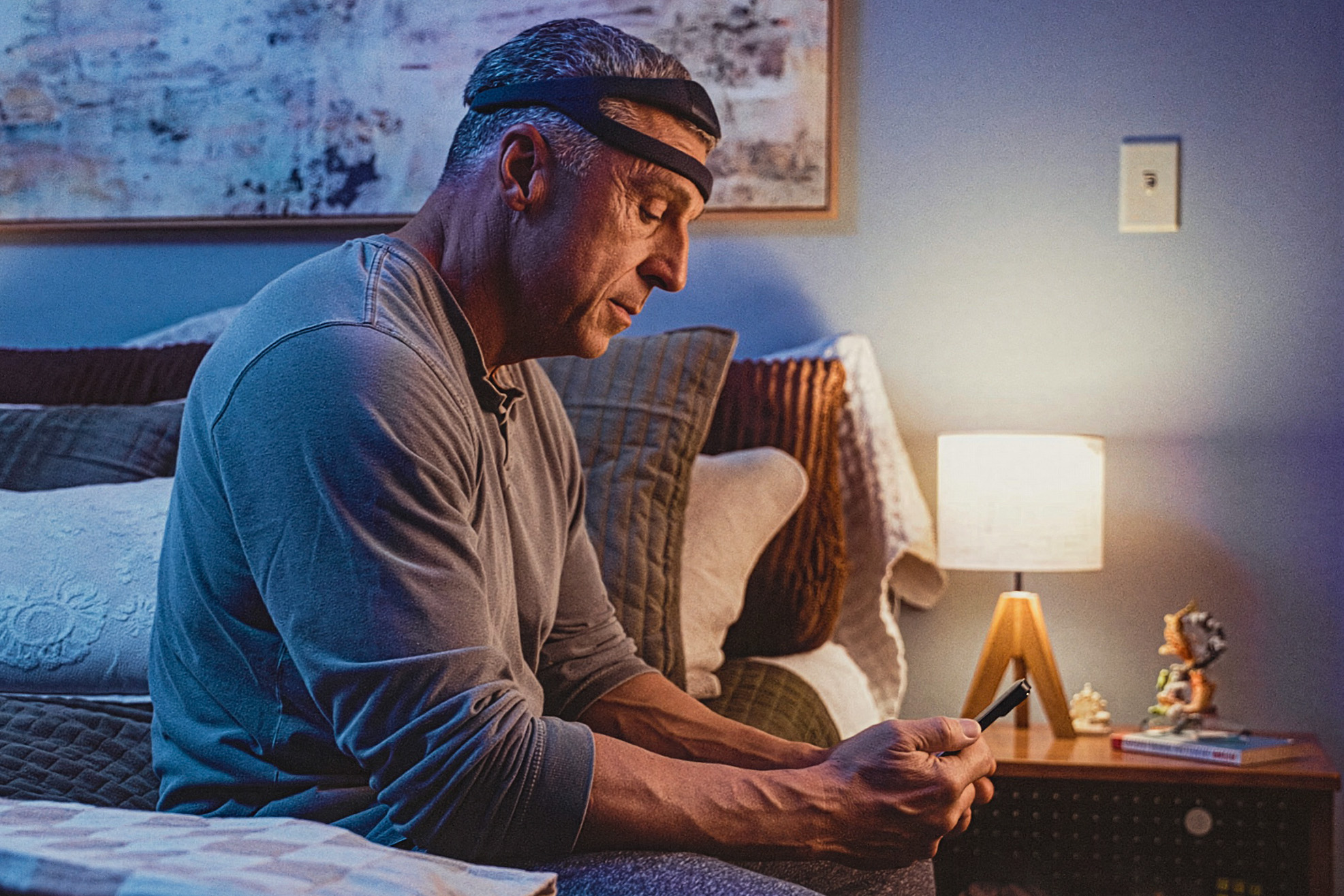
Beacon Biosignals, founded by Jake Donoghue PhD '19 and former MIT researcher Jarrett Revels, is developing an AI-driven platform to map brain activity during sleep, MIT News reports. The company has created a lightweight headband that uses EEG to record brain signals while people sleep at home, and it processes those data with machine-learning algorithms to monitor treatment effects, surface signs of disease progression, and generate patient cohorts for clinical trials, MIT News reports. MIT News also reports that Beacon partners with pharmaceutical companies to accelerate clinical engagement. "There's a step-change in what becomes possible when you remove the sleep lab and bring clinical-grade EEG into the home," Donoghue said, per MIT News.
What happened
Beacon Biosignals, founded by Jake Donoghue PhD '19 and former MIT researcher Jarrett Revels, is building an AI-driven platform that maps brain activity during sleep, MIT News reports. Per MIT News, the company developed a lightweight headband that uses EEG to measure brain activity while people sleep at home. Those recordings are processed with machine-learning algorithms to monitor effects of novel treatments, identify signals of disease progression, and create patient cohorts for clinical trials, MIT News reports. MIT News reports Beacon partners with pharmaceutical companies to accelerate its path to patients. "There's a step-change in what becomes possible when you remove the sleep lab and bring clinical-grade EEG into the home," Donoghue said, per MIT News.
Technical details
Per MIT News, the device is a wearable headband capturing EEG during normal sleep routines rather than in laboratory settings. The article describes the data pipeline at a high level: nightly EEG collection at home, followed by ML processing to extract biomarkers for diagnostics, longitudinal monitoring, and cohort selection for trials. The report does not publish sensor specifications, sampling rates, validation metrics, or regulatory status.
Editorial analysis - technical context
Industry-pattern observations: Bringing clinical-grade EEG into the home can substantially increase longitudinal data density, which is valuable for tracking slow-moving neurological changes and for powering trial enrichment. Companies doing similar at-home neurophysiology work typically must address signal quality, artifact rejection, device placement variability, and model generalization across diverse and uncontrolled environments. Independent validation against facility-grade polysomnography and peer-reviewed biomarker performance will be central to convincing clinicians and regulators.
What to watch
Indicators observers should follow include published validation studies that compare the headband to clinical EEG, the specifics of any pharmaceutical collaborations reported publicly, and steps toward regulatory clearance or clinical-trial use. Data governance, privacy protections, and how training cohorts are sourced and labeled will also influence adoption and research value.
Key Points
- 1Home EEG plus ML can convert overnight sleep into scalable, longitudinal brain data useful for monitoring disease and trial recruitment.
- 2Lightweight headbands reduce participant burden compared with lab polysomnography, speeding data collection but raising signal-quality and generalization challenges.
- 3Independent validation, regulatory progress, and transparent data governance will determine clinical adoption and pharma trial value.
Scoring Rationale
The story is notable for practitioners because at-home, continuous EEG could supply much larger longitudinal datasets for neurology research and clinical trials. Impact depends on sensor fidelity, peer-reviewed validation, and regulatory acceptance, so the current announcement is important but not yet transformative.
Sources
Public references used for this report.
Practice with real Health & Insurance data
90 SQL & Python problems · 15 industry datasets
250 free problems · No credit card
See all Health & Insurance problems