Baidu Begins Apollo Go Robotaxi Tests in London
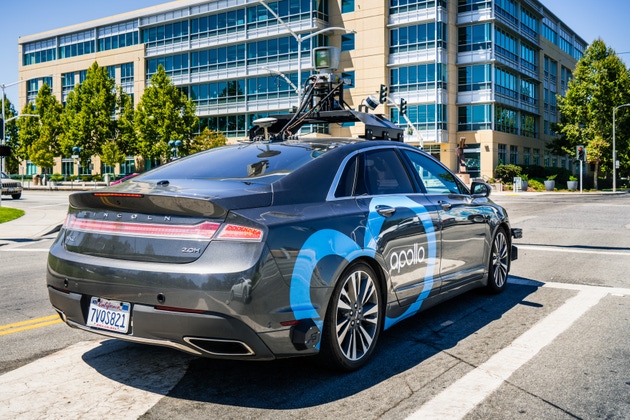
Baidu said its Apollo Go RT6 autonomous vehicles began road testing in London's Brent borough on July 28 with safety operators aboard. The company and Freenow by Lyft plan to invite public riders in 2027, subject to regulatory approval, making this a supervised validation program rather than a commercial driverless launch.
Baidu began road testing its Apollo Go RT6 autonomous vehicles in London on July 28, 2026, with Freenow by Lyft. The first trials are taking place in Brent with safety operators aboard and cover urban and suburban driving environments, according to Baidu's announcement.
Testing before passenger service
The companies say they plan to invite public riders in 2027, subject to regulatory approvals. They did not provide a fleet size, testing mileage, route map or a more specific passenger-launch date in the retrieved announcement.
That makes the current milestone a supervised road-testing program, not a commercial driverless service. Safety operators remain in the vehicles while the partners gather evidence about how the system behaves in London's road environment.
Baidu supplies the sixth-generation RT6 vehicles and autonomous-driving technology. Freenow, the mobility platform acquired by Lyft in 2025, contributes local operating experience and would place the vehicles within a network that also includes taxis and private-hire vehicles.
The London context
The program follows a Baidu-Lyft partnership announced in 2025 for European deployment. At that time, Associated Press reported that Lyft expected to begin London testing with dozens of vehicles and scale later, subject to approval. The newly retrieved July 28 announcement confirms that road testing has now begun, but it does not say that the earlier fleet target has been reached.
London is also hosting or preparing other autonomous-vehicle programs. That competitive context matters, but it does not establish equivalence between operators: testing scope, onboard supervision, operating domains and approval status can differ substantially.
What practitioners should watch
For autonomous-vehicle teams, the useful evidence will come after the launch announcement: disclosed intervention rates, operating-domain boundaries, testing mileage, regulator decisions and the conditions attached to any passenger service. None of those measures was supplied for the Brent program in the retrieved sources.
The current verified event is therefore narrow but concrete. Apollo Go vehicles are conducting supervised road tests in Brent, and a 2027 public-rider target remains conditional on regulatory approval.
Key Points
- 1Baidu said Apollo Go RT6 vehicles began supervised road testing in Brent on July 28, 2026.
- 2The partners target public rides in 2027, but regulatory approval remains a stated condition.
- 3The announcement did not disclose fleet size, mileage, route boundaries or intervention data for the London tests.
Scoring Rationale
The London tests extend Baidu's Apollo Go program into a prominent European autonomous-mobility market. The event is operationally relevant but remains a supervised, approval-dependent pilot without disclosed fleet or safety-performance metrics.
Sources
Primary source and supporting public references used for this report.
Practice with real Ride-Hailing data
90 SQL & Python problems · 15 industry datasets
250 free problems · No credit card
See all Ride-Hailing problems