Author Replaces NotebookLM With Self-Hosted Alternative
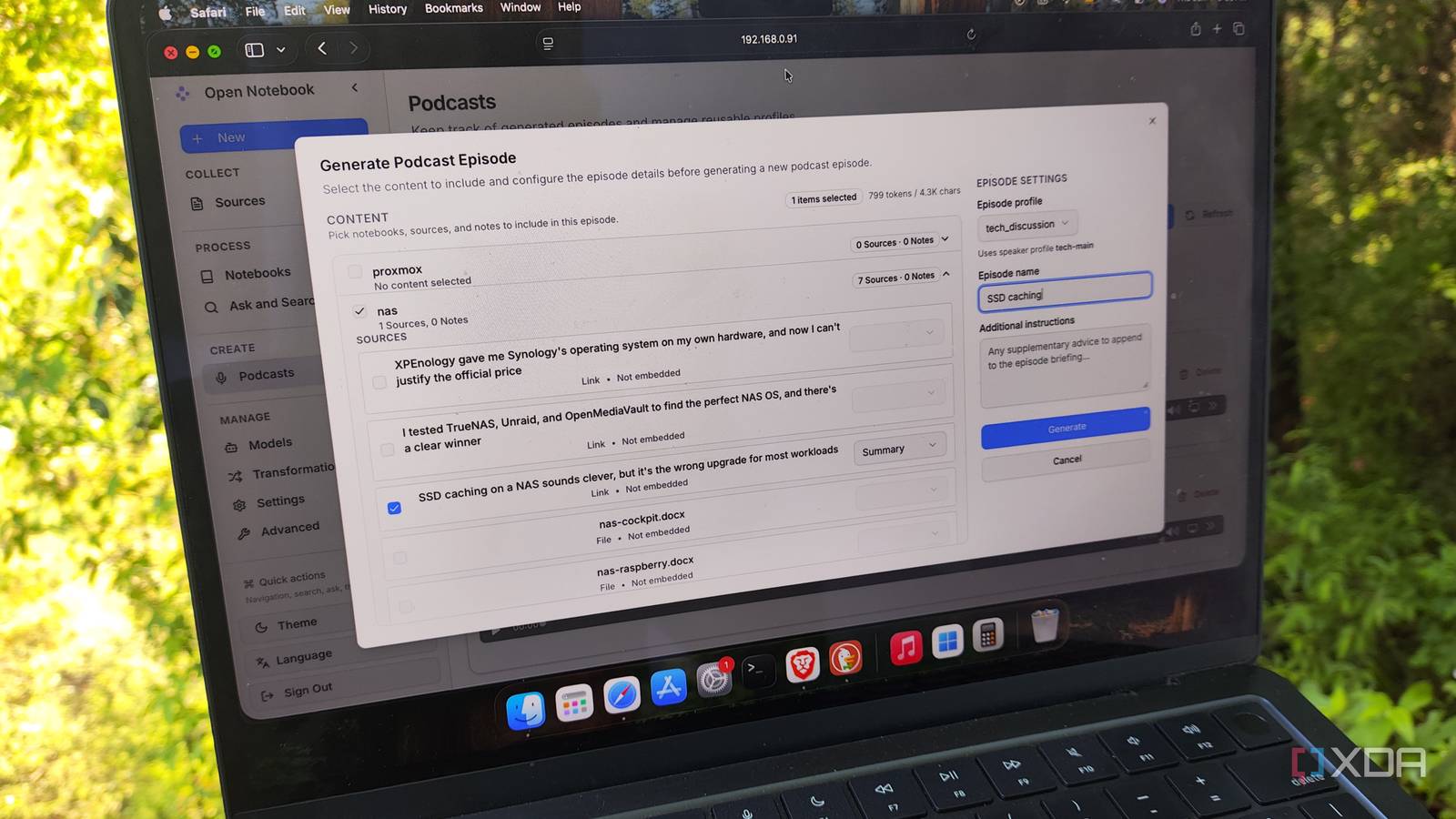
According to a XDA Developers hands-on review by Mahnoor Faisal, the author installed Docker, set up the open-source project Open Notebook on local hardware, and used it as a replacement for NotebookLM for one week. Faisal reports that, despite some rough edges and extra configuration work, Open Notebook was "good enough to make me hesitate" to return to NotebookLM, per the article. Self-hosted notebook replacements are reaching functional parity for many casual workflows, but they still impose operational overhead that may limit adoption outside technically oriented users.
What happened
Per a XDA Developers hands-on article by Mahnoor Faisal, the author installed Docker, configured an open-source project called Open Notebook, and used it in place of NotebookLM for an entire week. The article reports that the author had long been hesitant about self-hosting but successfully set up and ran Open Notebook locally. The author characterizes the experience as having "a few rough edges" while concluding the tool was "good enough to make me hesitate" about returning to NotebookLM.
Editorial analysis - technical context
Self-hosted notebook systems typically require containerisation, networking configuration, and environment-variable management. The article documents encountering Docker containers, reverse-proxy concepts, and configuration steps during setup. Industry-pattern observations: projects that rely on local model execution or self-hosted orchestration usually trade managed-service convenience for data locality and configurability; this raises ops and maintenance costs for practitioners who do not already run containerised infrastructure.
Context and significance
Open-source, self-hosted alternatives matter to practitioners focused on data control, privacy, and offline workflows. Experiences like the one reported by XDA show those alternatives are closing functional gaps with cloud-hosted notebook assistants for everyday note summarization and retrieval tasks, while still lagging in polish and seamless model updates that managed offerings provide.
What to watch
For practitioners and teams evaluating self-hosting, monitor three indicators
improvements in installer/UX flows that reduce Docker and reverse-proxy friction; broader community plugins and model compatibility that expand capabilities; and the emergence of managed self-hosting or hybrid offerings that aim to reduce maintenance burden without surrendering local data control. Observers should also compare total cost of ownership including ops time against managed NotebookLM subscriptions.
Practical takeaway
Editorial analysis
Hands-on trials like this one are useful signals that self-hosted notebook alternatives are viable for many workflows, but organisations should weigh operational trade-offs and upgrade paths before replacing managed assistants in production environments.
Key Points
- 1Open-source, self-hosted notebooks can match core NotebookLM workflows for many users while retaining local-data control.
- 2Docker, reverse proxies, and environment-variable configuration remain the main adoption friction for nontechnical users.
- 3Practitioners gain privacy and offline capability with self-hosting but accept higher maintenance and model-update overhead.
Scoring Rationale
Hands-on consumer-tech blog review of a self-hosted NotebookLM alternative. Useful practitioner signal that open-source tools are reaching functional parity for everyday notebook workflows, but limited to a single personal trial with no technical benchmarks or broad adoption evidence.
Sources
Primary source and supporting public references used for this report.
Practice interview problems based on real data
1,625 SQL & Python problems across 15 industry datasets — the exact type of data you work with.
Try 250 free problems