Astropad Introduces Workbench Remote Desktop for AI Agents
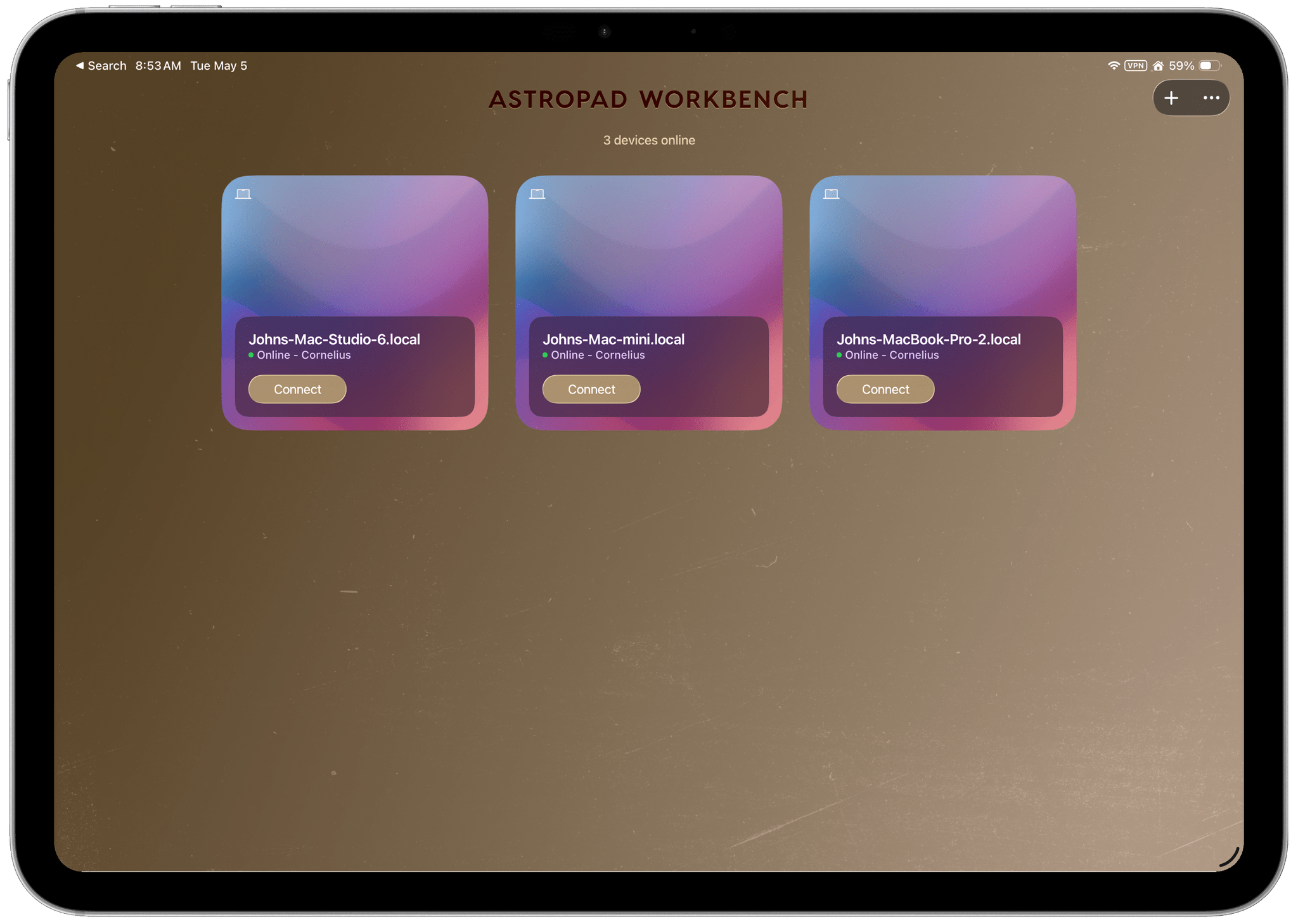
Astropad introduced Workbench, a remote desktop app for Mac, iPhone, and iPad designed to monitor and interact with long-running AI workflows, according to Astropad's product page and reporting by TechCrunch, AppleInsider, and 9to5Mac. Workbench uses Astropad's proprietary Liquid streaming protocol for low-latency, high-fidelity Retina visuals and supports voice dictation, keyboard, Apple Pencil, and touch input, per TechCrunch and 9to5Mac. The app consolidates multiple displays into a unified view and offers a device chooser for switching between remote Macs, TechCrunch reports. Trial access is free for 20 minutes per day, with subscription tiers at $10/month or $50/year, reported by 9to5Mac. TechCrunch includes a direct quote from CEO Matt Ronge on the product motivation.
What happened
Astropad introduced Workbench, a remote desktop system for Mac, iPhone, and iPad, according to Astropad's product page and coverage by TechCrunch, AppleInsider, and 9to5Mac. Per Astropad's blog post and product page, Workbench is framed for supervising and intervening in long-running AI workflows running on dedicated Macs. TechCrunch reports that CEO Matt Ronge said, "We have heavily adopted AI at Astropad, and we've been using agents. And sometimes, you have an agent running on a long task, and you want to check on it." 9to5Mac and AppleInsider report that Workbench uses Astropad's proprietary Liquid streaming engine to deliver low-latency, perceptually lossless Retina visuals.
Technical details
Astropad's product page and reporting by 9to5Mac describe the app as supporting native input methods including voice dictation, keyboard input, Apple Pencil, and touch, and as combining multiple remote displays into a single unified view with a mini-map for navigation. 9to5Mac reports that Workbench requires iOS 26 and macOS 15 or newer, supports Intel and Apple silicon Macs with a recommendation for Apple silicon, and uses end-to-end AES-256 encryption. TechCrunch and AppleInsider note that the Liquid protocol is the same core technology used in Astropad's Luna Display and Astropad Studio, and that it is intended to preserve color and responsiveness at high resolutions.
Editorial analysis - technical context
Industry-pattern observations: Low-latency, high-fidelity remote streaming is becoming a distinct product requirement as developers run on-device AI workloads that need occasional visual supervision. Developers running agents on headless or shelf machines often use text-based channels and SSH for routine control; reporting frames visual remote control as complementary when dialogs, approvals, or visual verification are required. The inclusion of voice and touch inputs aligns with a broader shift toward mobile-first operations for monitoring automation and agent workflows.
Context and significance
Coverage from TechCrunch, AppleInsider, and MacStories places Workbench in a growing ecosystem where consumer Mac hardware like the Mac mini is repurposed as low-cost, always-on compute for personal and developer AI tasks. Astropad and other vendors are responding with tooling that emphasizes monitoring and quick intervention rather than traditional help-desk use cases. Reported freemium pricing and short trial windows, as noted by 9to5Mac, follow a consumerized model for developer tooling that can lower friction for testing in small labs or home setups.
What to watch
For practitioners
observe latency and fidelity in real-world agent supervision tasks, particularly when remote debugging requires pixel-accurate views or color-critical inspection. Also watch compatibility with common agent orchestration setups and whether integrations emerge for status reporting or lightweight alerting. Finally, adoption signals to monitor include community guides or tutorials showing Workbench in workflows with tools such as OpenClaw and other Mac-based agent runners, which Astropad's blog and third-party reporting reference when describing the use case.
Key Points
- 1High-fidelity, low-latency streaming addresses a specific supervision gap for long-running on-device AI agents, enabling visual interventions when text interfaces fail.
- 2Mobile-first remote control shifts occasional supervision workflows from SSH and chat platforms to interactive visual sessions on iPhone and iPad.
- 3Freemium trial plus low-cost subscription mirrors consumerized developer tools, lowering adoption friction for small labs and hobbyist agent deployments.
Scoring Rationale
This is a notable product launch for practitioners running on-device or headless Mac AI workloads because it targets supervision and intervention use cases. The change is not paradigm shifting but useful for developers and hobbyists running agents on Mac minis; adoption and technical performance will determine broader impact.
Sources
Public references used for this report.
View 4 more sources
- Astropad unveils Workbench for Mac: 'Remote desktop ... - 9to5Mac9to5mac.com
- Astropad’s Workbench reimagines remote desktop for AI agents, not IT supporttech.yahoo.com
- Astropad Workbench Lets You Remotely Control Your Mac and AI ...macrumors.com
- Astropad's Workbench turns iPhones into AI agent control centerstechbuzz.ai
Practice with real Ad Tech data
90 SQL & Python problems · 15 industry datasets
250 free problems · No credit card
See all Ad Tech problems