Archaeologists Discover 120,000-Year Human Footprints In Arabia
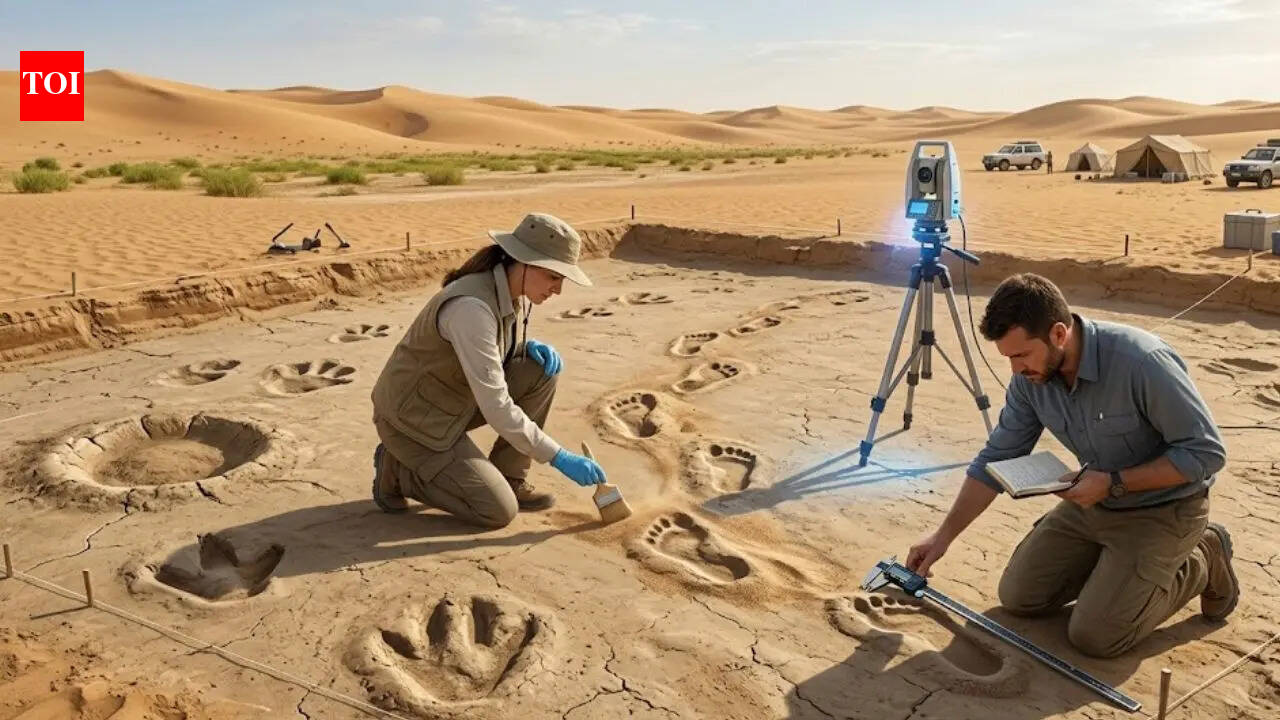
Archaeologists from the Max Planck Institute and Saudi Ministry of Culture report 120,000-year-old human footprints at Alathar in the Nefud Desert, published in Science Advances on April 2, 2026. Researchers used optically stimulated luminescence (OSL) dating to establish the chronology and document coexisting Pleistocene megafauna. The find provides the oldest dated Homo sapiens evidence on the Arabian Peninsula and suggests inland migration corridors during the Last Interglacial.
Key Points
- 1Document footprints at Alathar dated to 120,000 years using OSL, earliest Homo sapiens in Arabia
- 2Show Arabia was Green Arabia during Last Interglacial, offering lakes and corridors for migration
- 3Indicate earlier inland dispersals from Africa, implying multiple migration routes beyond coastal pathways
Scoring Rationale
Peer-reviewed Science Advances publication with robust OSL dating raises novelty and credibility; scope affects human-dispersal models. Score reduced because the topic is outside core AI/ML/DS relevance despite high scientific importance.
Practice interview problems based on real data
1,625 SQL & Python problems across 15 industry datasets — the exact type of data you work with.
Try 250 free problems