Amazon Adds AI-Generated Image Search To Shopping
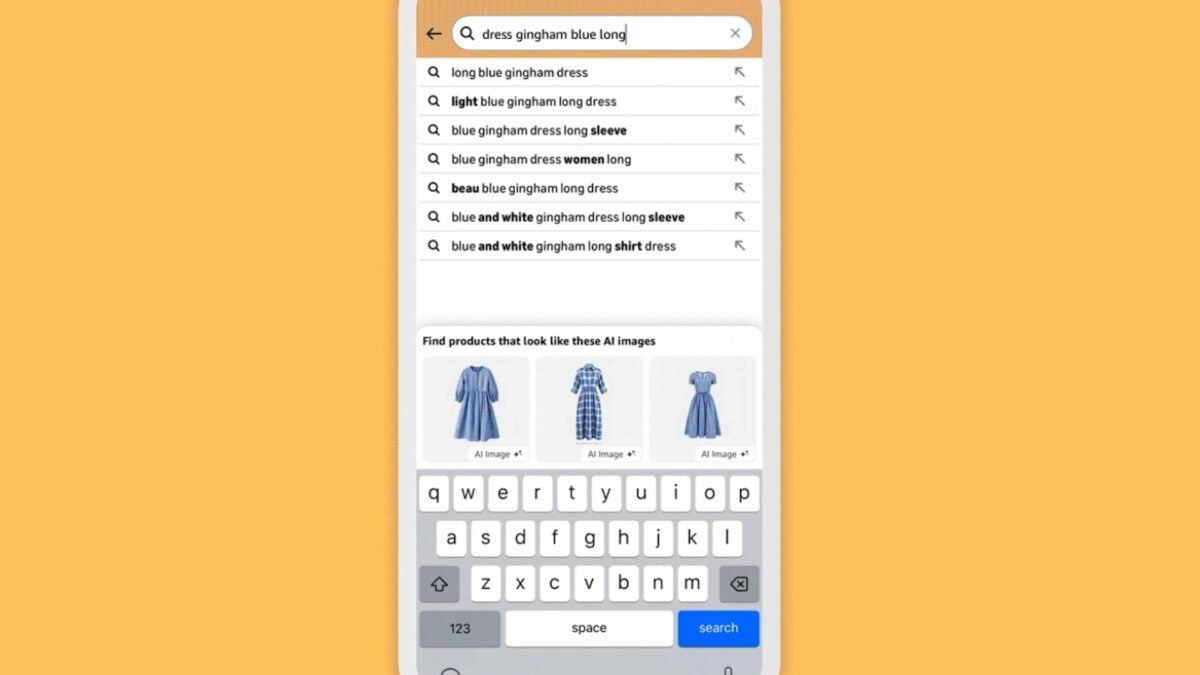
Amazon is rolling out a generative-AI feature in its Shopping app that creates product images from vague text descriptions, helping shoppers find items when they cannot recall a product name, according to Gizmodo and TechCrunch. As a shopper types descriptive language such as color, texture, or pattern, AI-generated images take shape in the search suggestions and refine with each word; the feature is live for U.S. customers on iOS and Android, alongside a related "shop by style" option that suggests outfit collages. Amazon's blog says its shopping assistant gained more than 50 technical enhancements and routes queries across models via Amazon Bedrock, including Claude Sonnet, Amazon Nova, and a custom model trained on Amazon product data. CNET reports Amazon is consolidating assistants, replacing Rufus with Alexa for Shopping, which VP of conversational shopping Rajiv Mehta described as "a personal shopper who already knows you." Several outlets questioned the value and trust implications of surfacing AI-generated images of products that may not match real listings.
What happened
Gizmodo and TechCrunch report Amazon is introducing a generative-AI search tool in the Amazon Shopping app that generates product images from vague, user-provided descriptions to help locate items when customers cannot remember product names. The images appear in the search suggestions and refine with each added word; the feature is live for U.S. users on iOS and Android. Amazon also added a "shop by style" feature that suggests outfit collages, and, per Engadget, expanded interactive audio summaries with real-time Q&A on its "Hear the highlights" feature.
Technical details
According to Amazon's corporate blog, the shopping assistant received more than 50 technical upgrades and uses a mix of models routed through Amazon Bedrock, including Claude Sonnet, Amazon Nova, and a custom model built from Amazon's product catalog, reviews, and Q&A content. The blog states the assistant uses retrieval-augmented generation and a real-time router to select models optimized for capability, latency, and answer quality.
Assistant consolidation
CNET reports Amazon is consolidating its shopping assistants by replacing Rufus with Alexa for Shopping, which will be free to all signed-in U.S. customers. CNET quotes Rajiv Mehta, vice president of conversational shopping, describing it as "a personal shopper who already knows you and remembers your preferences, your past purchases, and your conversations."
Industry context
Editorial analysis
retailers are increasingly layering generative and multimodal models into core discovery flows to shorten the path from intent to purchase. Amazon's described pattern, model routing plus RAG across heterogeneous model suppliers, mirrors a broader industry approach to trading off latency, accuracy, and content sourcing. Reception was mixed: several outlets questioned the usefulness and trust implications of showing AI-generated images of products that may not correspond to specific real listings.
What to watch
Monitor how Amazon measures effects on search conversion and discovery, whether generated images are labeled as synthetic in the UI, and any privacy adjustments tied to the cross-device data used by Alexa for Shopping, plus third-party and regulatory responses to synthetic-media consumer features.
Key Points
- 1Amazon now generates product images from vague text in the Shopping app, plus a "shop by style" collage feature, to reduce friction when users cannot recall product names.
- 2The shopping assistant routes queries across models via Amazon Bedrock, using Claude Sonnet, Amazon Nova, and a custom store-trained model with RAG to balance capability and latency.
- 3Industry pattern: large retailers pair multimodal generation with model routing to speed discovery, but face trust, labeling, and hallucination tradeoffs that reviewers flagged.
Scoring Rationale
A notable product rollout putting multimodal generative models and model routing into a consumer app at scale. It matters to engineers building search and recommendation systems, but it is a feature launch rather than a frontier model or paradigm shift, and it drew mixed reviews on usefulness and trust.
Sources
Public references used for this report.

Practice with real Retail & eCommerce data
90 SQL & Python problems · 15 industry datasets
250 free problems · No credit card
See all Retail & eCommerce problems