Allies Test Drone Swarm Interoperability in UK Experiment
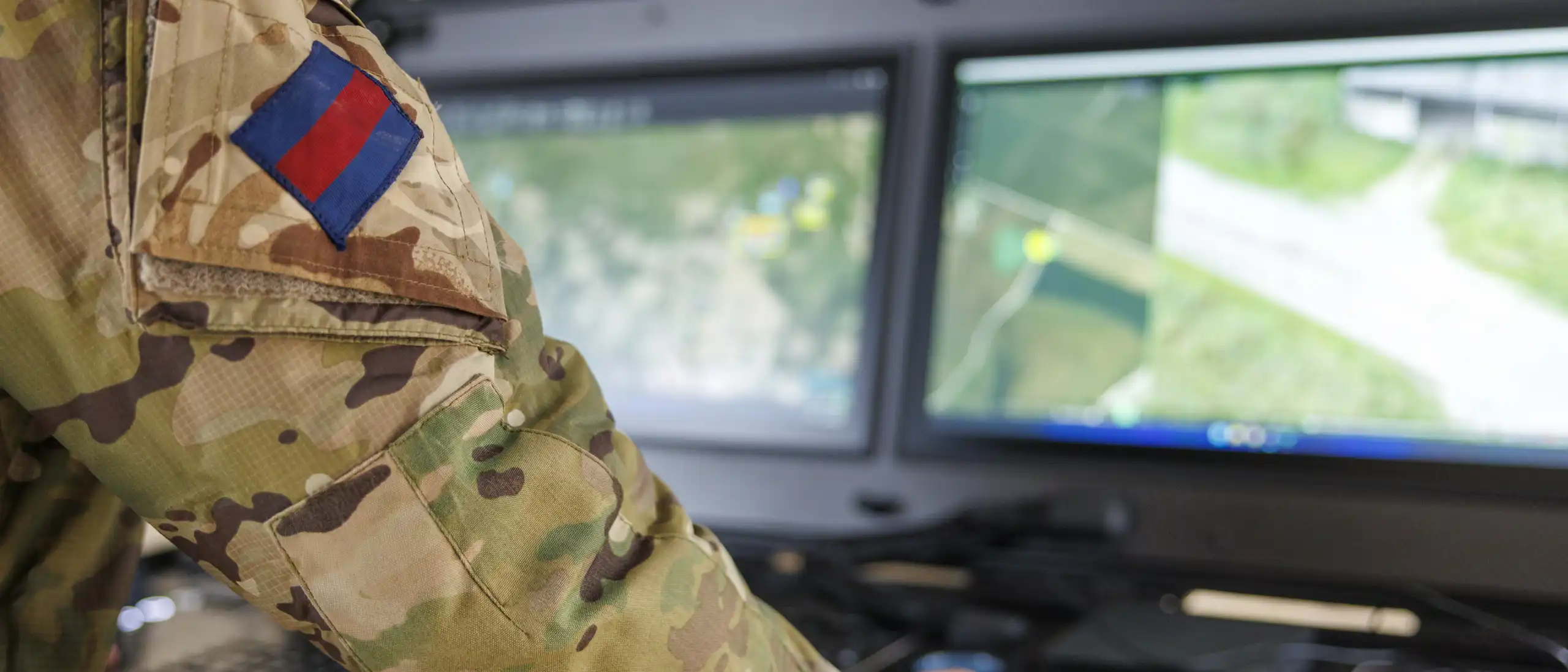
Allied forces from the United Kingdom, United States, and Australian Defence Force conducted coordinated trials of drone swarm technologies at the British Army's Warfighting Experiment 2026. The exercise demonstrated a prototype system that allows national drone swarms to share sensor data and intelligence across national servers in near real time, improving allied situational awareness. Trials focused on data-sharing protocols, AI-assisted target recognition, human oversight rules, and integration pathways for live and virtual swarms. The experiment ran for three weeks and produced operational lessons on training datasets, common messaging formats, and the interface between autonomy and human command.
What happened
Allied forces from the British Army, United States, and Australian Defence Force ran coordinated drone swarm trials during the Army Warfighting Experiment 2026 at Copehill Down. The key technical outcome was a prototype capability for sharing drone-derived intelligence across national servers in near real time, enabling one nation to distribute sensor data to partners quickly. The trial ran for three weeks with planning and live missions that validated cross-network data flows and multi-nation mission coordination.
Technical details
The program prioritized common messaging, shared data models, and AI-assisted target recognition. Teams worked to link national command-and-control stacks so that imagery and object detections could be transmitted from a British swarm to allied servers and consumed by partner systems. AI played two roles: improving automated target recognition using pooled datasets and mediating interoperability through standardized data descriptors. The exercise also stressed human-in-the-loop governance, with operational rulesets for when autonomy can act and when human approval is required. A British Army project lead summarized the challenge: "Just as we speak English to one another, machines need common languages to work together effectively. Finding those languages is vital." A drone pilot added the training burden: "We've inputted a significant number of images of battlefield items so far. It's a mammoth task, but all the time you're improving the capability."
Key capabilities demonstrated
- •Real-time cross-border data sharing between national servers that maintain sovereign control over raw feeds
- •AI-enhanced target recognition trained on pooled datasets to improve cross-platform detection consistency
- •Rules and procedures for human oversight that define autonomy thresholds and approval gates
Context and significance
This trial is an operational step toward allied swarm operations under the AUKUS cooperation model. Interoperability is the central technical barrier for coalition swarm employment because autonomy decisions, sensor formats, and classification outputs differ by nation and vendor. By focusing on standard messaging and server-level handoffs, the experiment reduces the need to standardize every platform component and instead creates translation layers that federate intelligence. That approach aligns with current best practice in multi-domain operations where data fabrics and API-level agreements matter more than common hardware.
The exercise also intersects with defensive work on counter-swarm systems. Last year, British trials with an RF directed energy demonstrator by Team Hersa and Thales immobilized more than 100 drones in testing, underscoring that offensive swarm capabilities and cost-effective countermeasures are evolving in parallel. Practitioners should view offensive swarm networking advances and directed-energy or electronic countermeasures as linked parts of the same tactical calculus.
What to watch
Next steps include scaling experiments to combined live and virtual swarms, formalizing data schemas for coalition use, and maturing AI dataset governance so partners can share training data without compromising sovereignty or operational security. Observe upcoming trials for concrete interoperability standards or reference implementations that could become de facto coalition protocols.
Key Points
- 1Allied trials demonstrated near-real-time data sharing between national drone swarms, solving a major interoperability bottleneck for coalition operations.
- 2Pooling training datasets and standardizing messaging improved cross-platform target recognition, lowering misclassification risk during multinational missions.
- 3Human oversight and sovereign server architectures were prioritized, enabling shared intelligence without forcing unified command or raw-data transfer.
Scoring Rationale
The experiment advances practical interoperability for coalition swarm operations, a notable operational milestone for defense AI practitioners. It is not a paradigm shift in AI research but materially affects coalition tactics and system integration.
Sources
Public references used for this report.
Practice interview problems based on real data
1,625 SQL & Python problems across 15 industry datasets — the exact type of data you work with.
Try 250 free problems