
AI Transforms Financial Literacy Curriculum for Students
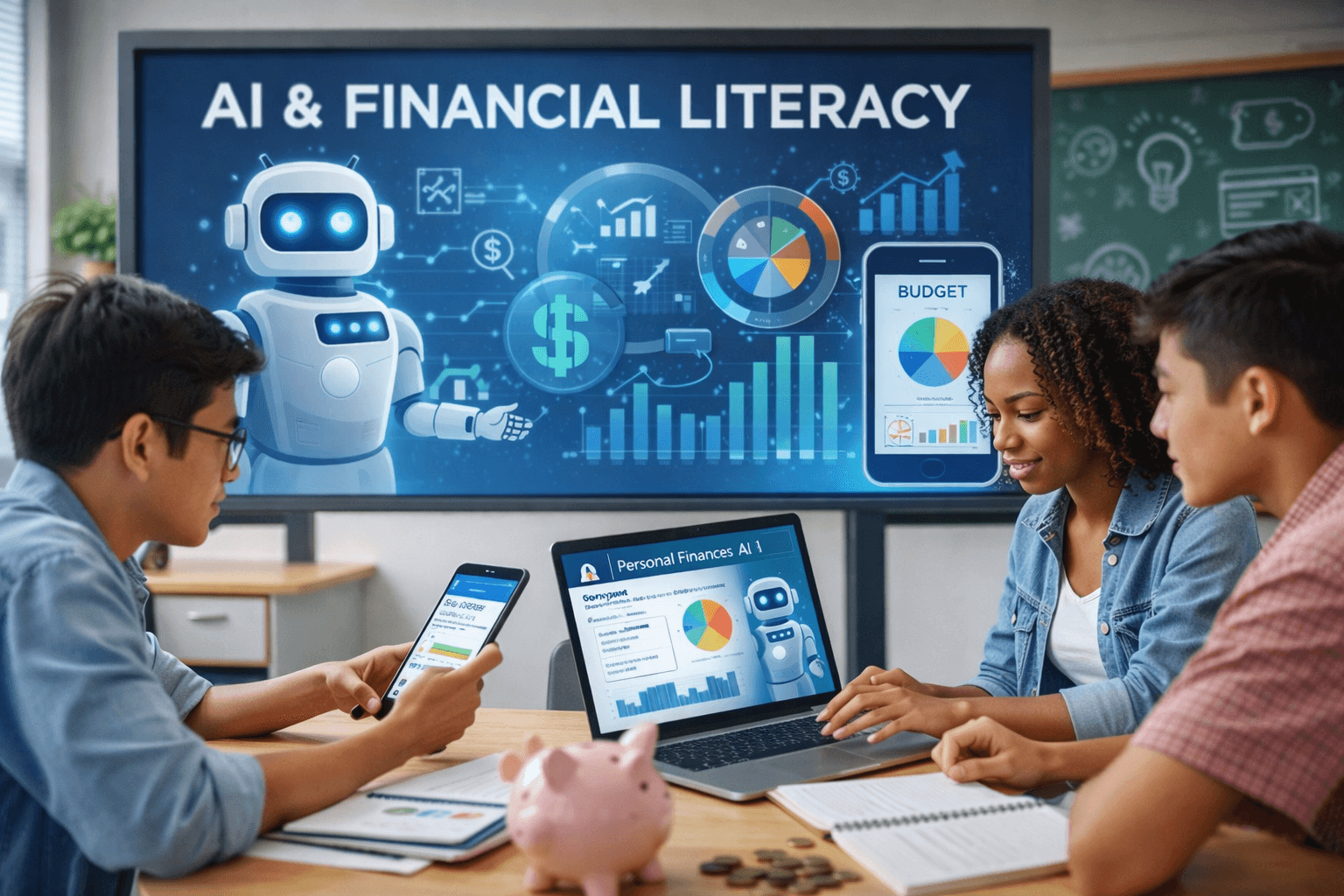
AI is reshaping personal finance and education; students need both money skills and AI literacy to navigate algorithmic financial tools. Schools and districts are moving from traditional budgeting and credit lessons toward integrated curricula that teach how robo-advisors, automated budgeting apps, and fraud detection models operate and fail. State guidance, such as the Ohio Department of Education's AI integration framework, gives concrete classroom activities, simulations, and ethics modules. Research and pilot programs show measurable learning gains from personalized GenAI tutors and simulations, but experts caution AI is a complement to, not a replacement for, foundational financial proficiency. Educators, curriculum teams, and district IT leaders should prioritize data literacy, model limitations, and evaluative prompting skills alongside traditional money management topics.
What happened
AI and financial literacy are converging in K-12 and higher education as schools adapt curricula to teach money skills alongside algorithmic understanding. Major inputs include state-level guidance from the Ohio Department of Education that requires districts to adopt AI use policies and offers lesson examples, reporting that AI can be used to simulate budgeting, analyze spending patterns, and prompt ethical discussions. Independent reporting and research, including analysis from Wharton and experimental results in the literature, indicate that personalized GenAI interventions and game-based simulations deliver substantive learning gains, with studies showing up to 58% higher earnings in simulated environments and material reductions in poor decisions.
Technical details
Educators should treat AI as a set of applied technologies with distinct capabilities and failure modes. Practical classroom building blocks include:
- •GenAI-driven tutors and chat interfaces for question answering and scenario explanation
- •Simulation engines that accept income/expense inputs and model long-term outcomes (retirement, debt amortization)
- •Data-visualization tools that surface spending patterns derived from transaction categorization models
- •Casework on algorithmic bias, data provenance, and fraud-detection heuristics used by banks
Teachers must design activities that surface model assumptions, data sources, and uncertainty. Lesson plans should require students to compare AI recommendations to baseline rules (for example, 50/30/20 budgeting) and to perform back-of-envelope checks. Technical competencies to emphasize include basic data literacy, prompt design and evaluation, interpreting probabilistic outputs, and understanding that robo-advisors optimize different objective functions than human advisors.
Context and significance
Financial literacy traditionally focuses on budgeting, credit, and investing. The rise of algorithmic personal finance means many decisions are now mediated by models: automated categorization, risk profiling for lending, robo-advising portfolio allocation, and real-time fraud scoring. State guidance like Ohio's moves curriculum discussion from theoretical to operational, aligning standards with technology literacy strands. Academic voices such as Wharton's faculty frame AI as an accelerant, not a panacea: AI can scale explanations and personalize practice, but it requires financial proficiency to generate safe outcomes. Emerging empirical work supports that AI augmentation improves measurable behavior in controlled settings, and early surveys indicate many students already use AI to make better saving choices. That pattern suggests integration could materially improve lifelong financial outcomes when implemented with safeguards.
What to watch
Districts must balance adoption with governance. Key near-term risks include overreliance on opaque tools, unequal access to quality AI resources, and curricula that teach tools rather than concepts. Practitioners should monitor: pilot evaluations measuring real-world behavior change, state and district AI acceptable use policies, and vendor claims about financial-advice accuracy. Successful programs will combine simulations, explicit instruction on model limitations, and assessments that measure decision quality, not just content recall.
Key Points
- 1AI augments financial education by personalizing practice and simulating long-term outcomes, increasing engagement and measurable learning gains.
- 2State frameworks like Ohio's shift classrooms from tool exposure to governance, ethics, and data-literacy requirements, enabling safer adoption.
- 3Teachers must pair AI tools with foundational finance skills and evaluation practices to prevent overreliance on opaque recommendations.
Scoring Rationale
This is a notable development for practitioners building curricula and edtech: state guidance plus empirical evidence of benefits make adoption actionable. It is not frontier research, so importance is mid-tier but practically consequential.
Sources
Public references used for this report.
Practice interview problems based on real data
1,625 SQL & Python problems across 15 industry datasets — the exact type of data you work with.
Try 250 free problems

