AI Scaling Framework Transforms Solo Work into Systems
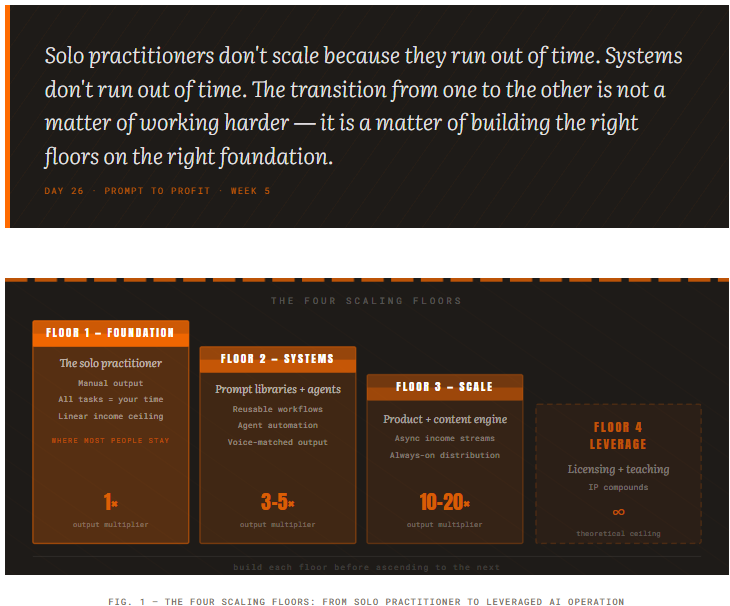
A July 5, 2026 Towards AI article argues that scaling AI work from solo execution into reliable systems depends on documented Standard Operating Procedures, not just stronger prompts or more automation. The piece frames AI scaling as a layered operating model: each process floor has to be structurally complete before teams can safely automate the next one. For practitioners, the useful takeaway is modest but concrete. Prompt libraries, quality reviews, model-version notes, and validation loops turn personal workflows into repeatable operations. Because this is a single practitioner guidance article rather than a new product release or independent market signal, it is best read as an implementation checklist for AI adoption teams rather than broad industry news.
The practical value here is the shift from prompt enthusiasm to operating discipline. AI scaling breaks when teams automate undocumented work, because higher throughput multiplies weak briefs, missing review steps, and model-version drift. For practitioners, the article is useful as a lightweight checklist for turning personal AI workflows into repeatable systems.
What happened
A July 5, 2026 Towards AI article by Faheem Munshi describes scaling with AI as a move from solo prompt work to system-level operations. The article uses a building metaphor and argues that each higher floor depends on structural completeness below it. It centers the advice on documented, repeatable SOPs for quality review, prompt/version control, automation judgment, and preserving the human layer around system output.
For practitioners
The strongest implementation point is that SOPs are not administrative overhead once AI is in the workflow. They become the interface between human judgment and automated execution. Teams can translate the idea into prompt-library versioning, sample-based quality reviews, explicit model/date notes, and validation checks before any workflow is scaled beyond one operator.
What to watch
The story is single-source practitioner guidance, so its claims should stay modest. The signal to monitor is whether teams treating AI operations as documented systems show fewer quality regressions than teams relying on ad-hoc prompt reuse. For LDS readers, the relevant takeaway is process reliability, not the specific metaphor.
Key Points
- 1The article frames scaling AI work as a systems problem, not simply a better prompt or faster personal workflow.
- 2Its four-SOP lens gives practitioners a checklist for documenting work before adding automation and orchestration.
- 3For production teams, the practical risk is quality drift when prompt libraries and reviews are not versioned.
Scoring Rationale
This is useful practitioner guidance for AI adoption teams, especially around SOPs, prompt-library control, and quality review loops. It is a single-source prescriptive article rather than a technical release, market event, or independently verified industry development, so the impact sits in the minor-to-solid range.
Sources
Public references used for this report.
Practice with real Ad Tech data
90 SQL & Python problems · 15 industry datasets
250 free problems · No credit card
See all Ad Tech problems