AI maps body fat and muscle to predict risk
The study, published May 5 in the journal Radiology and described in an RSNA release, used an open-source deep-learning framework to analyse whole-body MRI scans from 66,608 participants drawn from the UK Biobank and the German National Cohort between April 2014 and May 2022 (AuntMinnie; News-Medical; RSNA). The cohort had mean age 57.7 years, 34,443 males and mean BMI 26.2 (AuntMinnie; News-Medical). The authors derived age-, sex- and height-normalized body composition z-scores for subcutaneous adipose tissue, visceral adipose tissue, skeletal muscle, skeletal muscle fat fraction and intramuscular adipose tissue (AuntMinnie; News-Medical). Reported associations include high visceral fat with a 2.26-fold increased risk of future diabetes, high intramuscular fat with a 1.54-fold increased risk of major cardiovascular events, and low skeletal muscle with a 1.44-fold higher all-cause mortality (AuntMinnie). For imaging and ML practitioners, the paper illustrates how population-scale MRI plus automated segmentation creates normative maps that can be turned into quantitative risk predictors beyond BMI.
What happened
The study, published May 5 in Radiology and highlighted by the Radiological Society of North America (RSNA), applied a fully automated, open-source deep-learning pipeline to whole-body MRI scans from 66,608 individuals recruited from the UK Biobank and the German National Cohort between April 2014 and May 2022, the authors report (AuntMinnie; News-Medical; RSNA). The cohort had a mean age of 57.7 years, included 34,443 males, and had mean BMI 26.2 (AuntMinnie; News-Medical). The team computed age-, sex-, and height-normalized z-scores for body composition metrics including subcutaneous adipose tissue, visceral adipose tissue, skeletal muscle, skeletal muscle fat fraction, and intramuscular adipose tissue (AuntMinnie; News-Medical).
Technical details
Per the RSNA release and reporting in AuntMinnie and News-Medical, the body-composition measures were expressed as z-scores (low: z < -1; middle: z = -1 to 1; high: z > 1) and the prognostic value of those z-scores was tested for incident diabetes, major adverse cardiovascular events, and all-cause mortality (AuntMinnie; RSNA). Key reported effect sizes include a 2.26-fold higher risk of future diabetes for individuals with high visceral fat, a 1.54-fold increased risk of future major cardiovascular events associated with high intramuscular fat, and a 1.44-fold higher all-cause mortality for low skeletal muscle (AuntMinnie). The authors made their segmentation framework open-source and describe it as fully automated in the RSNA and News-Medical coverage.
Industry context
Why it matters
What to watch
Editorial analysis
Population-scale imaging studies that combine whole-body MRI with automated segmentation increasingly produce normative reference maps that can be converted to individual-level z-scores. Industry observers note that converting pixel-level segmentations into standardized z-scores is a practical route to integrate imaging-derived biomarkers into epidemiology and risk modelling pipelines.
For clinicians and ML practitioners focused on medical imaging, the study demonstrates that muscle quantity and quality metrics carry prognostic information distinct from traditional anthropometrics such as BMI. The result underscores a recurring pattern in imaging research where distribution and composition measures outperform crude surrogate metrics for some long-term health outcomes.
Observers should look for independent validation in non-European cohorts, availability and documentation of the open-source code and models, and prospective studies that evaluate whether integrating these MRI-derived z-scores into clinical workflows improves decision making or outcomes. Additionally, practitioners deploying similar pipelines will monitor compute cost, segmentation robustness across scanner vendors, and regulatory pathways for imaging biomarkers.
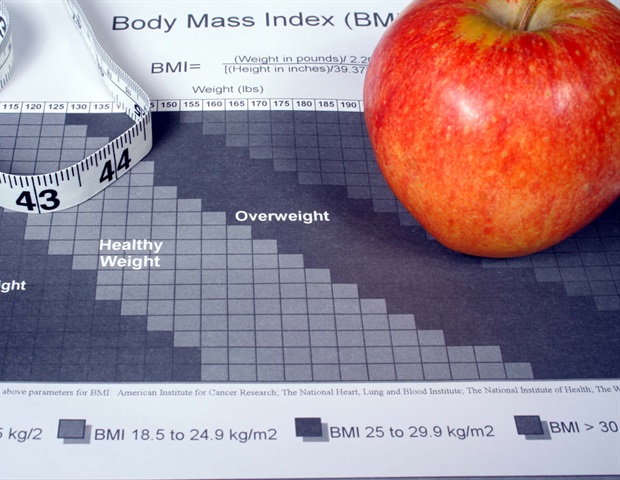
The paper includes direct commentary on BMI limitations. Jakob Weiss, M.D., Ph.D., is quoted saying, "Many risk scores and treatment decisions still rely on BMI or waist circumference because they are simple to obtain. But BMI does not reliably reflect a person's actual body composition," as reported in the RSNA/press materials (AuntMinnie; News-Medical; RSNA). The authors note that reference standards for asymptomatic individuals across age and sex are scarce, and the study supplies a large-scale reference map intended to address that gap (News-Medical; RSNA).
Key Points
- 1Large-scale MRI plus automated segmentation enables normative, age-sex-height-adjusted z-scores that can quantify body-composition variation at population scale.
- 2Muscle quantity and muscle fat fraction provide prognostic signal for diabetes, cardiovascular events, and mortality beyond crude measures like BMI.
- 3Open-source, fully automated frameworks reduce manual annotation bottlenecks but require external validation for different scanners, populations, and clinical workflows.
Scoring Rationale
The work is a notable population-scale application of deep learning to medical imaging with clear implications for imaging biomarkers and risk modelling. It is not a frontier model release but meaningfully advances MRI-derived phenotyping for clinical research, so it rates as a solid, practitioner-relevant research contribution.
Sources
Public references used for this report.
View 4 more sources
- AI Model Analyses Body Composition to Predict Health Riskskosmo.com.my
- Whole body MRI, deep-learning can 'map' distribution of fat and ...auntminnie.com
- AI Model Analyzes Body Composition to Forecast Health Risksbioengineer.org
- AI creates detailed map of fat and muscle distribution to predict major health risksnews-medical.net
Practice with real Ad Tech data
90 SQL & Python problems · 15 industry datasets
250 free problems · No credit card
See all Ad Tech problems