AI Improves Accuracy of Facial Recognition Systems
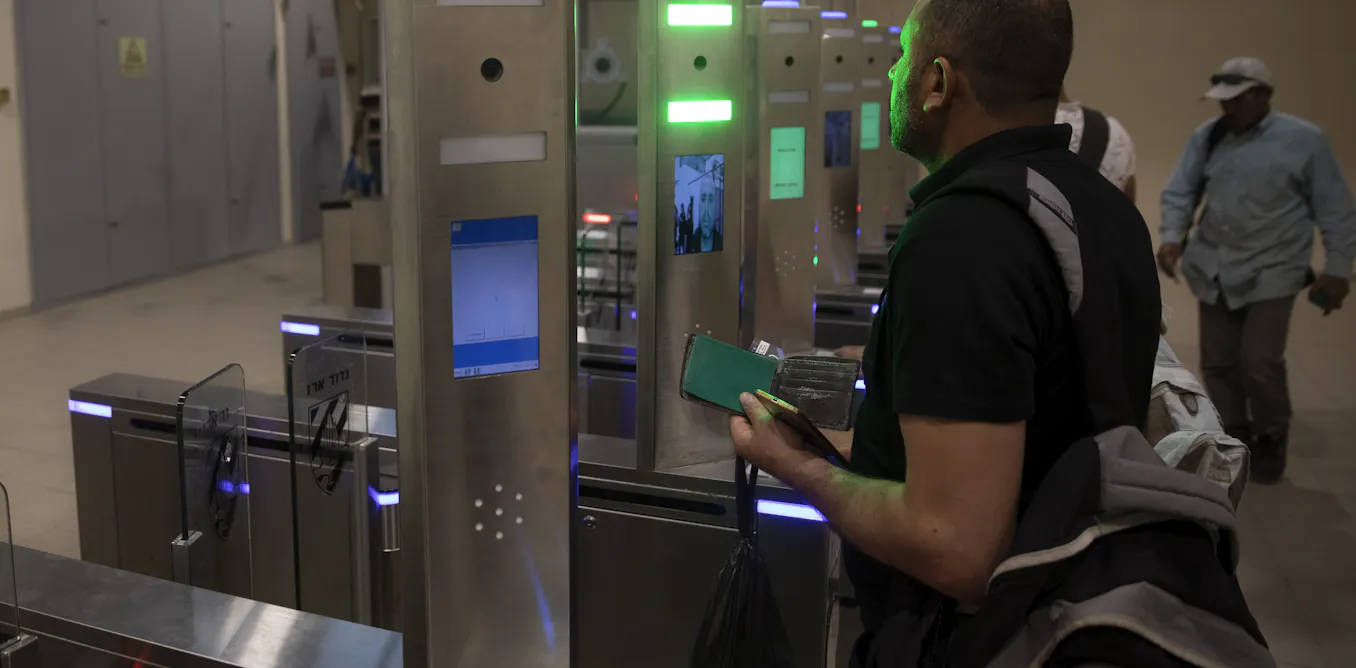
The Conversation reports that advanced deep learning models are making facial recognition more accurate and reliable in controlled settings, according to Professor Vijayan Asari of the University of Dayton. The article notes increasing public adoption at venues such as Madison Square Garden and Citizens Bank Park, and cites The Conversation's reporting that the Transportation Security Administration has deployed the latest facial recognition technology at numerous airports and said the system will be used in cities across the U.S. The piece outlines the basic three-step pipeline for face recognition: detection, creation of a faceprint, and database matching, and reports that modern models trained on hundreds of millions of face images drive the recent gains.
What happened
The Conversation published an explainer by Professor Vijayan Asari (University of Dayton) reporting that advanced deep learning models are improving facial recognition accuracy and reliability in controlled environments. The article gives examples of growing public deployment at venues including Madison Square Garden and Citizens Bank Park, and reports that the Transportation Security Administration has deployed the latest facial recognition technology at numerous airports and said the system will be used in cities across the U.S. The author describes the standard three-step facial recognition pipeline: detect the face, create a faceprint of geometric and texture features, then compare against a database.
Technical details
Editorial analysis - technical context: The Conversation reports that current face-recognition models are trained on hundreds of millions of face images, a scale that improves within-distribution accuracy in controlled settings such as smartphones, checkpoints, and airports. For practitioners, this trend reflects broader advances in deep convolutional and embedding-based pipelines that prioritize high-dimensional feature vectors and large-scale supervised training to reduce both false positives and false negatives in benchmarked scenarios.
Context and significance
Editorial analysis: Improved accuracy reduces some operational errors but also amplifies deployment consequences in surveillance and access-control settings. Industry observers have repeatedly noted that higher algorithmic accuracy does not remove concerns about dataset bias, demographic performance gaps, or misuse in uncontrolled settings; The Conversation article situates technical gains within this broader public-adoption story.
What to watch
Editorial analysis: Observers should track:
- •whether vendors publish demographic breakdowns and evaluation datasets
- •independent audits or red-team studies of deployed systems
- •regulatory or procurement requirements the TSA or large venues adopt that mandate transparency or accuracy reporting. Absent further public statements, The Conversation notes the deployments but does not provide agency rationale beyond the reported announcements
Key Points
- 1Deep-learning face models trained on very large datasets are driving measurable accuracy gains in controlled settings.
- 2Wider public deployment at venues and airports increases the operational footprint of improved models and scrutiny.
- 3Improved accuracy matters for operations but does not eliminate issues like demographic bias and accountability requirements.
Scoring Rationale
Technical accuracy gains matter to practitioners building or auditing recognition systems, and growing public deployments increase the need for evaluation and auditability. The story is notable but not a frontier-model breakthrough.
Practice interview problems based on real data
1,625 SQL & Python problems across 15 industry datasets — the exact type of data you work with.
Try 250 free problems