AI Guides Interview Prep for Full-Time Professionals
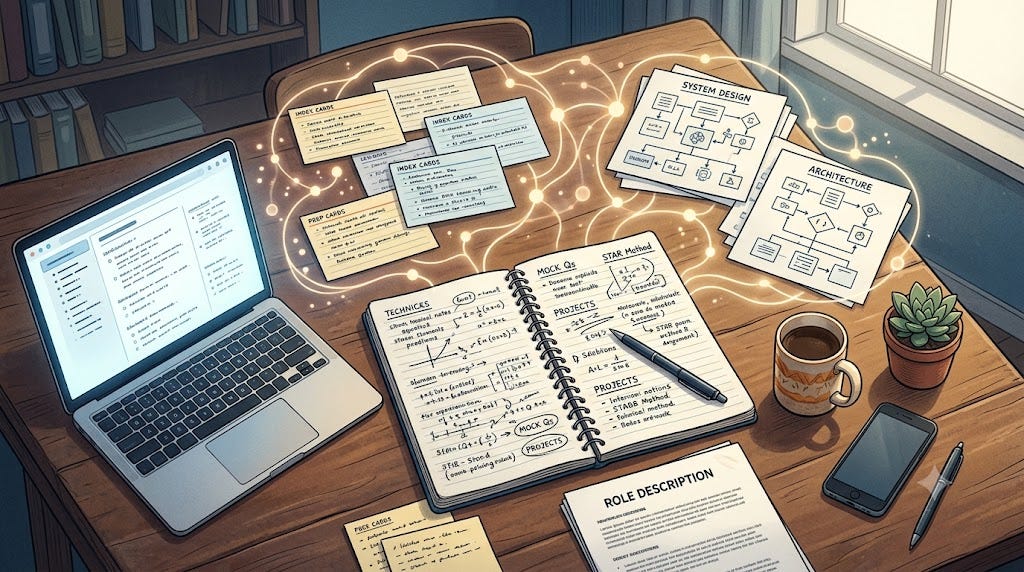
A July 9, 2026 Code Like A Girl post says one professional used AI while interviewing at five companies during full-time work, received three offers, and used the tool mainly to map existing projects to role requirements. The post is a first-person career workflow, not a broad product launch or labor-market study. Its value for practitioners is tactical: constrained prompts can turn real project history into sharper interview stories, while broad prompts produce generic coaching. Because the claim is single-sourced to the author's account, teams and candidates should treat it as a prompt-pattern case study rather than evidence that AI coaching reliably improves interview outcomes.
This is a narrow but useful workflow example: AI helps most when it turns a candidate's real experience into role-specific communication, not when it invents answers or stretches relevance. The story is best read as a prompt-design case study for time-constrained professionals.
What happened
In a first-person Code Like A Girl post, the author says they interviewed at five companies while working full-time, received three offers, got no offer from one big pharma company, and withdrew from one process after a first round. The author describes using AI to map projects to job requirements, draft concise anecdotes, and identify which experience mattered for each role.
For practitioners
The strongest lesson is constraint. Supplying a role description, project list, and specific interview goal produced more useful output than broad prompts. That pattern generalizes to other career and workplace coaching tasks: the model needs grounded inputs and a narrow evaluation target.
What to watch
Single-person career posts are not proof of causal lift. Candidates should keep human review in the loop, avoid misrepresenting project experience, and use AI to clarify truthful examples rather than fabricate alignment with a job description.
Key Points
- 1The post is a single-author case study showing AI used to translate existing projects into interview-ready stories.
- 2Constrained prompts with role descriptions and real project lists produced more useful coaching than broad generic requests.
- 3The evidence supports tactical prompt patterns, not a broad claim that AI coaching improves interview outcomes.
Scoring Rationale
This is relevant to AI-assisted career workflows but remains a single-author advice post with limited broader evidence. It deserves visibility as a practical prompt-pattern example, not as a major AI product or workforce trend.
Sources
Public references used for this report.
Practice with real Ad Tech data
90 SQL & Python problems · 15 industry datasets
250 free problems · No credit card
See all Ad Tech problems