AI Expands Use Cases From Grading Papers to Decoding Jargon
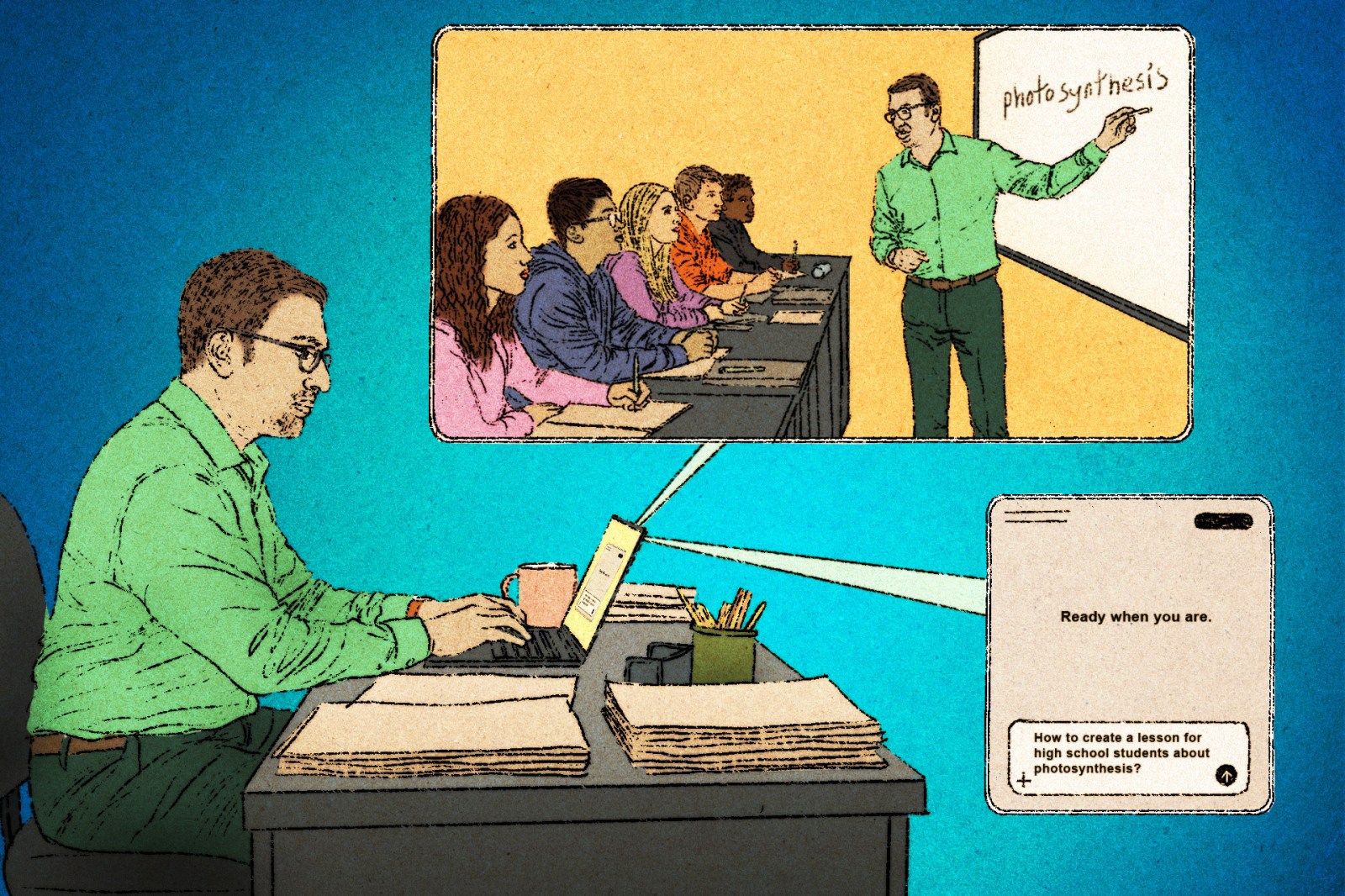
The Associated Press reports that artificial intelligence is increasingly used across workplaces, altering tasks from grading papers to decoding jargon, according to an AP article by Cathy Bussewitz. The article highlights everyday examples of employees adopting AI tools to assist with routine and knowledge work. Industry experience shows that adopting AI for recurring tasks typically shifts human roles toward review, quality control, and exception handling, and practitioners should prioritize validation, provenance, and user training when integrating these tools.
What happened
The Associated Press reports that artificial intelligence is permeating workplaces and changing job tasks ranging from grading papers to decoding jargon, in an article by Cathy Bussewitz published via the AP and carried by the Winnipeg Free Press. The article presents a set of everyday use cases where employees leverage AI tools to speed up repetitive or domain-specific work.
Editorial analysis - technical context
Industry-pattern observations: Deployments that target routine cognitive tasks commonly use off-the-shelf generative models and fine-tuned assistants for summarization, classification, and terminology translation. For practitioners: workflows that fold AI into tasks such as grading or jargon translation typically require explicit pipelines for input sanitization, prompt engineering, evaluation metrics, and human review to catch hallucinations and domain errors.
Context and significance
Industry context: Reporting on broad, cross-industry adoption reinforces ongoing trends where AI is used as a force-multiplier for productivity rather than a simple job substitute. Observed patterns in comparable deployments show attention shifts toward monitoring model drift, creating audit trails for outputs, and training end users on appropriate prompt constraints and verification steps. For teams in education, legal, health, or customer support, the practical stakes are accuracy, fairness, and reproducibility when AI influences decisions or assessments.
What to watch
Indicators an observer can follow include uptake of AI-assisted grading or summarization tools in LMS platforms, published vendor accuracy benchmarks or red-team results, emergence of organizational guidelines for human-in-the-loop review, and regulatory or accreditation guidance affecting use in high-stakes domains. The Associated Press article underscores everyday uptake; industry observers will watch how governance and tooling evolve to manage risk and quality.
Key Points
- 1AI is moving into routine cognitive work, enabling faster throughput but increasing the need for output validation and human oversight.
- 2Adopting AI for domain tasks typically shifts effort from execution toward monitoring, data preparation, and exception handling.
- 3Practitioners should track model performance, provenance, and user training to mitigate hallucinations and domain-specific errors.
Scoring Rationale
The story documents broad, everyday adoption of AI rather than a novel model or policy change. It is relevant to practitioners integrating AI into workflows, so it rates as a solid, practical update rather than a frontier development.
Practice interview problems based on real data
1,625 SQL & Python problems across 15 industry datasets — the exact type of data you work with.
Try 250 free problems