AI Debaters Transform Classroom Learning in India
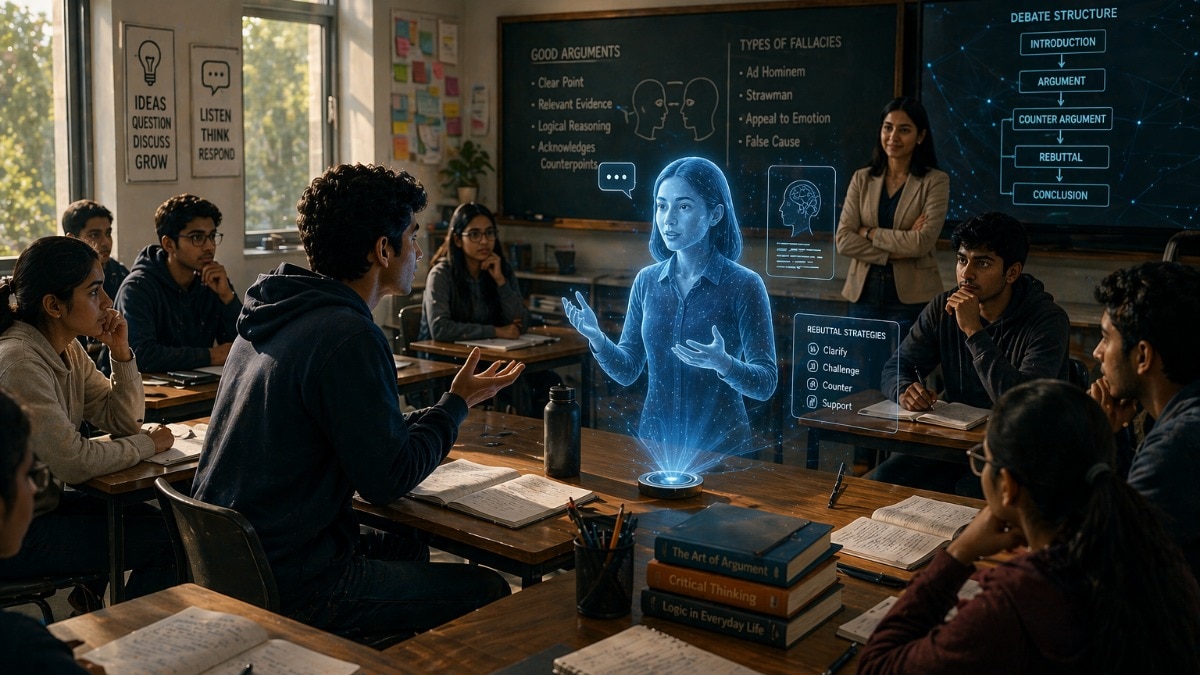
AI-driven debate platforms are moving beyond Q&A tutoring to real-time adversarial interaction in Indian classrooms. At IIT Delhi, the Indian Debating League piloted the debate system AugLi.ai, enabling students to select topics, present arguments, and receive immediate, structured counterpoints in timed sessions. The format emphasizes reasoning, rebuttal, and argumentative organization rather than rote recall. Founders and educators position the tool as a practice engine for critical thinking: students must respond, question, and defend ideas on the fly. Early deployments aim to augment classroom pedagogy by converting passive instruction into iterative dialogue, giving learners repeated practice in formulating and defending positions under time constraints.
What happened
The education experiment at IIT Delhi introduced the debate platform AugLi.ai via the Indian Debating League, shifting classroom AI from Q&A to adversarial dialogue. Within two months the system ran timed, one-on-one debate sessions where a student presents a case and the system issues structured counterarguments in real time, forcing immediate rebuttal and on-the-spot reasoning.
Technical details
Practitioners should view this as a dialogue system optimized for argumentative exchange rather than informational retrieval. Key characteristics include:
- •Real-time rebuttal generation tuned to counterpoints, likely using large language model stacks with debate-oriented prompting and turn-taking control
- •Time-bound session mechanics that enforce pacing and constrain response windows to simulate competitive debating
- •Topic selection and structured feedback that emphasize claims, evidence, and refutation
These features suggest a pipeline combining retrieval for factual grounding, fine-tuned or prompt-engineered generation for argumentative coherence, and session orchestration to enforce timing and scoring. Expect evaluation metrics focused on coherence, relevance of counterpoints, and pedagogical signaling rather than pure perplexity or n-gram overlap.
Context and significance
Education is shifting from content delivery to formative practice, and debate AI is a natural next step after tutoring chatbots. By prioritizing adversarial interaction, platforms like AugLi.ai target higher-order cognitive skills: reasoning under pressure, constructing counterarguments, and defending positions. This ties into a broader trend where AI augments skill practice in domains that require active retrieval and synthesis, not just information access. The move also aligns with edtech efforts to use AI for scalable, low-cost practice that complements human instruction.
What to watch
Monitor how these systems handle factual hallucinations in adversarial replies and whether they include teacher-in-the-loop moderation and explainable rationale for counterarguments. Adoption will depend on measurable learning gains, integration with curricula, and safeguards for bias and misinformation.
Key Points
- 1AI-driven debate platforms convert passive learning into active practice, improving students ability to formulate and defend arguments under time pressure.
- 2Design focuses on adversarial dialogue, requiring retrieval-grounding, debate-oriented prompting, and session orchestration to maintain coherence and pacing.
- 3Successful classroom adoption hinges on measurable learning outcomes, teacher integration, mitigation of hallucinations, and culturally appropriate moderation.
Scoring Rationale
This is a solid, application-focused development: it demonstrates an interesting pedagogical use of LLM-driven dialogue but does not introduce a new model or foundational capability. It matters for practitioners building edtech and dialogue systems, especially around evaluation and safety.
Practice interview problems based on real data
1,625 SQL & Python problems across 15 industry datasets — the exact type of data you work with.
Try 250 free problems