AI Becomes Competitive Advantage for Renewable Energy Companies
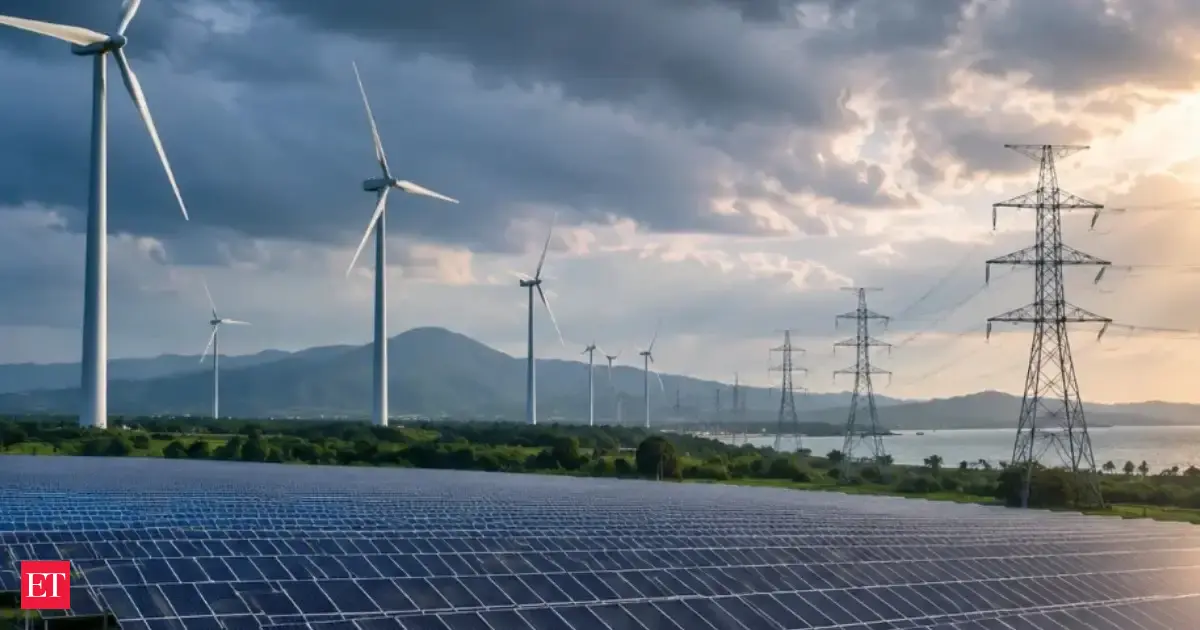
Boston Consulting Group's report "A New AI Playbook for Renewable Energy Companies" found that nearly 60% of energy-company leaders expected AI to deliver results within a year, while roughly 70% reported dissatisfaction with actual progress - a gap highlighted in June 2026 Economic Times coverage of the year-old BCG research. The Economic Times reporting says AI can boost worker productivity by up to 25% and improve energy yield when properly deployed. BCG attributes the shortfall to poor digital subsystems on equipment, fragmented data flows across producers, utilities, grid operators, and regulators, and privacy constraints limiting data sharing. The report's core recommendation: renewable energy companies should scale a handful of high-impact AI use cases into closed-loop operational tools rather than run numerous isolated pilots.
For AI/ML practitioners supporting utilities, independent power producers, and renewables integrators, the practical implication is operational: projects that prioritize clean, reliable telemetry, production-grade data pipelines, and a narrow set of high-impact models tend to convert pilot results into recurring economic value faster than broad experimentation.
What happened
Per the Boston Consulting Group report titled "A New AI Playbook for Renewable Energy Companies," nearly 60% of energy-company leaders expected AI to deliver results within a year, while roughly 70% reported dissatisfaction with progress. The Economic Times' June 2026 coverage of the BCG report notes AI can boost worker productivity by up to 25% and improve energy yield. BCG's report describes common barriers including poor digital subsystems on equipment, fragmented industry data flows across producers, utilities, grid operators, and regulators, and regulatory and privacy constraints that impede data sharing.
Technical context
The bottlenecks BCG documents map to recurring implementation failure modes practitioners see across sectors: missing or inconsistent telemetry, lack of edge-to-cloud integration, and absent feature stores or MLOps for production retraining. Without investment in streaming telemetry, canonicalized schemas, and automated retraining pipelines, models tend to degrade quickly in physical-asset environments where seasonality and weather materially shift data distributions.
For practitioners
BCG frames the solution set around scaling a few high-impact use cases rather than proliferating pilots, turning models into closed-loop operational controls and decision-support tools that feed back into maintenance, dispatch, and forecasting. EnergyConnects commentary by Ramya Sethurathinam echoes this, highlighting organizational agility - people, processes, and culture - as a prerequisite for extracting emissions and efficiency gains from AI. Teams should treat data infrastructure and production ML hygiene as the primary product: monitoring, drift detection, and retraining designed as first-class components typically reduce time to value and help avoid the "pilot trap" BCG documents.
Industry context
This fits a broader pattern where AI amplifies existing competitive advantages when integrated into core operations. For renewables, the value levers differ from pure-software firms: yield optimization, predictive maintenance, grid integration, and market bidding are value-rich but require domain-aligned features and regulatory-safe data practices. Third Way's clean-technology competitiveness analysis and BCG's broader AI-strategy research provide longer-term market context suggesting that improved telemetry and interoperability could accelerate adoption.
What to watch
Track whether recommendations translate into practice - increased deployment of streaming telemetry and edge compute on turbines and inverters, vendor announcements for domain-specific MLOps or feature-store products tailored to energy, commercial partnerships between renewables firms and cloud/AI providers, and regulatory pilots enabling secure data sharing across grid actors. Reported ROI from closed-loop pilots in maintenance, dispatch optimization, or yield forecasting will be the clearest signal of scaled value.
Key Points
- 1BCG found 60% of energy leaders expected AI results within a year, but about 70% reported dissatisfaction, per a report recirculated in June 2026 Economic Times coverage.
- 2Fragmented telemetry, weak edge-to-cloud integration, and absent MLOps are recurring technical barriers that make production ML in renewables brittle and costly to scale.
- 3BCG recommends scaling a few high-impact, closed-loop AI use cases over broad pilots, with organizational agility as a prerequisite for capturing efficiency and emissions gains.
Scoring Rationale
The Economic Times' June 2026 coverage synthesizes BCG's renewable-energy AI playbook into a practitioner-relevant roadmap with real survey data (60% expectation vs 70% dissatisfaction, 25% productivity gains) and concrete technical failure modes. Score is held below 'major' because the underlying BCG report dates to June 2025 and this is a recirculation/synthesis rather than new research or a new event.
Sources
Public references used for this report.
Practice with real Ad Tech data
90 SQL & Python problems · 15 industry datasets
250 free problems · No credit card
See all Ad Tech problems