AI Advances Enable Prospects for Animal Communication
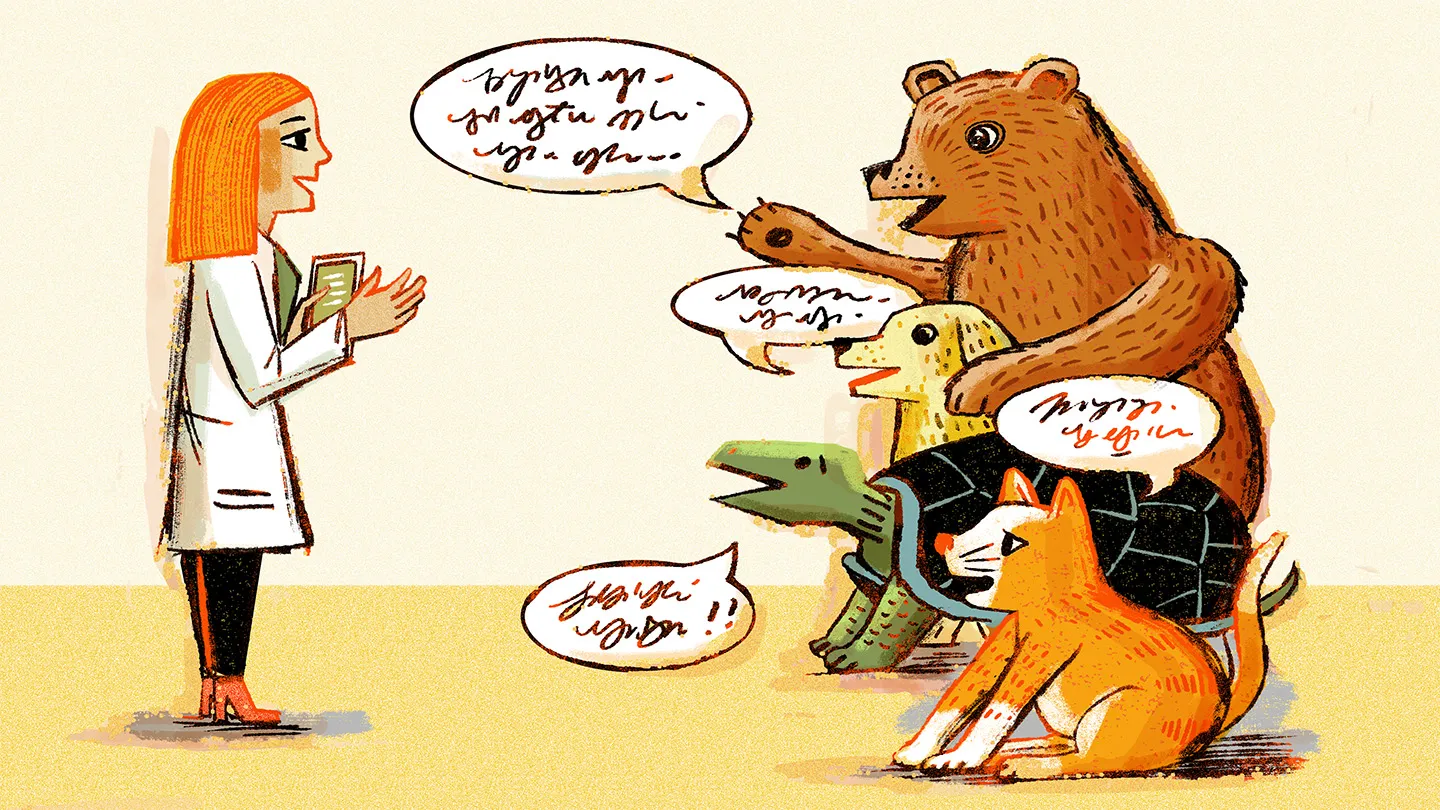
Recent advances in AI, computing power, and acoustic measurement are closing the gap between animal vocalizations and human-understandable signals. Researchers note that a small subset of species, notably some parrots, already mimic human speech, but true cross-species translation faces biological and semantic hurdles. Progress in model architectures, unsupervised representation learning, and higher-fidelity sensors could let systems map animal sounds to behavioral context and latent meaning. Practical translators remain exploratory: success will require large, well-annotated datasets, behavioral grounding, and interdisciplinary work bridging neuroscience, ethology, and machine learning.
What happened
Recent work highlights that advances in AI, increased computing power, and improved ways to record and analyze sound are making the long-standing idea of animal translators technically plausible. Scientists point to rare examples of vocal learning, such as a parrot that acquired Spanish, and argue those cases show animals can produce human-like signals under certain conditions. Researchers caution that widespread, reliable translation is not imminent but research trajectories look promising.
Technical details
Practical progress rests on three technical pillars:
- •Computing power, enabling larger models and longer temporal context when processing acoustic streams
- •AI methods, notably self-supervised and unsupervised representation learning that can discover structure in unlabeled animal vocalizations
- •Improved sensing and annotation, higher-fidelity microphones, multi-modal recording, and richer behavioral labels
These elements let models cluster and correlate acoustic patterns with observed behaviors and environmental context, a prerequisite to mapping signals to intent or meaning. Vocal-learning capability is scarce, present in fewer than 1% of vertebrate species, which constrains transferability of methods across taxa.
Context and significance
This work sits at the intersection of bioacoustics, neuroscience, and ML. For practitioners, the field is a rich testbed for unsupervised learning, domain adaptation, and causally grounded representation learning where labels are expensive. Success would extend ML applications into ethology, conservation, and human-animal interfaces, but it also surfaces hard problems: aligning latent acoustic features to semantics without shared language, accounting for species-specific perceptual systems, and avoiding anthropomorphic misinterpretation.
What to watch
Follow developments in large-scale, multi-species acoustic datasets, cross-disciplinary projects that combine behavior annotation with neural recordings, and ML methods focused on grounding and interpretability. Progress will be incremental and depends as much on better field data and experimental design as on modeling advances.
Key Points
- 1AI and greater compute let models extract structured acoustic features, enabling cross-species vocal pattern discovery and clustering.
- 2Biological limits matter, vocal learning exists in under 1% of vertebrates, constraining direct transfer of translation methods.
- 3Meaningful translation requires behavioral grounding and large annotated datasets, not just better classifiers or bigger models.
Scoring Rationale
The story outlines an emerging research area where ML methods meet ethology. It is interesting and technically relevant for practitioners but remains exploratory without an immediate, high-impact product or benchmark breakthrough.
Practice with real Ad Tech data
90 SQL & Python problems · 15 industry datasets
250 free problems · No credit card
See all Ad Tech problems