AI Accelerates Translation of Cancer Drug Discovery
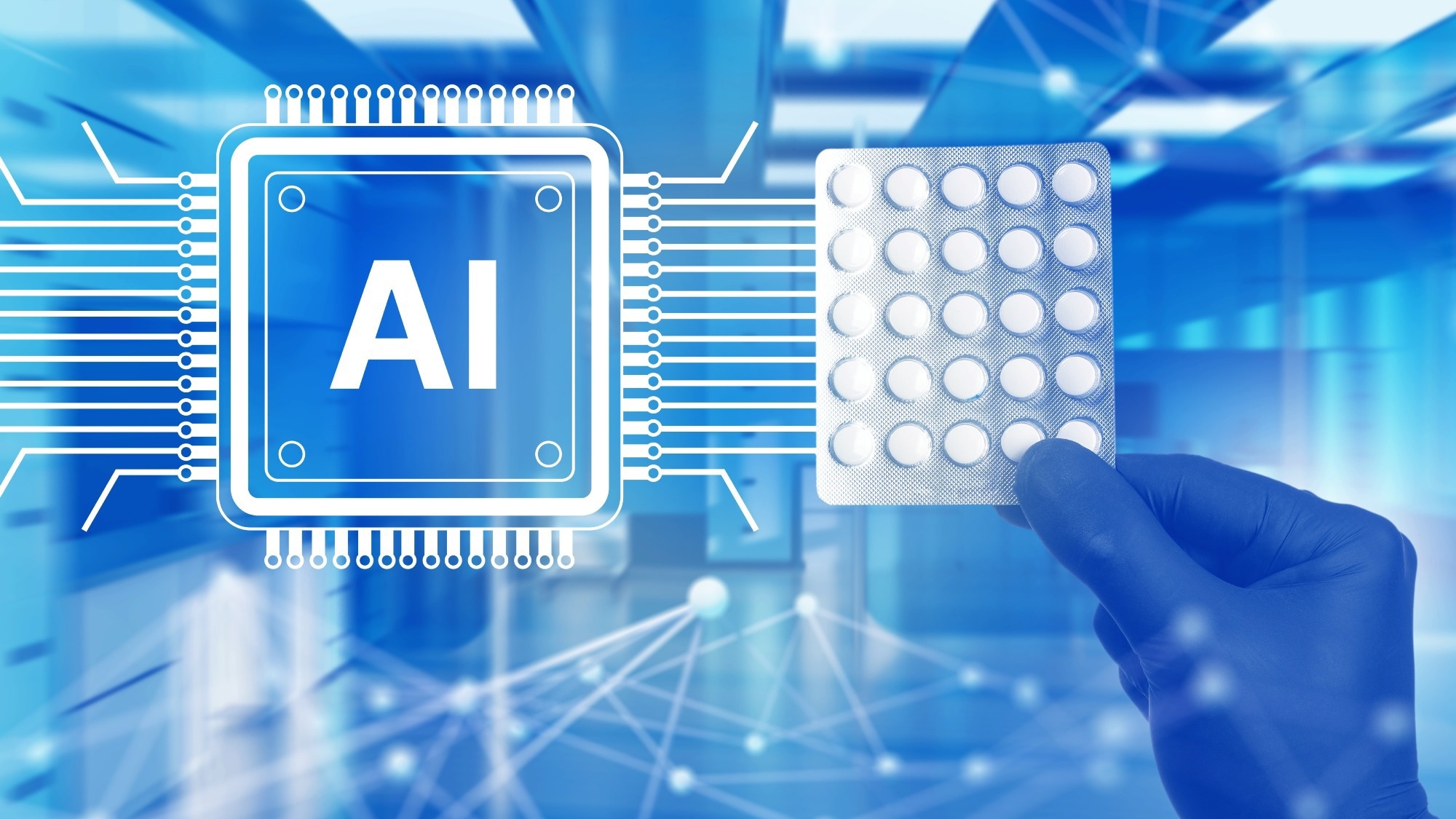
AI is shifting oncology drug discovery from decade-long empirical pipelines toward earlier clinical translation by combining generative design, predictive modeling, and patient stratification. A recent Perspective highlights a milestone: an AI-designed TNIK inhibitor advanced into human testing with safety and pharmacodynamic signals, demonstrating that computationally generated small molecules can clear early translational barriers. The paper emphasizes practical gains-faster candidate ideation, improved in silico ADMET and target engagement predictions, and better biomarker-driven trial design-while calling out persistent obstacles: tumor heterogeneity, biased training data, limited prospective clinical validation, and regulatory uncertainty. For practitioners, the takeaway is that AI tools are maturing into translational partners, but reliable pipelines will require tighter experimental validation, rigorous dataset curation, and new regulatory frameworks to enable routine clinical impact.
What happened
The field is moving from computational support tools to active drivers of translational oncology. The Perspective argues that AI, especially generative AI, is now producing small-molecule candidates that reach first-in-human studies. A notable example is an AI-designed TNIK inhibitor that showed safety, tolerability, and pharmacodynamic evidence of target engagement in a human trial, conducted in idiopathic pulmonary fibrosis but methodologically relevant to cancer therapeutics.
Technical details
AI contributes across the discovery and translation stack. Key technical capabilities include:
- •Generative chemistry for de novo small-molecule design, optimizing scaffolds and properties simultaneously
- •Predictive models for in silico ADMET and off-target profiling to triage candidates early
- •Patient stratification and response prediction using multiomic and clinical data to sharpen trial cohorts
These systems typically combine deep learning-driven encoders, graph or SMILES-based generators, and supervised models trained on public and proprietary biochemical datasets. Practical limitations remain: models often underperform on rare tumor subtypes because of skewed training data, mechanistic interpretability is weak for many generative outputs, and prospective ADMET prediction across diverse human physiology is still noisy.
Context and significance
The milestone of an AI-designed small molecule entering human testing is a proof point that computational pipelines can compress design timelines from years to months for lead ideation. For precision oncology this matters because tumor heterogeneity and rapid clonal evolution demand faster iteration and better patient selection. However, the paper stresses that clinical translation requires more than optimized molecules; it requires robust biomarker strategies, prospective validation studies, and regulatory acceptance of AI-derived design rationale. This is not a replacement for wet lab work, it is a force multiplier that reallocates experimental resources toward decisive validation.
What to watch
Evaluate models by prospective, pre-registered benchmarks and integrate mechanistic priors into generative models to improve trustworthiness. Regulatory guidance on AI-designed therapeutics, and additional human trials of AI-derived molecules in oncology indications, will determine whether this approach scales beyond proof-of-concept.
Key Points
- 1AI-generated small molecules have reached human testing, proving computational design can clear early translational milestones.
- 2Generative design, in silico ADMET, and patient stratification accelerate candidate selection, reducing time and cost before trials.
- 3Data bias, weak interpretability, and regulatory uncertainty are the main barriers to routine AI-driven clinical oncology translation.
Scoring Rationale
AI-designed small molecules entering human studies marks a notable translational milestone that directly impacts drug discovery workflows and clinical trial design. The story is important but not paradigm-shifting; broader impact depends on reproducible clinical successes and regulatory acceptance.
Practice with real Health & Insurance data
90 SQL & Python problems · 15 industry datasets
250 free problems · No credit card
See all Health & Insurance problems