Agentic AI Compresses Enterprise Patch Management Timelines
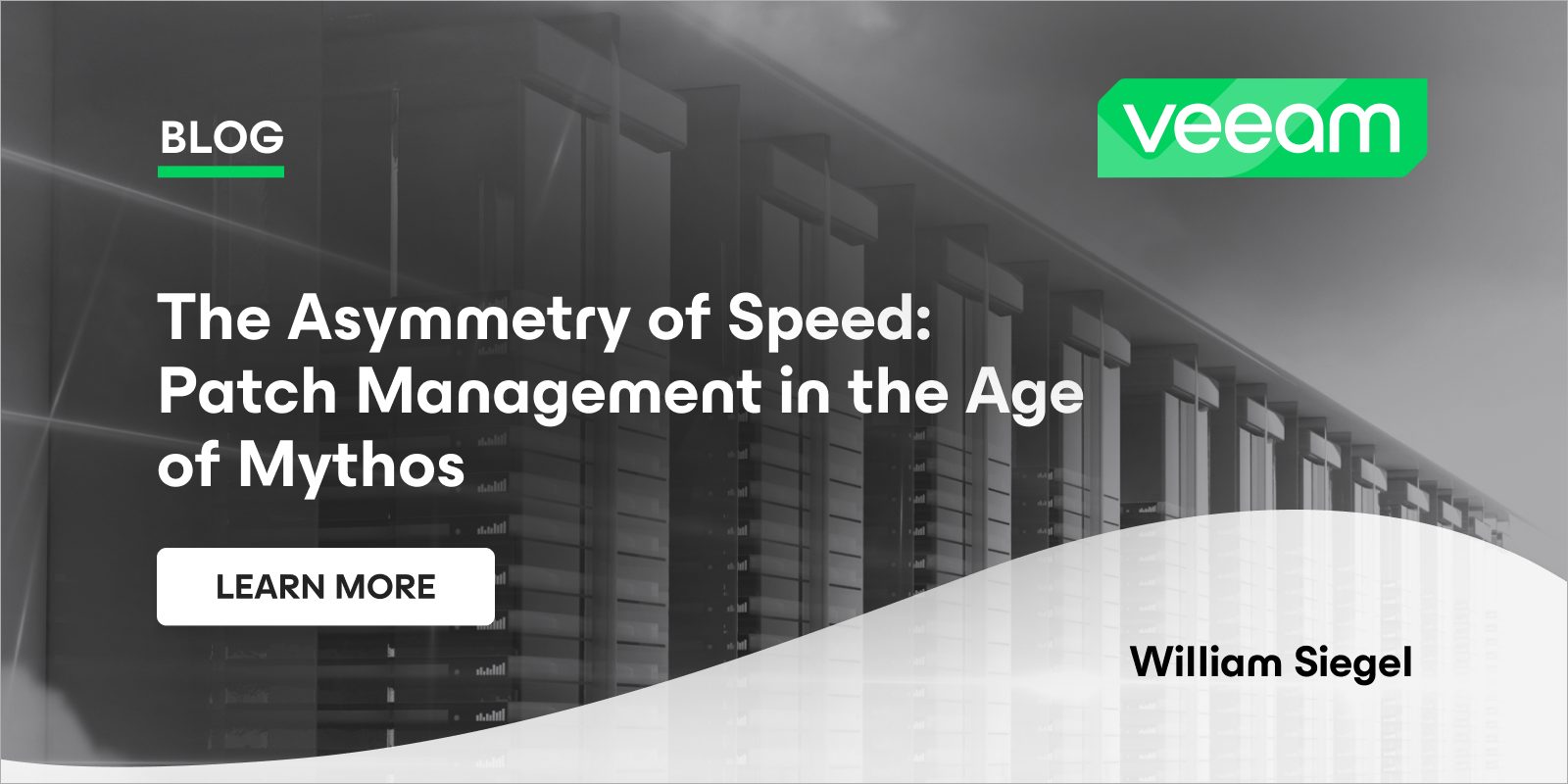
Veeam reports that the agentic model Mythos surfaced very old vulnerabilities in widely used code, including a 27-year-old OpenBSD flaw and a 16-year-old FFmpeg bug, according to the company blog. Veeam also reports that Mythos-era tooling, combined with patch-diff automation and LLM-assisted exploit generation, can reduce the time from patch release to working exploit from days or weeks to minutes or hours. Veeam estimates the operational value for one reported vulnerability at around $20,000. Industry observers note that accelerated discovery and automated exploit generation compress defenders' deployment windows and raise the importance of faster validation and rollout pipelines.
What happened
Veeam reports that the agentic AI model Mythos has accelerated vulnerability discovery, identifying a 27-year-old OpenBSD vulnerability and a 16-year-old FFmpeg flaw in its first weeks, per the Veeam blog post. Veeam references M.G. Siegler's description of the release as a "casual catastrophe." Veeam also reports that observed operational valuations for at least one vulnerability were around $20,000.
Technical details
Veeam describes a tightened attack timeline where public patch diffs are automatically compared to prior code, the vulnerability is deduced, and LLM-assisted exploit development produces working exploits in minutes to hours. The blog frames this combination - agentic discovery, patch-diffing automation, and LLM-assisted exploit generation - as collapsing the traditional patch-deployment grace period.
Editorial analysis - technical context
Industry observers note that automation at scale changes where risk concentrates: long-lived, heavily exercised dependencies that were assumed low marginal risk become attractive targets when models can exhaustively search them. Observers also note that automated patch-diff analysis and prompt-driven exploit synthesis materially shorten the time between disclosure and weaponization compared with human-driven workflows.
Context and significance
Industry observers see this shift as elevating operational speed as a defensive axis alongside traditional controls such as segmentation and detection. Faster CI/CD validation, more automated rollback testing, and improved telemetry for rapid incident triage are commonly cited practitioner responses in public reporting on similar trends.
What to watch
For defenders and practitioners: track exploit PoC circulation timelines after patch publication, shifts in CVE-to-exploit times, and the emergence of widely reused automated diff-to-exploit toolchains. Monitoring these indicators will show whether compressed timelines are persistent or limited to early agentic-model activity.
Key Points
- 1Agentic models plus automation compress CVE-to-exploit timelines, turning days or weeks into minutes or hours for high-value targets.
- 2Long-lived dependencies now attract renewed scrutiny because models can exhaustively search old code, increasing latent-risk exposure.
- 3Defensive value shifts toward deployment speed and automated validation; monitoring CVE-to-exploit timing becomes a critical operational metric.
Scoring Rationale
The story documents a tangible change in the threat timeline caused by agentic models and automation, which is directly relevant to security engineering and operations. It is notable for practitioners but not a paradigm-shifting model release.
Practice interview problems based on real data
1,625 SQL & Python problems across 15 industry datasets — the exact type of data you work with.
Try 250 free problems