49ers Use AI to Inform Draft Strategy
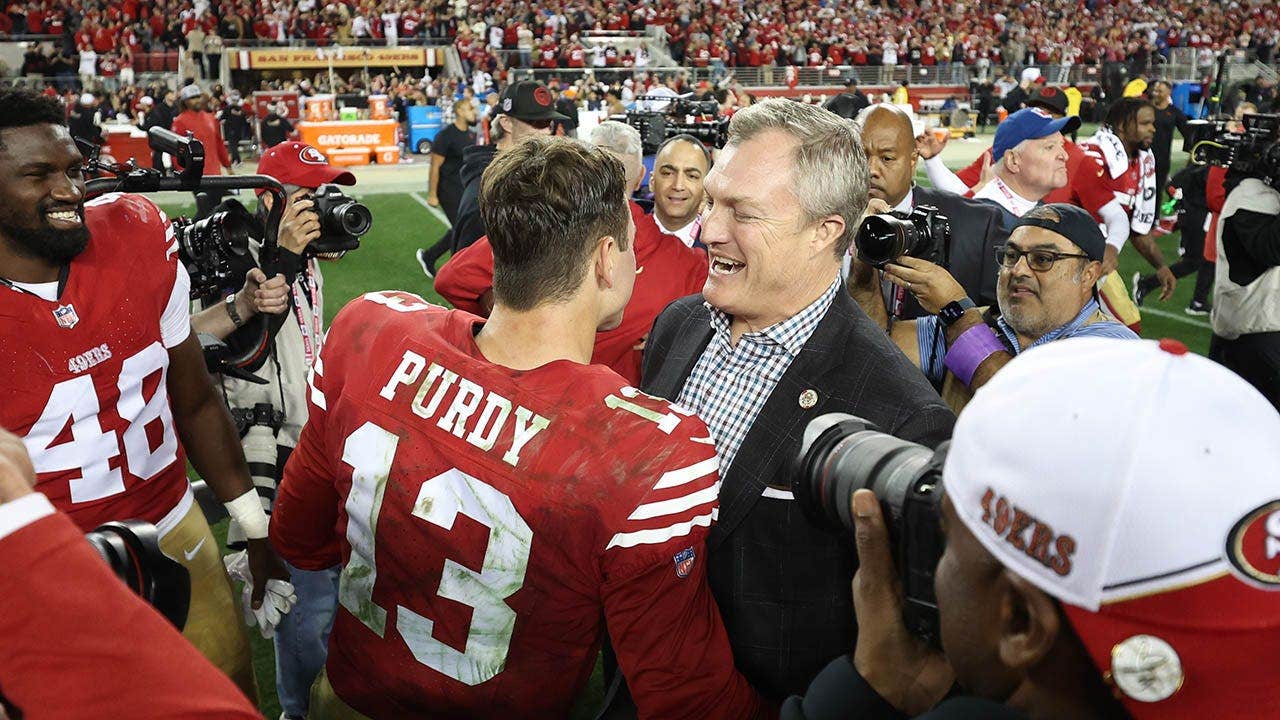
The San Francisco 49ers are using artificial intelligence as part of their preparation for the 2026 NFL Draft. General Manager John Lynch said the team runs simulations and asks AI systems for candidate ideas and scenario outcomes, adding, "If you aren't using it, you're already behind." The team is studying trade-down scenarios around their No. 27 pick and using developer-built tools to synthesize scouting inputs, run mock boards, and evaluate positional fits. The public reaction is mixed: some observers view this as sensible optimization of analytics, while critics worry about overreliance on opaque models or poor training data. For practitioners, the 49ers example highlights practical AI adoption in operations: internal model development, simulation-driven decision making, and incrementally automating parts of a complex, high-variance selection process.
What happened
The San Francisco 49ers told reporters they are integrating AI into their 2026 NFL Draft workflow as part of pre-draft planning. General Manager John Lynch said the franchise leverages developer-built systems to run simulations and generate candidate ideas, adding, "If you aren't using it, you're already behind." Lynch also indicated the team will simulate trade scenarios around their No. 27 pick and use AI to help triage prospects and board movement.
Technical details
Lynch described using AI as a practical, non-expert tool: "Just like you at home, planning a travel itinerary, you can just ask the thing, and it can spit out pretty good things." Reported capabilities and likely components practitioners should infer include:
- •simulation and scenario analysis for trade strategy and pick optimization
- •automated prospect synthesis and ranking that combines scouting notes, college tape metrics, and other performance data to produce comparative evaluations
- •draft-board monitoring and alerts that surface opportunities to trade up or down when projected availability shifts
Why those details matter
Combining simulations with human scouting shortens the decision loop and scales scenario coverage. The 49ers specifically referenced developer involvement, suggesting they may be using custom tools rather than off-the-shelf chatbots or public mock drafts.
Context and significance
The message from the 49ers reflects a broader trend: teams across professional sports are operationalizing machine learning to augment, not replace, domain experts. In high-variance selection environments like the NFL Draft, AI is useful for enumerating edge cases, stress-testing tradeoffs, and surfacing nonobvious fits across positions. Public reaction has been mixed. Some analysts welcomed the efficiency gains; others mocked the claim as performative given past draft misses. Concerns surfaced about model inputs: if generative systems pull from low-quality mock drafts or unsourced internet evaluations, they can amplify noise or groupthink rather than create signal.
Practical implications for ML practitioners
Sports organizations wanting similar capabilities should prioritize these engineering and governance items: rigorous data cleaning for scouting texts and tracking feeds, clear validation metrics for player-projection models, backtesting of simulated draft strategies, and human-in-the-loop review to catch model hallucinations. The 49ers' emphasis on developer-built tools signals that bespoke systems with closed data access remain the safer path for competitive organizations.
What to watch
Will other NFL teams disclose similar AI usage ahead of the draft, and will any adopters publicly document measurable improvements in draft ROI or player performance? Also watch for discussions about model auditing and data provenance if teams increasingly rely on generative outputs during high-stakes decisions.
Bottom line
The 49ers' announcement is not a radical technical breakthrough, but it is a concrete example of domain teams moving from analytics dashboards to simulation-driven, AI-augmented workflows. For practitioners, it underscores the value of robust pipelines, model validation, and human oversight when applying AI to one-off, high-impact decisions.
Key Points
- 149ers integrate AI into draft prep to run simulations and generate candidate ideas, increasing scenario coverage and speed.
- 2Practical systems likely combine scouting text, college performance metrics, and custom simulations, requiring rigorous data pipelines and validation.
- 3Public reaction is mixed, highlighting risks from opaque models and low-quality training data; human-in-the-loop governance is essential.
Scoring Rationale
This is a notable example of AI adoption in a high-profile operational context that will interest practitioners building applied ML systems. It is not a research breakthrough or industry-shaking event, but it demonstrates practical simulation and automation use cases worth studying.
Sources
Public references used for this report.
View 4 more sources
- John Lynch on 49ers using AI for draft evaluations: 'The cool thing is... you don’t need to be an expert'awfulannouncing.com
- Transcript: 49ers GM John Lynch speaks ahead of 2026 NFL Draft49erswebzone.com
- 49ers GM John Lynch has interesting admission on using AIlarrybrownsports.com
- John Lynch’s AI comments about the NFL Draft are about to get really overblownninersnation.com
Practice with real Ad Tech data
90 SQL & Python problems · 15 industry datasets
250 free problems · No credit card
See all Ad Tech problems