MIT Demonstrates Heat-powered Matrix Multiplication Devices
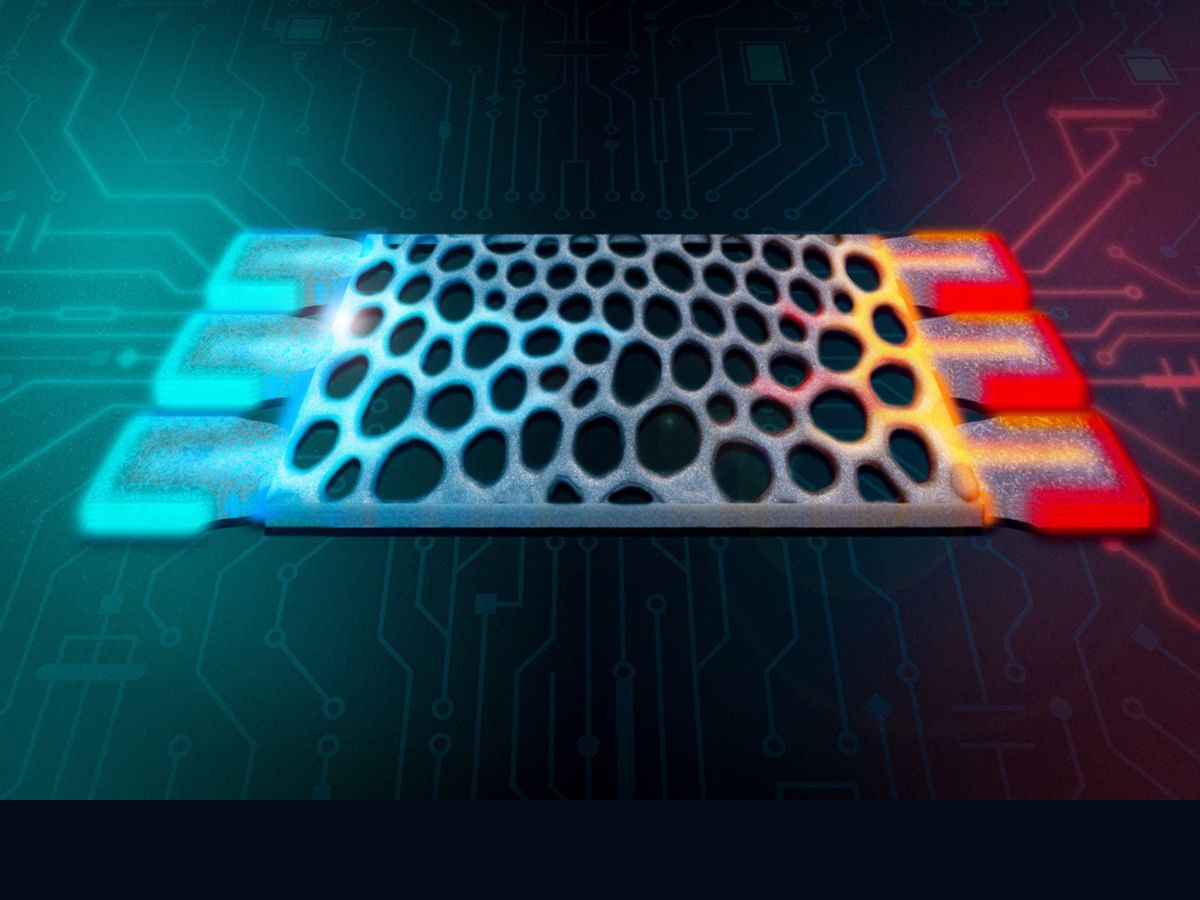
MIT researchers Caio Silva and Giuseppe Romano publish in Physical Review Applied that inverse-designed microscopic silicon structures can perform matrix-vector multiplication using heat rather than electricity, achieving over 99% accuracy in simulations. The pore-filled, dust-sized devices guide thermal flow to compute and could enable passive overheating detection and low-power thermal management, though bandwidth and scaling limit complex deep-learning use.
Key Points
- 1Uses inverse-designed silicon microstructures to perform matrix-vector multiplication using heat with over 99% simulation accuracy
- 2Addresses waste-heat problem by treating thermal gradients as information for computation and sensing
- 3Enables passive overheating detection and low-power thermal management; scaling challenges remain for deep-learning workloads
Scoring Rationale
Peer-reviewed novelty with strong experimental validation, but practical impact limited by bandwidth, scaling challenges, and early-stage laboratory demonstration.
Practice interview problems based on real data
1,625 SQL & Python problems across 15 industry datasets — the exact type of data you work with.
Try 250 free problems